
Let me start with something most people are never told.
If you have autoimmune gastritis and you have tried everything, eating bland food, cutting out spice, drinking plenty of water, taking antacids, and yet the heaviness, the bloating, the burning, and that strange hunger pain keep returning, it is not because you are doing something wrong.
It is because no one has explained what is actually happening inside your body.
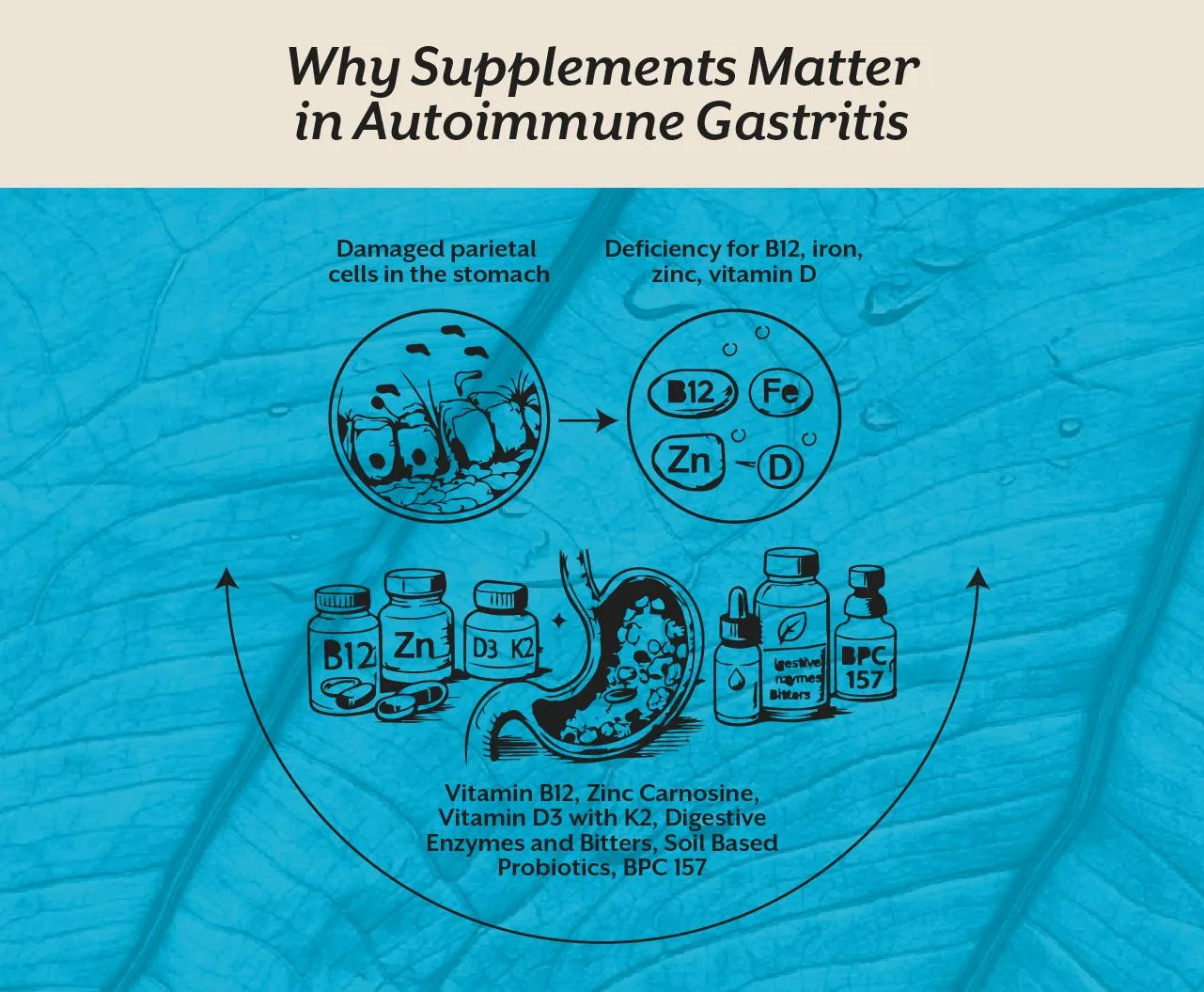
Autoimmune gastritis is not a temperamental stomach. It is a condition where your own immune system has turned against a specific type of cell in your stomach lining. Those cells, called parietal cells, are responsible for two critical things: producing stomach acid and making a protein called intrinsic factor, which is the only way your body can absorb vitamin B12.
When parietal cells are damaged over time, you lose the ability to digest food properly, absorb nutrients properly, and protect your gut from harmful bacteria. The damage compounds quietly. By the time most people get a diagnosis, they have already been low in B12, zinc, iron, and other key nutrients for years.
What makes it even harder is that the foods most people think are safe, like bread, curd, milk, biscuits, and even some fruit juices, may actually be keeping the immune system fired up without anyone realising it.
This article will walk you through what autoimmune gastritis actually is, which foods are quietly making it worse, what your body genuinely needs to start healing, and which supplements matter when absorption itself is compromised.
What Is Autoimmune Gastritis and Why Does It Keep Getting Worse
Most people are introduced to autoimmune gastritis through symptoms that seem disconnected. Heaviness after meals. A burning feeling that comes and goes. Fatigue that sleep does not fix. Sometimes a strange pain that gets worse when you have not eaten for a few hours.
These symptoms happen because the stomach lining is being attacked from within.
In a healthy stomach, parietal cells sit along the stomach wall and do their job quietly. They make acid that breaks down food and kills harmful bacteria. They also make intrinsic factor, without which vitamin B12 simply cannot be absorbed no matter how much meat, eggs, or dairy you consume.
In autoimmune gastritis, the immune system produces antibodies that target these very cells. Over months and years, the cells are gradually destroyed. Stomach acid output falls. Intrinsic factor production drops. And because digestion is weakened, the entire nutrient absorption process begins to suffer.
The frustrating part is that this often happens slowly enough that the body adapts. You start eating less because food feels heavy. You stop eating certain things because they seem to make you worse. You get used to a level of tiredness that you once would have found alarming. And no one connects the dots because the symptoms seem too scattered to belong to one condition.
Why the Foods You Eat Matter More Than You Think
Here is something that trips a lot of people up.
Autoimmune gastritis is not just a digestive problem. It is an immune system problem that happens to live in your stomach. And because the immune system is involved, what you eat directly affects how active or how calm that immune response is.
One of the key mechanisms is something called intestinal permeability, which most people know as leaky gut. When the gut lining is inflamed or damaged, food particles that are only partly digested can get through into the bloodstream. The immune system sees these particles as invaders and creates an immune reaction.
Here is where it gets specific to autoimmune gastritis. Some food proteins, particularly gluten, look structurally similar to parts of the stomach lining. When the immune system reacts to gluten, it may also accidentally attack stomach tissue in the process. This is called molecular mimicry.
So removing certain foods is not just about reducing irritation. It is about reducing immune confusion. The two are very different things.
Foods That Keep Autoimmune Gastritis Active
Gluten Is Not Just a Trend to Avoid
If there is one food that consistently worsens autoimmune gastritis, it is gluten. The protein found in wheat, barley, and rye has been repeatedly observed to increase intestinal permeability and trigger immune responses in people with autoimmune conditions.
For many people with autoimmune gastritis, a strict gluten-free trial of eight to twelve weeks produces dramatic improvements in bloating, upper stomach discomfort, fatigue, and brain fog. The key word is strict. Even small amounts from sauces, coatings on fried foods, or biscuits can be enough to keep the immune response switched on.
If you have been eating gluten freely and wondering why your symptoms persist, this is often the first place to look. It is not about being trendy. It is about removing the most common trigger for immune confusion in your gut.
Conventional Dairy Creates More Trouble Than It Soothes
A very common belief is that curd, paneer, and milk are gentle on the stomach. They feel soft. They seem safe. But conventional dairy contains a protein called A1 casein, and in people with autoimmune conditions, A1 casein can behave very similarly to gluten inside the gut.
A1 casein has been observed to trigger inflammatory pathways and increase digestive distress. For someone whose stomach lining is already under immune attack, adding this protein regularly can make symptoms much harder to resolve.
Many people notice that their nausea, heaviness after meals, and persistent bloating improve when they remove conventional dairy for a period of time. This is not necessarily a permanent restriction. Some people eventually tolerate small amounts of ghee, which contains almost no casein. Others may reintroduce goat milk or A2 dairy later, once the gut has had time to calm down.
But in the active healing phase, conventional milk, processed cheese, flavoured yoghurt, and commercial dairy products are worth removing.
Refined Sugar and Processed Foods Feed the Problem
There is a reason why eating biscuits, packaged snacks, or sugary drinks tends to give temporary comfort followed by a worse feeling a short while later.
Refined sugar feeds inflammatory bacteria and yeast inside the gut. It also creates blood sugar spikes that trigger stress hormones, and stress hormones increase inflammation throughout the body.
Ultra-processed foods come with another problem. They contain emulsifiers, preservatives, artificial flavours, gums, and refined flours, all of which put extra pressure on a digestive system that is already struggling to do its job. These foods offer nothing that supports healing. They only add to the burden.
If your symptoms tend to flare when you eat quickly or grab something convenient when hungry, the food itself may be a large part of why.
Seed Oils Damage the Cells Trying to Heal You
This one surprises people the most.
Refined seed oils like sunflower oil, soybean oil, canola oil, and corn oil are in almost every restaurant meal, packaged snack, and fried food available. They are also rich in omega 6 fats that, when consumed in excess, increase the production of inflammatory compounds inside cells.
In someone with autoimmune gastritis, the cells lining the gut are already under stress. Adding large amounts of these unstable fats only makes it harder for those cells to repair themselves. Replacing seed oils with ghee, coconut oil, or good quality olive oil is one of the quieter but consistent changes that helps people feel better over time.
Alcohol and Autoimmune Gastritis Simply Do Not Work Together
Alcohol directly irritates the stomach lining. It also increases intestinal permeability, meaning it actively makes leaky gut worse. For someone with autoimmune gastritis who may already be low in B12, iron, or zinc, alcohol slows healing and interferes with how the body stores and uses those nutrients.
Even small amounts can be enough to set progress back. This is one of the harder truths to accept. What feels like an occasional treat can quietly undo weeks of careful eating for someone whose gut is in an active healing phase.
What to Eat When You Have Autoimmune Gastritis
After reading what to remove, most people feel overwhelmed. The reaction is usually "what is left?" But the goal is not permanent restriction. The goal is to give the stomach the environment it needs to repair itself and to give the body the nutrients it needs to function properly during that time.
Build Every Meal Around Protein and Healthy Fats
Your stomach lining repairs itself using amino acids. Without adequate protein, the healing process slows significantly. This is one of the reasons people with autoimmune gastritis who survive on plain rice, crackers, and tea remain symptomatic for so long. The body cannot repair what it does not have the raw materials to fix.
Meals built around slow cooked meats, wild fish, free-range eggs, and lamb give the gut the amino acids it needs. If you can tolerate organ meats, even small amounts of liver are extraordinarily nourishing because they contain vitamin A, B vitamins, iron, and folate in forms the body absorbs well.
Healthy fats from ghee, coconut oil, avocado, and olive oil provide stable energy and help reduce inflammation rather than add to it.
Choose Carbohydrates That Are Gentle and Grounding
Not all carbohydrates are equal when the gut is inflamed. The ones that work best are easy to digest, unlikely to spike blood sugar, and naturally free of gluten.
Cooked vegetables, sweet potato, pumpkin, ripe banana, rice, and berries are all good choices. Gluten-free grains like ragi, jowar, and bajra can work well when they are soaked or fermented before cooking, which reduces the compounds that make them harder to digest.
Raw foods and large amounts of fibre can sometimes be harder on an inflamed gut. Soups, stews, broths, and well-cooked foods are often better tolerated during active healing.
Replace What the Condition Has Taken Away
People with autoimmune gastritis are consistently depleted in specific nutrients. Magnesium, B12, zinc, iron, and selenium are among the most commonly low. Food alone cannot always replace these, but choosing mineral-rich foods helps.
Seafood, cooked leafy greens, one brazil nut daily for selenium, cooked cruciferous vegetables like broccoli and cabbage, garlic, and onions all contribute to the mineral replenishment the body needs.
Bone broth deserves a specific mention. It is rich in glycine and proline, two amino acids that directly support gut lining repair. Many people with inflamed digestive systems find it easier to tolerate than solid food and genuinely helpful during acute flares.
Supplements That Make a Real Difference
Food is the foundation. But because autoimmune gastritis damages the very cells responsible for absorbing certain nutrients, supplementation is not optional for most people. It is necessary.
Vitamin B12 Cannot Wait
Without intrinsic factor, the body cannot absorb B12 from food. This is not a matter of eating more eggs or meat. The absorption mechanism itself is broken.
This means oral capsule supplements often do not work either, because they still depend on intrinsic factor in the gut. The most effective forms are sublingual B12, which dissolves under the tongue and enters the bloodstream directly, or B12 injections for those with severe deficiency.
Correcting B12 is often the most impactful single change in how someone with autoimmune gastritis feels. Tingling, brain fog, fatigue, low mood, and memory issues can all be linked to B12 deficiency that has been quietly accumulating for years.
Zinc Carnosine Supports the Lining Directly
Zinc is critical for gut lining integrity and tissue repair. Zinc carnosine is a specific form that has a particular affinity for stomach and intestinal tissue, making it especially useful in autoimmune gastritis.
Signs that you may be zinc-deficient include white marks on the nails, slow wound healing, poor appetite, low immunity, and reduced sense of taste or smell. Restoring zinc gives the stomach the material it needs to begin rebuilding its own lining.
Vitamin D3 with K2 Helps the Immune System Calm Down
Low vitamin D is found consistently in people with autoimmune conditions. Vitamin D does not just support bone health. It acts as a regulator for the immune system, helping it distinguish between genuine threats and the body's own tissues.
When levels are low, the immune system tends to remain in a state of overactivation. Supplementing with vitamin D3 alongside K2, which helps direct calcium properly and enhances vitamin D's effects, is often one of the most important long-term steps in calming an overactive immune response.
Digestive Enzymes Give the Stomach Support It Cannot Provide Itself
One of the confusing features of autoimmune gastritis is that people often feel burning even though they actually have too little stomach acid, not too much. This is called hypochlorhydria. Without enough acid, food sits longer in the stomach, ferments, causes gas and pressure, and produces a burning sensation despite the lack of acid.
Digestive enzymes taken with meals help break down food more effectively. Herbal bitters before meals can also help stimulate what acid production remains. Together they reduce the heaviness, fullness, and discomfort after eating that many people assume is simply part of having gastritis.
Gut Healing Peptides Like BPC 157
BPC 157 is a peptide derived from a protective protein naturally found in the stomach. It has gained significant attention for its ability to support gut lining repair and reduce digestive inflammation.
Some people with years of burning, food sensitivity, and persistent pain have reported meaningful improvement when BPC 157 is used correctly as part of a broader healing protocol. It is not a standalone solution, but for some people it becomes a valuable part of the picture.
Soil-Based Probiotics and the Gut Environment
Certain soil-based probiotics can help restore bacterial diversity and reduce gut permeability over time. Black cumin seed oil combined with raw honey has also shown value for people with underlying H. pylori-related irritation.
The important caveat here is that supplementation genuinely needs to be personalised. What works well for one person can aggravate another. This is one of the reasons a structured assessment makes a difference rather than trying supplements one by one based on what you read online.
The Questions People Ask Most Often
Q: Why does my stomach feel worse when I have not eaten for a few hours?
When the stomach lining is inflamed and stomach acid is low, long gaps between meals can worsen symptoms. The acid that is still present irritates the already-damaged lining. Regular meals that include protein and healthy fats help buffer this. Blood sugar swings from skipping meals also increase cortisol, which adds to digestive inflammation.
Q: I thought dairy was gentle on the stomach. Why is it making things worse?
Because the issue in autoimmune gastritis is not just irritation. It is immune activation. A1 casein in conventional dairy can trigger the same inflammatory pathways as gluten in sensitive people. The soft texture of milk or curd has nothing to do with what it does at an immune level inside the gut.
Q: Can I ever eat gluten again?
Many people with autoimmune gastritis who strictly avoid gluten for an extended period and then reintroduce it carefully discover they still react to small amounts. For some, full removal becomes a long-term choice because the benefit of staying off it is so significant. This is something to assess individually rather than assume either way.
Q: Why am I still so tired even after taking B12 supplements?
If you are taking oral capsule B12 and the intrinsic factor is compromised, the supplements may not be absorbing properly. Sublingual B12 or injections bypass the digestive tract entirely and are far more effective. It is also worth looking at whether other deficiencies like iron, vitamin D, or zinc are contributing to the fatigue independently.
Q: My doctor says my blood tests are normal. Why do I still feel terrible?
Standard blood tests often use reference ranges that reflect what is common in the population, not what is optimal for health. B12, for example, can appear in range while being functionally low. The same applies to vitamin D, zinc, and iron. Functional testing looks at a much broader picture of what is actually happening inside your cells.
Q: Is autoimmune gastritis something I will always have?
The autoimmune process itself may not fully reverse, but the symptoms, the inflammation, the deficiencies, and the quality of life can improve dramatically when the triggers are addressed and the body is given proper nutritional support. Many people go from feeling constantly unwell to functioning well and eating varied meals without distress.
Q: What is the first thing I should actually do?
Remove gluten completely and stop conventional dairy for at least eight weeks. Get proper testing done that includes B12, vitamin D, zinc, iron, ferritin, and inflammatory markers. And get that testing interpreted using functional ranges, not just standard lab ranges. These two steps alone give you more clarity than most people have had in years.
Why a Generic Plan Often Fails
The most common thing we hear from people who come to us after years of trying is that they followed something they read online, felt slightly better for a few weeks, and then went backwards again.
That is because autoimmune gastritis looks different from person to person. One person might have a severe H. pylori infection driving the immune activation. Another might have SIBO on top of the gastritis. Someone else might be under enormous chronic stress that keeps cortisol high and the immune system reactive. Another might be pregnant and dealing with a completely different hormonal environment.
A food list cannot account for all of this. A supplement stack copied from a blog cannot either.
What actually helps is understanding what is driving your specific version of this condition. Is it gluten sensitivity? A gut infection? Nutritional deficiencies that have been building for a decade? Stress that has never really been addressed? Often it is several of these together.
At iThrive, that is exactly what we look for. Not just what to take, but why the immune system became confused in the first place. Because when you address that, the symptoms do not just manage. They actually begin to change.
If you want to understand what is specifically happening in your body, the iThrive Alive programme offers a structured, personalised approach to restoring gut health, calming immune activation, and rebuilding nutrition from the inside out.
Where to Start Right Now
You do not need to do everything at once. But you do need to start somewhere meaningful.
- Remove gluten completely for a minimum of eight weeks. Read labels. Hidden gluten in sauces, biscuits, and packaged foods counts.
- Remove conventional dairy for the same period. Ghee is usually fine to keep.
- Replace seed oils in your cooking with ghee, coconut oil, or olive oil.
- Build meals around protein and cooked vegetables rather than grains and crackers.
- Get proper blood work done that includes B12, vitamin D, zinc, iron, ferritin, and fasting insulin. Not just a standard panel.
- Consider sublingual B12 if you have any neurological symptoms like tingling, brain fog, or low mood.
- Eat at regular intervals and do not skip meals. Long gaps make symptoms worse when the lining is inflamed.
- Reduce alcohol as much as possible during the healing phase.
Small, consistent steps in the right direction compound. The body responds when it is given what it actually needs.




























Sign in to leave a comment.