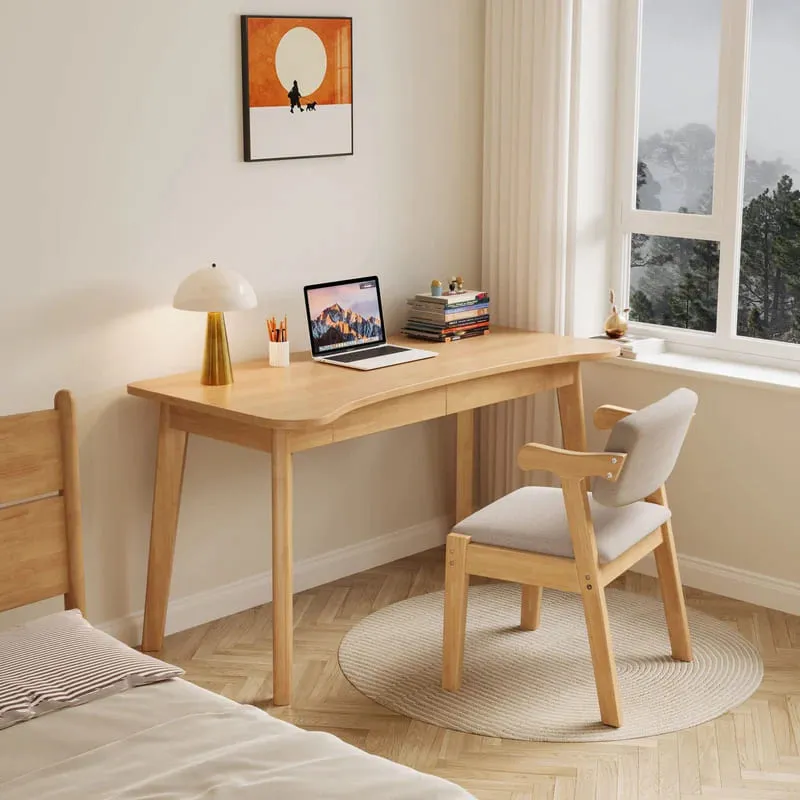

A study desk is one of those purchases that looks simple and turns out to matter more than expected. Buy the wrong size and you're constantly working around a constraint. Buy without thinking about storage and the surface becomes a permanent pile. Buy without considering height and you end up with a desk that causes discomfort after an hour.
The right desk makes study and work easier. The wrong one becomes a source of low-level friction every time you sit down. Here's how to work through the decision properly.
Start With How You Actually Work
Before looking at any specific desk, it's worth being clear about what you'll actually be doing at it — because the workspace requirements are genuinely different depending on the task.
Writing and reading requires surface area for an open book or notebook alongside whatever else is in use. A 1.2M desk is typically sufficient for this kind of work, with room for a laptop and a few reference materials without feeling cramped.
Computer or laptop work with a single monitor needs roughly 600–700mm of depth — enough to push the screen to a comfortable viewing distance while leaving forearm space on the desk surface. Width of at least 1M is practical.
Dual monitor setup — increasingly common for both home workers and students — needs a wider desk. A long desk of 1.6M or 1.8M allows two monitors to sit at comfortable spacing without pushing everything else to the edge of the desk.
Drawing, design work, or projects that spread out benefit from the largest practical surface area. A wider desk — or an L-shaped corner desk — allows project materials to stay laid out without having to pack up between sessions.
Identifying which of these categories your primary use falls into narrows the size decision significantly before you look at anything else.
Size: The Dimension Most People Get Wrong
The most common mistake in buying a study desk is underestimating the width needed. A 1M desk feels adequate in a showroom or product photo, but at home with a monitor, a keyboard, a notebook, and a coffee, it fills up quickly.
Width determines how much you can have in front of you simultaneously. As a guide: 1M suits compact setups with minimal surface needs; 1.2M is the practical minimum for comfortable everyday study; 1.4M–1.6M suits home workers and students with multiple items in use at once; 1.8M suits serious home office setups or dual monitor configurations.
Depth — the front-to-back measurement — is often overlooked. A depth of 600mm is the standard minimum. For desktop monitors, 700–800mm of depth creates a more comfortable viewing distance. A desk that's too shallow forces the monitor too close, which creates eye strain over long sessions.
Height is fixed on most desks at around 740–760mm, which suits most adults working on a keyboard at a standard ergonomic setup. If you're significantly taller or shorter than average, or if multiple people of different heights share the desk, an adjustable desk resolves the problem by letting each user set the correct height independently.
Storage: What You Need Within Reach
The amount of storage a desk needs depends on what's being stored and how the space around the desk is organised.
For students who work from textbooks, folders, and stationery, a desk with a built-in bookshelf keeps the most-used items accessible without requiring a separate bookcase. The shelf keeps the desk surface clear — books and folders go on the shelf rather than piling up on the workspace.
For home workers who primarily work on a computer with minimal physical reference materials, desk drawers suit better than shelves. Drawers keep frequently used items — chargers, notebooks, stationery — out of sight and off the desk surface without requiring them to be out of reach.
For children and students, a combination of shelf and surface storage tends to work well at different ages. Younger students need stationery and school supplies within easy reach; older students benefit from organised storage that keeps the surface clear for focused work.
If the room around the desk has adequate bookcase or shelving storage, a simpler desk with minimal built-in storage often works better than one with elaborate compartments that add bulk without adding value.
Material: Solid Wood vs Engineered
Most study desks fall into two material categories: solid wood and engineered wood (also called MDF or particleboard with a laminate surface).
Solid wood — rubberwood is the most common in quality study desks — is more durable, heavier, and more resistant to surface damage over time. It can be sanded and refinished if the surface is scratched or marked, and it holds screws and fixings more reliably than engineered alternatives. A solid wood desk built to a good standard will outlast an engineered desk of the same age by a considerable margin.
Engineered wood is lighter and less expensive. For a desk used occasionally or in a low-intensity study environment, it performs adequately. For a desk used daily for years — which is what a quality study desk should be — the surface durability and structural integrity of solid wood is a meaningful long-term advantage.
OZ Study Desks' range is built from solid rubberwood — a dense, stable timber that performs consistently across years of daily use without the warping, swelling, or surface degradation common in lower-grade engineered alternatives.
Room Fit: Measuring Before You Order
The desk needs to fit the room — physically, and proportionally.
Measure the wall space or zone where the desk will sit, and subtract 60–90cm on each side for movement around the desk. This gives you the maximum practical desk width for the space.
Also consider the visual weight of the desk in the room. A large, solid timber desk in a small bedroom will dominate the space. A smaller desk, or a corner desk that tucks into a corner, can provide the same or greater workspace while leaving more of the room's floor area open.
Finally: if other people use the same desk — a shared study setup, or a parent and child sharing a home workspace — a 2-person desk or a long desk with clearly delineated zones resolves the layout problem without requiring two separate desks.
OZ Study Desks stocks a full range of study desks in solid wood — including desks with bookshelves, corner desks, long desks, and adjustable desks — with fast shipping from Sydney, Melbourne, and Brisbane warehouses.




























Sign in to leave a comment.