
Introduction
The fashion industry’s digital shift is impossible to ignore—nearly half of all apparel sales now happen online. In fact, U.S. online apparel revenue reached $180.5 billion in 2022 and will be $295.7 billion by 2025. For ecommerce clothing businesses looking to launch or scale an online clothing ecommerce store, a website that truly represents your brand is crucial. This guide will show you how to create a fashion e-commerce store that looks great and converts. We’ll cover planning, design best practices, must-have features and marketing tips—all for e-commerce clothing brands from startups to enterprise. Let’s get started!
What Is a Fashion Website?
A fashion website is an online space (basically your online clothing store) where you showcase your clothing, accessories or fashion products to customers. It’s a digital catalog and storefront where visitors can browse collections, learn about your brand and buy. A good fashion e-commerce store should be beautiful, easy to use and on brand. It has all the information shoppers need – product details (sizes, colours, prices), shipping and returns, customer reviews – in one place. In short your fashion website is the central hub of your brand online, open 24/7 to connect your style to the world.
How to Create a Fashion Website in 10 Simple Steps
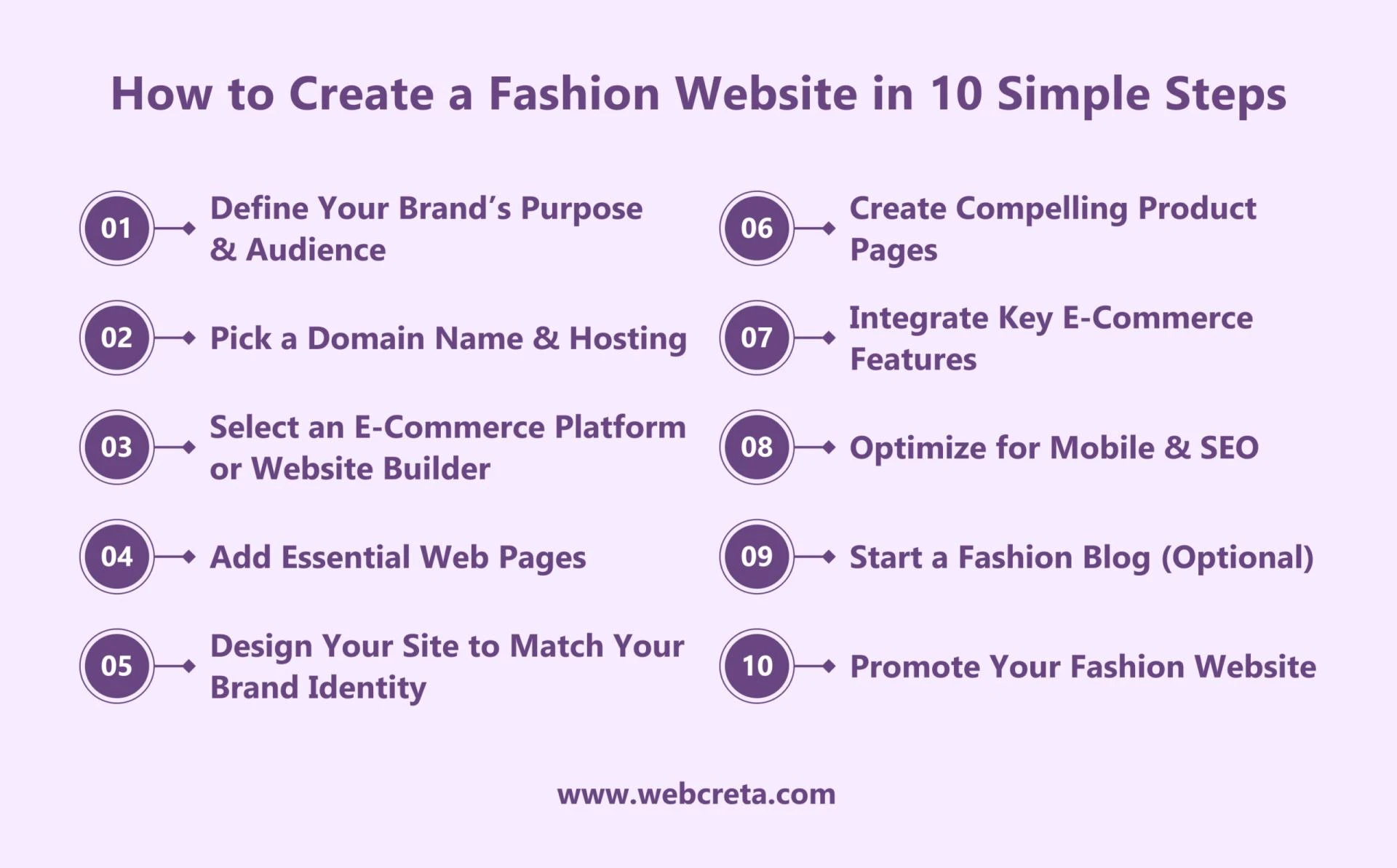
I) Define Your Brand’s Purpose and Audience:
Before you start designing or building, take a step back and clarify the foundation of your fashion website: what you’re offering, to whom, and why. Ask yourself:
- What products will I sell? Clothing, accessories or a niche? Define your product range – everyday apparel, luxury gowns, vintage pieces or custom designs.
- Who is my target audience? Who are your ideal customers? Men, women or both? What age group and style do they have? Knowing your audience’s tastes and shopping habits will guide your site’s style and content.
- What sets my brand apart? What’s my unique selling proposition (USP)? Quality, affordability, sustainability, exclusive designs or a distinct aesthetic. Knowing my brand’s competitive edge will help me highlight it throughout my site.
Next, think about how you’ll source or produce your products. Will you design and manufacture your own clothing line, resell products from other labels or use a dropshipping or print-on-demand model? This affects inventory management and possibly the features you need.
II) Pick a Domain Name and Hosting:
Choosing the right domain name is an early decision for any online store. Your domain is the web address (URL) that customers will use to find your site, so it should be memorable and match your brand name. Here are some tips for choosing a great domain name:
- Keep it short and simple: Go for a name that’s easy to spell and pronounce. Shorter names are easier to remember.
- Choose a memorable domain name: Pick a domain that’s your brand name or style. Keep it short, easy to spell and relevant (e.g. YourBrandName.com). A custom domain builds trust and makes it easy for customers to find you.
- Choose a reliable extension: “.com” is the standard for e-commerce and is trustworthy. You can also consider .store, .shop or country specific extensions if they fit your audience, but if possible, try to get the .com.
Once you have a domain in mind, you’ll need to register it and get hosting. Hosting is the service that stores your website’s files and makes your site live on the internet. Some all-in-one e-commerce platforms include hosting by default, others require you to get your own hosting plan. If you’re using a platform like Shopify, BigCommerce or Wix, hosting is taken care of for you in the subscription. If you’re using self-hosted solutions like Magento or WooCommerce, you’ll need to choose a hosting provider that can ensure your site runs smoothly and loads fast.
III) Select an E-Commerce Platform or Website Builder:
Now that you have your domain, the next big decision is how to build your fashion website. There are many ways to create an online store, from do-it-yourself website builders to custom development. Choosing the right e-commerce platform is a key part of the clothing ecommerce website development process and will affect your site’s functionality, scalability and manageability. Here are a few options to consider:
- User-friendly website builders: If you’re a beginner or want a quick setup, platforms like Shopify or Wix offer templates and drag-and-drop tools for e-commerce. These let you launch an online clothing ecommerce store with minimal technical skills. They handle hosting, security and often come with built-in features like product catalogs, shopping carts, and payment processing.
- Open-source or self-hosted platforms: For more flexibility and control you might choose an open-source solution like Magento (Adobe Commerce), WooCommerce (a WordPress plugin). These require a bit more technical know-how (or hiring developers) but are highly customizable. For example Magento is popular with medium to large fashion e-commerce businesses because of its robust features and ability to handle large product catalogs.
- Headless or custom development: Large enterprises or those with very specific needs might opt for a custom-built website or a headless e-commerce setup. This route offers maximum flexibility – you can customize everything – but it typically requires a development team and a bigger budget.
IV) Design Your Site to Match Your Brand Identity:
Now that we have the platform and template in place, it’s time for the fun part – designing your fashion website’s look and feel. This is where you tailor your site’s visual elements to your brand’s unique identity and make an impression on visitors. Remember, in fashion visuals are everything. A well designed site enhances user experience and gets customers to explore and shop. Focus on these design elements:
- Color scheme: Choose a color palette that evokes the right emotions and matches your branding. Bold and bright colors can be fun and trendy, while neutral or muted tones can be luxury or minimalist. Use your brand colors consistently for headers, buttons and accents so the site feels cohesive.
- Typography: Select fonts that are legible and match your brand personality. A high end fashion label might use elegant serif fonts, while a modern casual brand might use clean sans-serif typography. Make sure your fonts are readable on all devices. You can even create a pairing to create hierarchy and interest.
- Logo and branding elements: Put your logo front and center. It should be high res and link to the homepage. Add your tagline or fashion slogan if you have one.
- Layout and imagery: Responsive and user friendly layout is key. Use a clean layout that showcases your products without clutter. High quality images are the heart of any fashion site – they let your products speak for themselves. Mix in product shots and lifestyle images to inspire shoppers.
- Consistency: Treat every page as part of the same story. Consistent design across your homepage, product pages and content pages looks professional. For example use the same style for buttons and forms site wide.
V) Add Essential Web Pages:
A fashion e-commerce website isn’t just product listings – you also need supporting pages to give context and build trust with your customers. Here are the must-have pages to include in your clothing website:
- Homepage: This is your storefront’s welcome mat and should immediately tell your brand story and what your brand is about. Your homepage might feature a hero banner with your latest collection or signature product, a short tagline or value prop, and clear navigation to shop categories. Add eye-catching CTAs and maybe a few featured products or testimonials for social proof. Because first impressions matter, invest in visuals and a clean layout here.
- Shop (Product Listing) Pages: If you have multiple categories of products (e.g. Women, Men, Accessories), create separate collection pages for them. These pages will display a grid or list of products. Make sure filters and sorting options are available if you have a large catalog. (so users can filter by size, color, price, etc.) Product thumbnails should be clear and each should link to the product page.
- Product Pages: Every item should have its own product page. Big, high-res images, detailed descriptions, pricing and an “Add to Cart” button. Be transparent and informative here – include sizing info, material/fabric details, care instructions and stock availability. High quality visuals and rich product info helps customers make a decision. Also consider adding customer reviews or ratings on product pages, seeing positive feedback can reassure shoppers. A well written product page can increase conversions since that’s where the buying decision happens.
- About Us: Shoppers want to know the story behind the style. Use an About Us page to tell your brand story, mission and values. What inspires your designs or what problem you set out to solve.
- Contact Page: Make it easy for customers to get in touch with you. A contact page usually includes an email and/or phone number for customer service, a contact form and possibly your business address if relevant. Also link to your social media profiles here. Fast and accessible customer support can set you apart from the competition especially for online shoppers who might have questions about fit or shipping.
- FAQs: An FAQ page can cover questions about shipping times, return/exchange policies, sizing guidance, care instructions etc. This not only helps customers get quick answers without having to contact support but also reduces the number of questions you get.
- Policies (Shipping & Returns): Clearly state your shipping options, costs, delivery timeframes and what your return/exchange policy is. Fashion purchases often involve fit and style concerns so a transparent return policy can actually encourage customers to buy (they know they can send it back if it doesn’t work out). Link to these policies in your footer so they’re always accessible.
VI) Create Compelling Product Pages:
Product pages are the heart of your fashion e-commerce site –this is where a browser becomes a buyer. As I mentioned, a great product page requires good visuals and lots of information, but let’s break down the key elements and best practices:
- High-Quality Images: Use clear photos for each product. Provide multiple images of different angles and if relevant, shots of the item being worn or styled. For example, front, back and close up detail shots (fabric texture or unique design elements). If you can, add a short video or 360° view and enable a zoom feature so users can get up close and personal.
- Detailed Descriptions: Write product descriptions that are informative and appealing. Not only do detailed descriptions help customers make a decision, they also help with SEO by including keywords related to your products. Keep the tone consistent with your brand – whether that’s glamorous and sophisticated or fun and quirky.
- Size and Fit Information: Minimising uncertainty around fit can reduce returns. Provide a sizing chart or guide on the product page. This can be a simple table of measurements or a link to a full size guide page. The easier you make it for customers to choose correctly the happier they’ll be with their purchase.
- Price and Promotions: Show the price and if you’re running a promotion, make it clear. If the item is on sale, show the original price struck out next to the sale price so customers see the discount.
- Customer Reviews: If you’re just starting out and don’t have reviews yet, consider a section for “Leave a review” so as you make sales, customers can add feedback. For a new brand, even testimonials you ask from early customers or influencers can be helpful.
- Related Products: It’s good to show a “You might also like” or “Related products” section below the item details. This keeps shoppers on your site longer and exposes them to more of your catalog. Many e-commerce platforms have this feature built-in or available via plugin, often powered by tagging or AI recommendations.
VII) Integrate Key E-Commerce Features:
To run a smooth online clothing ecommerce store you need to have all the shopping functionality in place and working. Customers expect certain features from any top-tier e-commerce clothing brands. As you build your fashion site, make sure to integrate the following e-commerce features:
- Shopping Cart and Checkout: When a customer adds an item to their cart the experience should be seamless. Implement a visible shopping cart icon that updates with the number of items. The checkout process should be simple and as short as possible. Guest checkout is highly recommended – forcing new visitors to create an account can lead to cart abandonment. Also display progress indicators during checkout so buyers know how many steps are left. Security is key here: use SSL encryption, display trust badges for payment and let customers know their data is safe.
- Payment Gateways: Integrate payment options so customers can pay easily. At minimum accept major credit/debit cards through a secure payment gateway. Also consider offering alternative payment methods that are popular in fashion ecommerce. Make sure your payment processor is PCI DSS compliant and has fraud protection. Offering multiple trusted payment methods can increase conversion rates because the customer can choose their preferred way to pay.
- Shipping Options: Set up shipping calculations and options clearly. You might offer free shipping – a big draw for online shoppers. Alternatively, provide real-time carrier rates, flat-rate shipping or tiered options. Make sure the shipping cost and delivery estimates are shown before final checkout so there are no surprises.
- Search and Product Filters: If you have a large fashion catalog, a search bar is a must. Implement a search function that can search by product name, category or even attributes. Also filtering tools on category pages help users narrow down items by size, color, price range etc.
- Wishlist or Save for Later: Many shoppers like to browse and not buy immediately. By allowing them to save items to a wishlist, you encourage them to come back and potentially buy in the future.
- Account Management: Allow customers to create an account where they can save their details, view order history and track current orders. Don’t force account creation at checkout but having an account system is good for customer retention.
- Reviews and Ratings: As mentioned earlier, a review system is super useful. There are many third-party apps and plugins that can handle customer reviews. Make sure to moderate them to filter out the nasty stuff but allow honest feedback – it builds trust. Highlighting top rated products or showing a badge like can also be a powerful persuader on your site.
- Personalization Tools: As you grow, you might integrate more advanced features like recommendation engines and dynamic content based on user behavior.
VIII) Optimize for Mobile and SEO:
Ensuring your fashion website is optimized is critical for reaching the maximum audience. Two major aspects of optimization are mobile usability and search engine optimization (SEO), as well as site speed and performance.
- Mobile Optimisation: A lot of fashion browsing and buying happens on mobile. As of now, mobile devices account for a huge chunk of e-commerce traffic – your site must look and work great on smaller screens. Choose a responsive design and test each page on mobile. Simplify navigation for mobile users with clear menus. Also, optimize for fast loading on mobile networks by compressing images and minimising heavy scripts. Remember, if your mobile experience is poor you’ll lose more than half your visitors right away.
- Site Speed: 70% of consumers say website loading speed affects their willingness to buy, so a slow site can hurt your sales. Optimise images, enable browser caching and CDN (content delivery network) if possible and minimise the use of too many heavy plugins or third-party scripts. Even a beautiful design won’t help if pages take too long to load. Aim for your pages to load in a few seconds or less.
- SEO (Search Engine Optimisation): This is how you improve your site’s visibility on search engines like Google. Given the competition among fashion e-commerce stores, investing some time in SEO can pay off with steady organic traffic. Key SEO steps include:
- Keyword Research
- Meta Tags
- SEO-Friendly URLs
- Content and Blogging
- Link Building
- Technical SEO
- Analytics: As part of optimisation, set up analytics tools (like Google Analytics or the built-in analytics in your e-commerce platform). These will help you track how users are interacting with your site – which pages they visit, where they drop off, what products are popular etc. Use this data to continually refine your site.
IX) Start a Fashion Blog (Optional):
A blog on your website can serve multiple purposes. It’s a content marketing tool, an SEO booster and a way to engage your audience beyond just shopping. Here’s how a blog can benefit your fashion site:
- Improve SEO with fresh content: Search engines love fresh content. Post articles – weekly or biweekly – and keep your site active in Google’s eyes. Target long-tail keywords through blog posts (e.g. “Summer 2025 fashion trends” or “How to style a denim jacket”). Over time some blog posts will rank on Google and bring in new visitors who weren’t looking for your products but found your brand through an article.
- Establish authority and brand voice: A blog allows you to share your expertise and passion for fashion. You can write about the inspiration behind your latest collection, give style advice, show behind-the-scenes looks at photoshoots or the design process or comment on fashion week trends.
- Shareable content: Articles with beautiful images or unique insights are super shareable on social media and Pinterest. A great blog post might get shared by your followers or even picked up by fashion news sites and increase your reach.
- Community building: If you allow comments on your blog you can start conversations with your audience. It’s a place for customers and fans to interact, ask questions and for you to gather feedback.
X) Promote Your Fashion Website:
Now your fashion website is live, it’s time to drive traffic and get customers. Here’s how to get the word out:
- Social Media Marketing: Use Instagram, Facebook, TikTok and Pinterest to share high quality product images, lifestyle content and behind the scenes footage. Collaborate with fashion influencers to expand your reach and build trust with new audiences.
- Email Marketing: Build your mailing list with popups or first time shopper discounts. Send out personalized updates about new arrivals, exclusive offers and style tips to keep your brand top of mind.
- Paid Ads: Run targeted ads on Google, Instagram or Pinterest to reach fashion shoppers who are actively searching or scrolling. Use visuals, carousels and videos to grab attention and drive clicks.
- SEO & Content: Boost organic traffic by optimising your site and publishing helpful blog content. Guest post on relevant fashion blogs to build backlinks and credibility.
- Offline & Omnichannel: Promote your site in physical stores, at pop-ups or in packaging. Ask customers to share their purchases online.
- Track with Google Analytics: Focus on what works and refine your strategy. Promotions tied to holidays or seasons can also boost engagement.
Ready to Build Your Fashion E‑Commerce Store?
Launching a fashion website tailored to your brand is a big step in growing your business. That might sound daunting, but by focusing on the fundamentals of your brand and what your customers want from their online experience-you can build a site that looks great and drives real results. Your brand’s personality and that user experience should be at the heart of every decision you make.
If you’re feeling overwhelmed or just want to get it right the first time, we can help. Webcreta has years of experience in fashion and clothing eCommerce website development. We work with startups, SMEs and enterprise brands to create websites that are tailored to their needs. That means we can help with everything from choosing the right platform to crafting a design that really converts visitors into customers-and integrating all the features you need. We’ve helped many fashion e-commerce businesses build websites that genuinely reflect their brand and make their customers happy.
Get in touch with us today to discuss your project and see how we can partner in building a fashion website that suits your brand perfectly.

























Sign in to leave a comment.