

OpenAI’s self-serve Ads Manager matters now because it turns ChatGPT from a useful interface into a commercial discovery layer; and once discovery becomes paid, SEO teams, paid media teams, and ecommerce operators all end up in the same room. This is not just another ad platform launch. It is an early signal that conversational interfaces are hardening into marketplaces.
According to Yahoo Finance, OpenAI has launched a self-serve ad platform, while reporting from Search Engine Land on MSN notes that the Ads Manager beta has opened to UK advertisers. That combination matters for businesses here in Britain in particular; the idea has moved from rumour and conference chatter to something marketers can actually test.
Why this is bigger than a new ad dashboard
Most ad products arrive with familiar logic: more placements, more targeting, another interface to learn. ChatGPT Ads Manager is different because it sits inside a behaviour shift that is already underway. People are not only searching; they are asking, refining, comparing, and buying inside a conversation.
That changes the shape of the funnel.
In classic search, a user enters a query, scans a page, and chooses from visible options. In a conversational environment, the interface can narrow the field before the user ever sees a traditional list. If ads are inserted into that process, then brands are no longer competing only for clicks; they are competing to be included in a machine-mediated recommendation path.
For SEO, that means organic visibility is no longer just a ranking problem. It becomes a retrieval, citation, and recommendation problem. For paid acquisition, it means there is a new surface where commercial intent may be expressed earlier and more naturally than in keyword search.
We explored the broader strategic picture in How OpenAI’s Self-Serve Ads Manager Could Reshape Search, Discovery, and Paid Acquisition; this piece is narrower and more practical. The question here is simple: what should website owners and marketers do now that the platform is live in self-serve form?
What OpenAI appears to be launching
The public reporting points to a few important features.
First, self-serve access lowers the barrier to entry. Large brands may have been able to test through managed relationships, but self-serve turns experimentation into something smaller businesses can budget for and run directly.
Second, the UK beta matters. If your business serves British consumers, this is no longer a distant Silicon Valley development. It is a channel your competitors may begin testing this quarter.
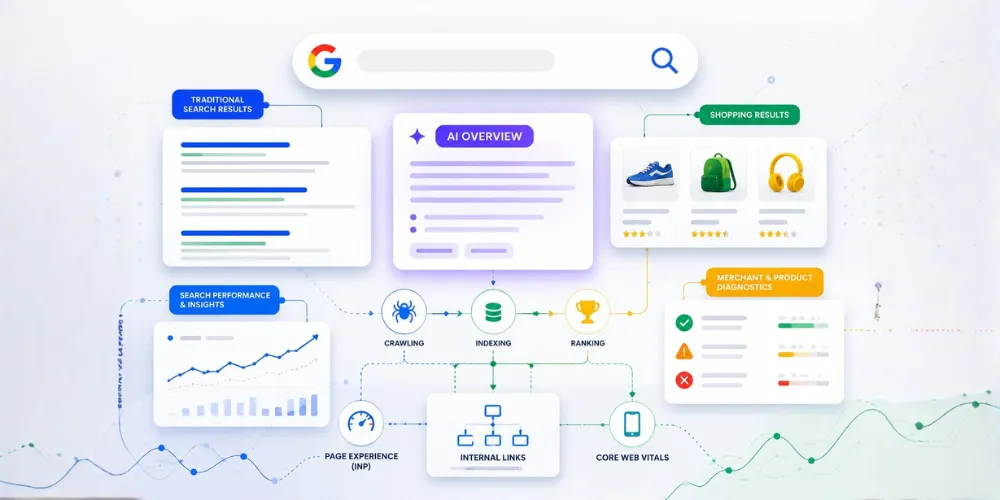
Third, OpenAI is not stopping at simple text ad concepts. Search Engine Land has also reported on product feed ads in Ads Manager beta. That is the detail many SEOs should not miss. Product feeds pull this platform closer to shopping and comparison behaviour, which means structured product data, clean catalogues, and merchant-side accuracy become more valuable across both organic and paid surfaces.
There is also a strategic backdrop. WinBuzzer reported on OpenAI pitching ChatGPT ads at Cannes. Whether one dwells on the corporate finance angle or not, the practical reading is straightforward: OpenAI is building an ad business with intent. Marketers should treat this as the beginning of a channel, not a one-off experiment.
How ChatGPT ads differ from search ads in practice
Intent is expressed in sentences, not just keywords
Search ads have long benefited from explicit intent signals; “best trail shoes for wet paths” is already useful. In ChatGPT, intent can be richer: “I hike at weekends in the South Downs, my ankles roll a bit, and I want something waterproof but not heavy.” That is not merely a query. It is context.
For advertisers, richer context can improve matching and creative relevance. For site owners, it raises the bar. Thin category pages and generic copy are less likely to align with nuanced, conversational commercial intent. The pages that win are usually those that solve a real decision problem.
The interface may compress comparison journeys
In traditional search, users often open several tabs, compare review sites, skim product pages, and bounce between retailer and publisher content. A conversational interface can compress that journey by summarising options, surfacing products, and narrowing choices in one place.
If your business relies on upper-funnel comparison clicks, expect pressure. If your business sells a clear, well-documented product with distinctive strengths, expect opportunity.
Creative and landing page quality matter differently
On a search engine results page, position and snippet quality do much of the work. In a conversational ad environment, the handoff matters more. If the user arrives after a highly specific recommendation, the landing page has to continue that thread. Any mismatch becomes more obvious.
A generic homepage will waste spend. A page that mirrors the user’s stated need, answers obvious objections, and presents proof cleanly stands a better chance.
The SEO implications most businesses will miss
1. Structured data becomes a commercial asset, not just an SEO enhancement
Many teams still treat structured data as a technical SEO box to tick. That is too modest a view now. Product feeds and machine-readable content increasingly sit at the centre of how AI systems understand offers, prices, availability, reviews, and attributes.
If OpenAI’s ad product leans further into feeds, then the businesses with disciplined catalogues will move faster. That means accurate titles, consistent variants, up-to-date stock status, clean pricing, descriptive attributes, and strong image sets. It also means aligning on-site schema with merchant feed data so the same product is described consistently across systems.
2. Brand clarity will matter more than brand size
Conversational interfaces reward clarity. If your value proposition is muddy, if your naming conventions are inconsistent, or if your site architecture hides your strengths, AI-led discovery becomes harder. The system has to understand what you are for before it can recommend you well.
Smaller brands should take heart here. A focused offer explained plainly can outperform a larger but vaguer competitor in emerging discovery environments.
3. Informational content needs stronger commercial bridges
Many publishers and brand blogs still separate educational content from conversion content too sharply. In a world where a user asks one interface for advice and product suggestions in the same session, the divide weakens.
Your informational pages should still inform first. But they should also make the next step easy: product comparisons, use-case pages, buyer guides, calculators, demos, and FAQs that answer pre-purchase concerns. Good SEO content now needs better connective tissue.
4. First-party measurement becomes more important
New ad surfaces often begin with imperfect reporting. Attribution may be partial; assisted conversions may be undercounted; branded search lift may show up before direct platform ROAS looks tidy. Businesses that rely only on platform-reported conversion numbers will misread early performance.
Prepare your own measurement layer. Use analytics, CRM tagging, post-purchase surveys, and landing page segmentation to identify whether ChatGPT-origin traffic behaves differently from search, social, or email.
Who is most affected first
Ecommerce brands with structured catalogues
If you sell products with clear specifications, comparisons, and repeatable buying criteria, you are near the front of the queue. Product feed ads suggest that OpenAI sees shopping as a practical use case, not a side note.
Retailers in electronics, homeware, beauty, supplements, outdoor gear, software, and hobby categories should pay close attention. These are all areas where users ask nuanced questions before buying.
SaaS companies and software marketplaces
Business Insider has reported that software companies are already moving into ChatGPT’s ad economy. That makes sense. Software buyers often begin with problem-led prompts rather than brand-led searches: “best tool for client onboarding”, “CRM for a small estate agency”, “project management software that works offline”.
If you are in SaaS, your category pages, comparison pages, and integration pages may become more important than your blog alone. Buyers want fit, not just information.
Publishers and affiliate sites
This group faces the most tension. If conversational interfaces keep more comparison behaviour on-platform, some affiliate and review traffic may thin out. The answer is not panic; it is differentiation.
Original testing, expert commentary, first-hand photography, unique data, and trust signals become more important. Generic “best X” pages built from light research will be easier for AI systems to summarise and bypass.
Local and service businesses
The impact may arrive more gradually here, but do not ignore it. People already ask AI tools for recommendations on accountants, therapists, decorators, dog trainers, and solicitors. Once paid placement and recommendation logic mature, local discovery may follow.
That means your service pages should answer practical questions clearly: area served, pricing model, response times, credentials, process, and proof.
What This Means for You
Here is the practical part. If I were briefing a client this week, these would be the immediate actions.
Audit your commercial landing pages for conversational intent
Take your top revenue pages and ask: would this page satisfy someone who arrived after asking a detailed, natural-language question?
Check for:
- Clear statement of who the product or service is for
- Specific use cases rather than broad claims
- Pricing or pricing logic explained simply
- Trust signals near decision points
- FAQs that handle realistic objections
- Fast mobile performance and clean layout
If a page assumes the user has already done all comparison work elsewhere, improve it.
Clean up your product data and feeds
If you run ecommerce, assign one owner to catalogue quality this month. Review titles, descriptions, images, attributes, GTINs where applicable, availability, shipping information, and return policy data. Resources like MonetizeMyWebsite cover this in more depth.
Then compare your on-site product schema with your merchant feed. Inconsistencies create friction for both organic systems and paid ingestion. The tidier your data, the easier it is to participate in any feed-driven ad or recommendation environment.
Build pages around decision moments, not just keywords
Create or improve pages that answer the questions buyers actually ask before conversion:
- “Which option is best for beginners?”
- “What if I have a small budget?”
- “How does this compare with the market leader?”
- “What works in rainy weather / small flats / hybrid teams / sensitive skin?”
These are not just content ideas. They are conversion assets. In a conversational web, specificity is a kind of distribution.
Run small paid tests; do not wait for a perfect playbook
If you have access to the beta, test with modest budgets and tight hypotheses. Separate campaigns by product type or user problem. Send traffic to pages built for one intent cluster, not to a catch-all destination.
Measure beyond last click. Watch engagement, assisted conversions, branded search lift, demo quality, and returning users. Early-stage channels rarely look elegant in week one.
Align SEO and paid search teams now
One quiet risk here is organisational. If SEO owns content and technical structure while paid owns acquisition testing, ChatGPT ads can fall into the gap between them. Avoid that.
Set one shared review every fortnight. Bring landing page data, search query insights, feed issues, and conversion notes into the same meeting. The businesses that learn fastest will not be the ones with the biggest budgets; they will be the ones with fewer internal silos.
Protect your brand queries and branded narratives
As discovery fragments, brand recall matters more. Make sure your site clearly communicates what your brand stands for, what problem it solves, and why it is credible. Keep your About, reviews, case studies, and expert bios current.
When users move from AI recommendation to validation search, branded SERPs still matter. Own them.
A sensible testing framework for the next 90 days
Month 1: Readiness
Audit landing pages, product data, analytics tagging, and CRM source tracking. Identify five pages that deserve priority because they already convert well from organic or paid search.
Month 2: Controlled experiments
Launch small tests if access is available. Use narrow audience assumptions and clear success criteria. Compare bounce rate, time to conversion, assisted conversion rate, and lead quality against Google Ads and paid social benchmarks.
Month 3: Content and feed iteration
Refine the pages and feeds that supported your best-performing tests. Expand FAQs, sharpen headlines, improve proof elements, and add comparison content where users hesitated.
This is not glamorous work. But then neither is tuning a piano; and yet the whole room sounds different after it is done.
What not to do
Do not treat this as a replacement for SEO
Paid placement in ChatGPT does not make organic visibility irrelevant. If anything, it increases the value of well-structured, trustworthy content because the same ecosystem depends on machine-readable quality signals and strong landing experiences.
Do not overreact to early case studies
New ad platforms attract dramatic anecdotes. Some will be true; some will be theatre. Avoid rebuilding your acquisition model around a handful of screenshots. Test calmly. Keep notes. Let the data accumulate.
Do not send paid traffic to weak pages
This is the oldest mistake in digital marketing, and it remains undefeated. If your page is vague, slow, or thin, a new traffic source will not rescue it.
Do not ignore adjacent search shifts
ChatGPT ads are arriving during a broader rearrangement of search and discovery. If you want the wider context, two pieces on WriteUpCafe are also worth reading: How Google’s AI Search Summaries Quoting Reddit Changes SEO Strategy and How the End of Ask.com Changes the Way We Think About Search Survival. They point in the same direction: distribution is consolidating around systems that summarise, filter, and decide faster than the old web did.
The larger strategic lesson
The old SEO habit was to ask, “How do we rank for this term?” The better question now is, “How do we become the most understandable, trustworthy, and commercially useful answer across machine-mediated discovery?”
That sounds abstract, but it cashes out in ordinary work: better product data, clearer pages, stronger proof, tighter measurement, and content that helps people decide rather than merely browse.
There is a line in Middlemarch, in the chapter sometimes remembered for its quiet attention to consequence, about the way lives are shaped by unhistoric acts. Digital marketing has its version of that truth. Channels change with fanfare; outcomes change through patient maintenance. The businesses that benefit from ChatGPT’s ad layer will usually be the ones that already know their catalogue, their customer, and their message with unusual precision.
What to watch next
Over the next few months, watch for three things: broader geographic rollout, more detailed ad formats built around product and merchant data, and clearer evidence on how ChatGPT-origin traffic converts compared with search and social. Also watch whether reporting and attribution mature enough for larger budget shifts. For now, the wisest posture is neither scepticism nor hype. It is readiness. ChatGPT is becoming a place where intent can be shaped before the click; and if your site is not prepared for that handoff, someone else’s will be.





























Sign in to leave a comment.