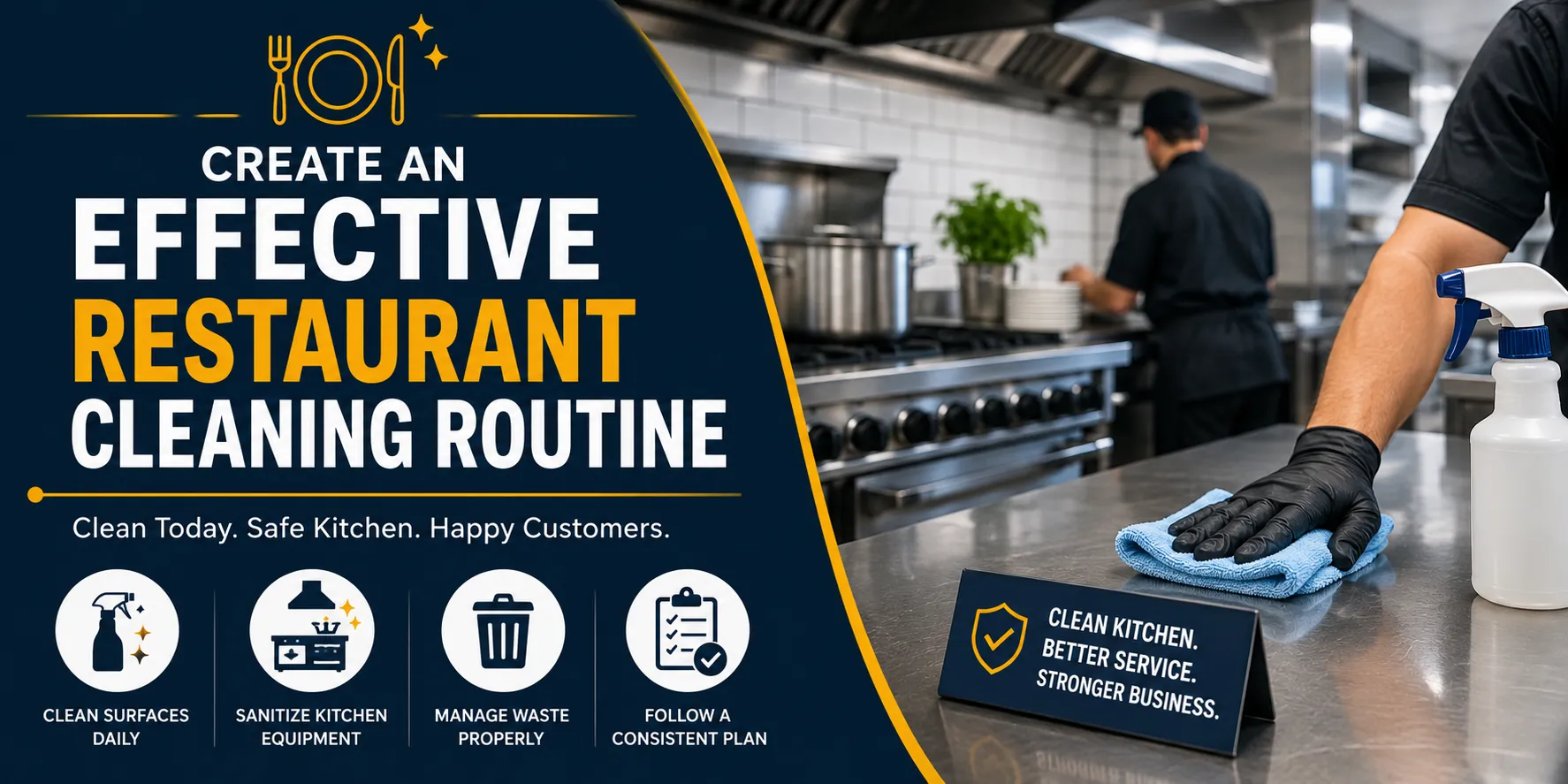

Maintaining a clean environment is one of the most important responsibilities for any food service business. A well-planned restaurant cleaning routine supports food safety, protects staff and customers, and helps a business meet health regulations. Without a structured approach, cleaning tasks can be inconsistent or overlooked, which may lead to larger issues over time. This article outlines the key steps involved in building an effective restaurant cleaning routine and explains why consistency matters in a food service setting.
Why a Structured Restaurant Cleaning Routine Matters
Restaurants handle food preparation, storage, and service on a daily basis, which creates a higher risk of contamination if cleaning is not managed properly. A consistent restaurant cleaning routine helps reduce the buildup of grease, bacteria, and food residue in areas that are used frequently. It also supports compliance with local health codes, which often require documented cleaning schedules for kitchens and dining areas.
Without a clear routine, cleaning responsibilities can become unevenly distributed among staff, resulting in missed tasks or inconsistent standards. A structured plan removes this uncertainty by defining what needs to be cleaned, how often, and by whom.
Key Elements of an Effective Restaurant Cleaning Routine
Daily Cleaning Tasks
Daily tasks form the foundation of any restaurant cleaning routine. These are the tasks that must be completed every day, regardless of how busy the restaurant is. Common daily tasks include wiping down countertops, sanitizing food preparation surfaces, sweeping and mopping floors, emptying trash bins, and cleaning restrooms.
These tasks are typically performed at the start of the day, throughout service, and again at closing to ensure the space remains sanitary during operating hours.
Weekly Cleaning Tasks
Weekly tasks address areas that do not require daily attention but still need regular care. This may include cleaning behind and underneath equipment, washing walls near cooking stations, deep cleaning refrigeration units, and sanitizing storage shelves. Assigning these tasks to a specific day each week helps ensure they are not forgotten during busier periods.
Monthly and Deep Cleaning Tasks
Some cleaning tasks are less frequent but equally important. Monthly or deep cleaning tasks often involve areas that accumulate grease and buildup over time, such as exhaust hoods, ventilation systems, and hard-to-reach corners of the kitchen. These tasks may require specialized equipment or professional cleaning services to complete thoroughly, particularly in areas related to grease trap maintenance or ductwork.
Building a Cleaning Schedule
Assigning Responsibilities
An effective restaurant cleaning routine assigns specific tasks to specific staff members or shifts. This prevents confusion about who is responsible for each task and helps maintain accountability. Many restaurants use checklists that staff can sign off on after completing assigned duties.
Setting a Consistent Timeline
Cleaning tasks should be scheduled at consistent times, such as before opening, during slow periods, and after closing. This structure helps ensure that cleaning does not interfere with service while still keeping the space sanitary throughout the day.
Documenting Completed Tasks
Keeping records of completed cleaning tasks is a common requirement for health inspections. Logs or checklists provide proof that cleaning has been performed consistently, which can be helpful during audits or inspections.
High Priority Areas in a Restaurant Cleaning Routine
Kitchen Equipment
Ovens, grills, fryers, and prep stations are used constantly and require regular cleaning to prevent grease buildup and cross-contamination. These areas should be included in both daily and weekly cleaning tasks.
Food Storage Areas
Refrigerators, freezers, and dry storage areas need routine cleaning to prevent spoilage and pest issues. Spills should be addressed immediately, and shelves should be wiped down on a regular basis.
Dining and Customer Areas
Tables, chairs, menus, and high-touch surfaces such as door handles should be cleaned frequently throughout the day. These areas directly affect the customer experience and play a role in overall hygiene standards.
Restrooms
Restrooms require frequent attention due to high traffic and hygiene concerns. Daily cleaning, along with regular restocking of supplies, helps maintain a sanitary environment for both staff and customers.
The Role of Professional Support
While many restaurant cleaning tasks can be handled by in-house staff, some areas benefit from professional cleaning services, particularly those involving deep cleaning or specialized equipment. Companies such as Wizard Cleaning are often brought in to assist with tasks like deep kitchen cleaning, exhaust hood maintenance, or post-event cleanup, which require specific tools and techniques beyond standard daily upkeep.
Bringing in outside support for these tasks can help ensure that harder-to-reach areas receive thorough attention without disrupting daily restaurant operations.
Reviewing and Adjusting the Routine
A restaurant cleaning routine should not remain static. As menus change, equipment is added, or staffing changes occur, the cleaning schedule may need adjustments. Regularly reviewing the routine helps identify gaps or outdated practices, ensuring the cleaning plan continues to meet the needs of the business.
Feedback from staff who perform daily cleaning tasks can also be useful in refining the schedule, since they are often the first to notice areas that require more frequent attention.
Conclusion
An effective restaurant cleaning routine relies on clear structure, consistent scheduling, and defined responsibilities. By organizing tasks into daily, weekly, and monthly categories, restaurants can maintain a sanitary environment while supporting compliance with health regulations. High-priority areas such as kitchen equipment, food storage, dining spaces, and restrooms require regular attention to reduce health risks and maintain operational standards. For more demanding tasks, professional cleaning services can provide additional support where specialized equipment or expertise is needed. A well-maintained restaurant cleaning routine ultimately contributes to a safer, more efficient, and more reliable food service operation.























Sign in to leave a comment.