
Every vehicle in India carries a unique registration number printed on its number plate. This number is not just a random combination — it contains important details about the vehicle’s state, RTO office, and registration series. Understanding how to decode these vehicle registration numbers (RTO codes) helps you identify where a vehicle is registered and know more about its background.
This guide explains the meaning of each part of an Indian vehicle registration number in the simplest way.
What Is a Vehicle Registration Number?
A standard Indian vehicle registration number looks like this:
MH12 AB 1234
Each part has a meaning:
MH → State code
12 → RTO/Regional office code
AB → Series code
1234 → Unique registration number
Now let’s decode each section.
1. State Code (First Two Letters)
The first two letters show the State or Union Territory where the vehicle was registered.
Examples:
DL → Delhi
MH → Maharashtra
UP → Uttar Pradesh
GJ → Gujarat
KA → Karnatak
RJ → Rajasthan
This helps identify where the vehicle originally belongs.
2 second 2 digits
The next two digits represent a specific RTO/Transport Office within the state.
Examples:
MH12 → Pune
KA03 → Bengaluru
DL04 → Janakpuri, Delhi
GJ01 → Ahmedabad
Each RTO code is unique to a city or district.
This helps track where the vehicle was first registered.
3. Series Code (Two Alphabet Letters)
The next two letters (like AB, CD, XY) represent the registration series.
Why series exist?
Each RTO registers thousands of vehicles.
Once numbers reach 9999, a new series starts (AA, AB, AC…).
Some special series like VIP numbers begin with specific letters.
Series codes help manage large volumes of registrations.
4. Unique Number (Last Four Digits)
The last four numbers are the vehicle’s unique registration number.
Examples:
0001 → VIP number
4444 → Premium fancy number
5678 → Normal sequence number
These numbers can be purchased as premium or auctioned in many states.
✔ Example: Complete Number Plate Breakdown
UP32 KT 9876
UP → Uttar Pradesh
32 → Lucknow RTO
KT → Series code
9876 → Vehicle number
So this vehicle is registered at Lucknow RTO.
Why Decode Vehicle Registration Numbers?
1. Helps identify where the vehicle belongs
Useful when buying a used vehicle to check if it’s from another state.
2. Useful for tracking suspicious or accident vehicles
Helps report correct details to police or authorities.
3. Helps avoid fraud in used car/bike purchases
Some sellers hide the vehicle’s origin. RTO codes reveal real information.
4. Helpful for challan & RTO service checks
Knowing the RTO code helps locate:
- Challan records
- RC status
- Vehicle tax office
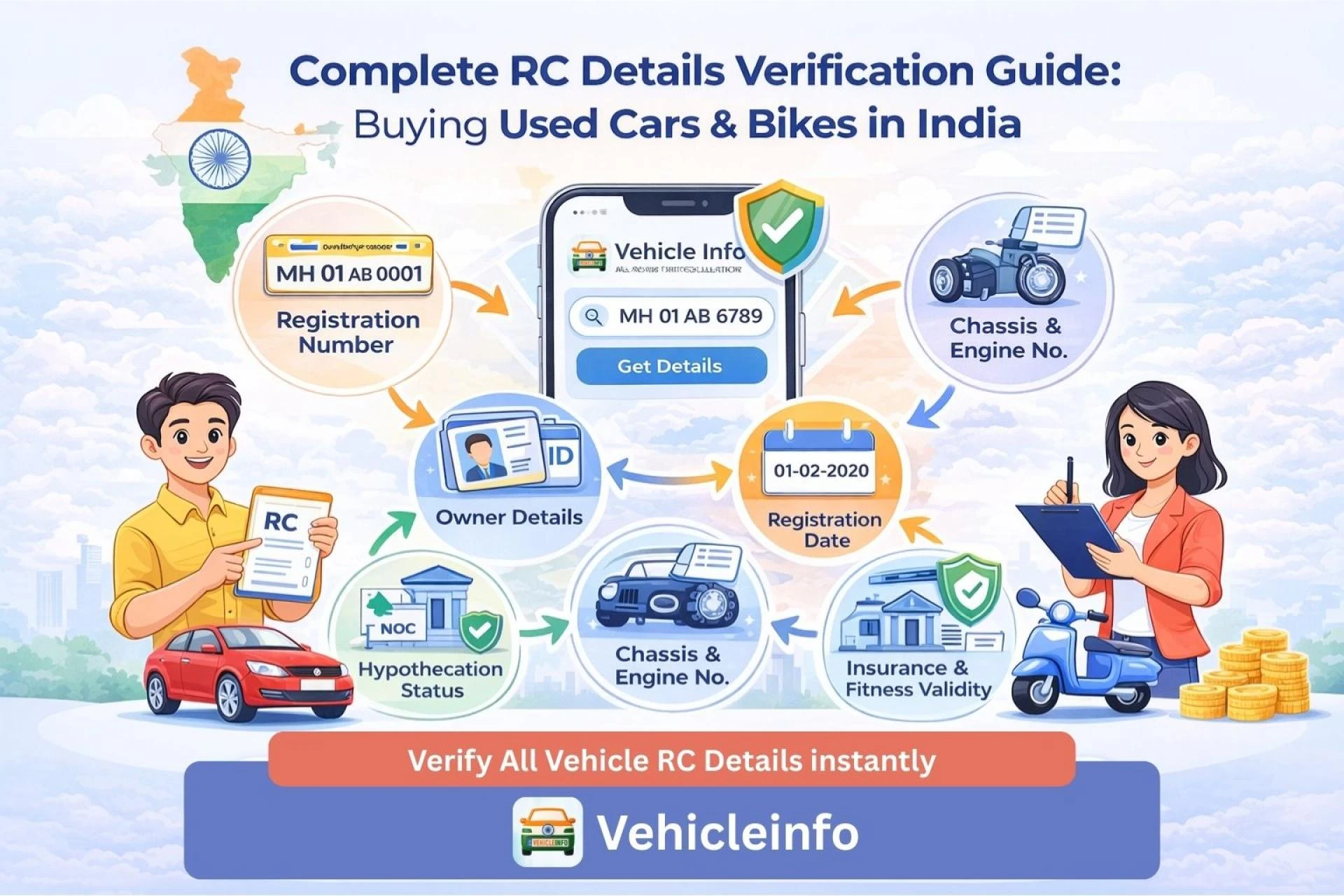
How to Check RTO Code of Any Vehicle?
You can check RTO codes online using:
- State transport websites
- Parivahan portal
- Vehicle information App
Just enter the vehicle number to know:
- State
- RTO office
- RC details
- Insurance status
- Fitness & challans
Conclusion
Decoding vehicle registration numbers is simple once you understand the format. The number plate reveals the state, RTO office, registration series, and the vehicle’s unique identity. This information is extremely useful when checking vehicle ownership, buying second-hand vehicles, or verifying challans and RC details.



























Sign in to leave a comment.