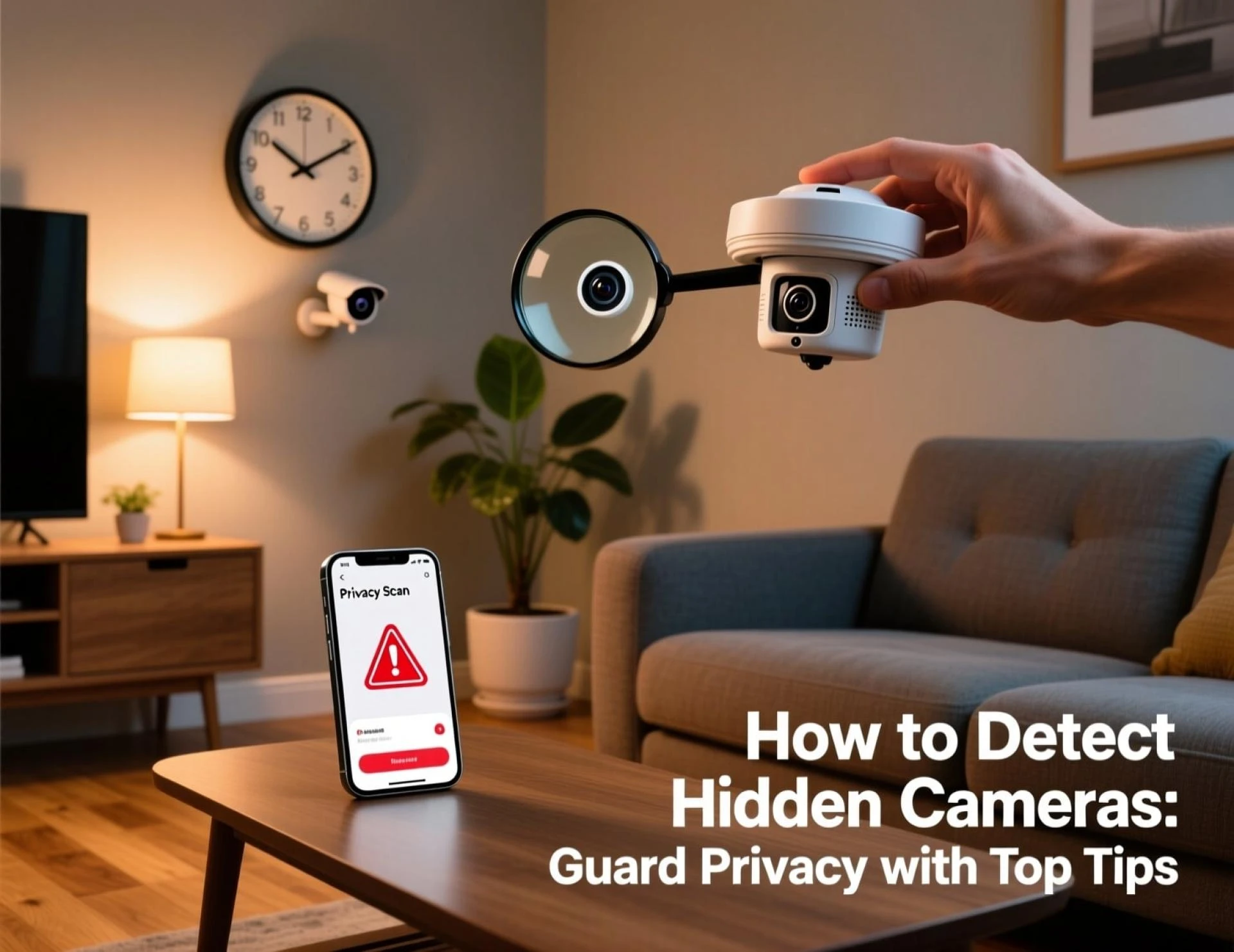

One of the bitter truths of the times we live in, with miniaturization and mass technological integration into daily life, is that there is some form of violation to privacy in the very places that are presumed safe—a hotel room, a vacation apartment, a men's washroom, or even one's home. Hidden cameras, recording in silence those private moments of one's life, are a violation that should never be placed on anyone. In the vast majority of cases, hosts, landlords, or businesses operate with integrity, but a few miscreants are there to exploit this technology for their personal gain. Well, it is good to know that you can take some action to counter them. By increasing your awareness on the subject and learning a few simple techniques, you can actively defend your personal space. This guide is designed to empower you with practical knowledge and actionable strategies on how to detect hidden cameras and reclaim your peace of mind.
Understanding the Common Hiding Spots
The first order of business is to determine where the camera could be. The most favored spots are always at the vantage view of the contrite—those able to reveal the maximum of secretly taped events in such places as bedrooms and bathrooms; the idea is to think like someone who would want to hide something freely into plain sight. Some of the common spots may include:
- Smoke Detectors and Alarm Clocks: These household items are very common in high areas, having natural grills or slots that can perfectly camouflage camera lenses.
- Electrical Outlets and Power Strips: Small holes in an ordinary power outlet will serve as an excellent pinhole for a camera lens. Power strips, with all their buttons and sockets, are again often modified.
- Wall Hangings and Picture Frames: Artwork, mirrors, and photo frames can all be altered, with a tiny lens hidden in a discreet manner within the decorations or behind a seemingly but not quite obvious one-way surface.
- Vents and Air Purifiers: The lamellas of air vents provide both the camouflage and a huge field of view, making this a prime location.
- Everyday Electronics: Be wary of any USB charger, Bluetooth speaker, set-top box, or even stuffed toy. Anything that can be plugged in or works on batteries can be modified to host a camera.
- Bathroom Fixtures: Tiny, waterproof cameras can be installed in showerheads, toiletry holders, and even hooks.
Your first line of defense is to search and do thorough visual inspections of these spaces once you have entered.
The Manual Search: Your Eyes and Hands
You could do a basic sweep without advanced technology; it could serve the purpose well for you and sometimes be more effective.
1. The Visual Scan:
Begin from the door and methodically sweep your gaze around the room. Look for small, unusual holes or anything that is irregular about an object. Pay careful attention to anything that seems out of place, like a smoke detector that varies slightly from the others in the building or a decoration that seems unnecessarily positioned to face a bed or shower. Walk over to eye level with objects and look for tiny glints of light that could be reflecting off a camera lens. A flashlight or the flashlight on your phone would already prove useful; shine it around at different angles and look for any reflective glimmers.
2. The Lens Reflection Test:
It is one of the easiest and most effective ways of detecting a hidden camera. In the dark, take a brightness source (your phone flashlight is good, but a brighter one is even better) and slowly pan it through the area you are investigating. Hold the light at eye level about where you think the camera is. A camera lens will be made of glass or plastic and reflects light back to you as a bright glint, which may often look bluish or white in color. This little spot of light is like a bench on grainy visibility.
3. Check the Network:
Most modern hidden camera types require a Wi-Fi connection to transmit the video remotely. This is an Achilles heel for the spy using one, but a valuable clue for you. Check your smartphone Wi-Fi list for any networks with weird or generic names (e.g., "IPCamera," "Security," or some random number-and-letter combinations). Some cameras may not broadcast their own network if connected to the main Wi-Fi of the property, but once you see a suspicious standalone network, that is a big red flag.
How to Detect Hidden Cameras with Technology
For those wanting extra security, there are technological aids to help.
1. RF (Radio Frequency) Detectors:
Hidden cameras that get footage transmitted wirelessly give out a radio frequency signal. An RF detector is designed to detect these signals. You turn on the detector and then walk slowly through the room. If it detects a strong RF emission, the detector beeps or lights up and shows you the way toward the transmitter. This works especially well in detecting wireless cameras that may be physically hidden from sight.
2. Camera Lens Detectors:
These are things meant to detect lenses of cameras. They work by projecting a bright red LED light into the room. The bright red light reflects on the curved glass of the camera lens back into the viewfinder of the device. Ads are right on target rather than flashlight beams and can be very efficient; however, they are more demanding with regard to steadiness and slow sweeping of the hand watching along.
3. Using Your Smartphone:
People often believe that with the camera on their smartphones, they can see the infrared (IR) light of a hidden camera. The truth is that the older smartphone cameras were capable of seeing IR LEDs (for night vision) from a distance, but such capability has been eliminated by the IR filter in the modern smartphone camera. However, another good way of using your smartphone is to install dedicated applications for scanning the Wi-Fi network for connected devices, which will help you detect suspicious IP cameras.
What to Do If You Find a Camera
Finding a hidden camera is, probably, one of the most shocking and violating events. Your first priority needs to be your safety.
- Never Touch It: As much as it may make your hands itch, never disable or destroy the device. You might have slashed the evidence or caused someone to know that you are onto him/her.
- Document Everything: Use your phone to take pictures and videos of the device and its exact position as evidence.
- Contact Authorities Immediately: Leave the premises and call the police. It is a criminal case; they will know how to tackle it.
- Notify the Platform: If you stay in a rental place, immediately contact the booking platform (e.g., Airbnb or Vrbo) and bring the issue to their attention.
Your best defense against the invasion of your privacy is vigilance. With a little observation and a methodical approach, the odds of being watched can be seriously reduced. For example, checking with bare eyes or investing in a detector-text: all these methods aim at one goal: to feel safe at home. Cultivating these habits every time you step into a new environment gives a very strong argument for your right to privacy and the best skills on how to detect hidden cameras.






























Sign in to leave a comment.