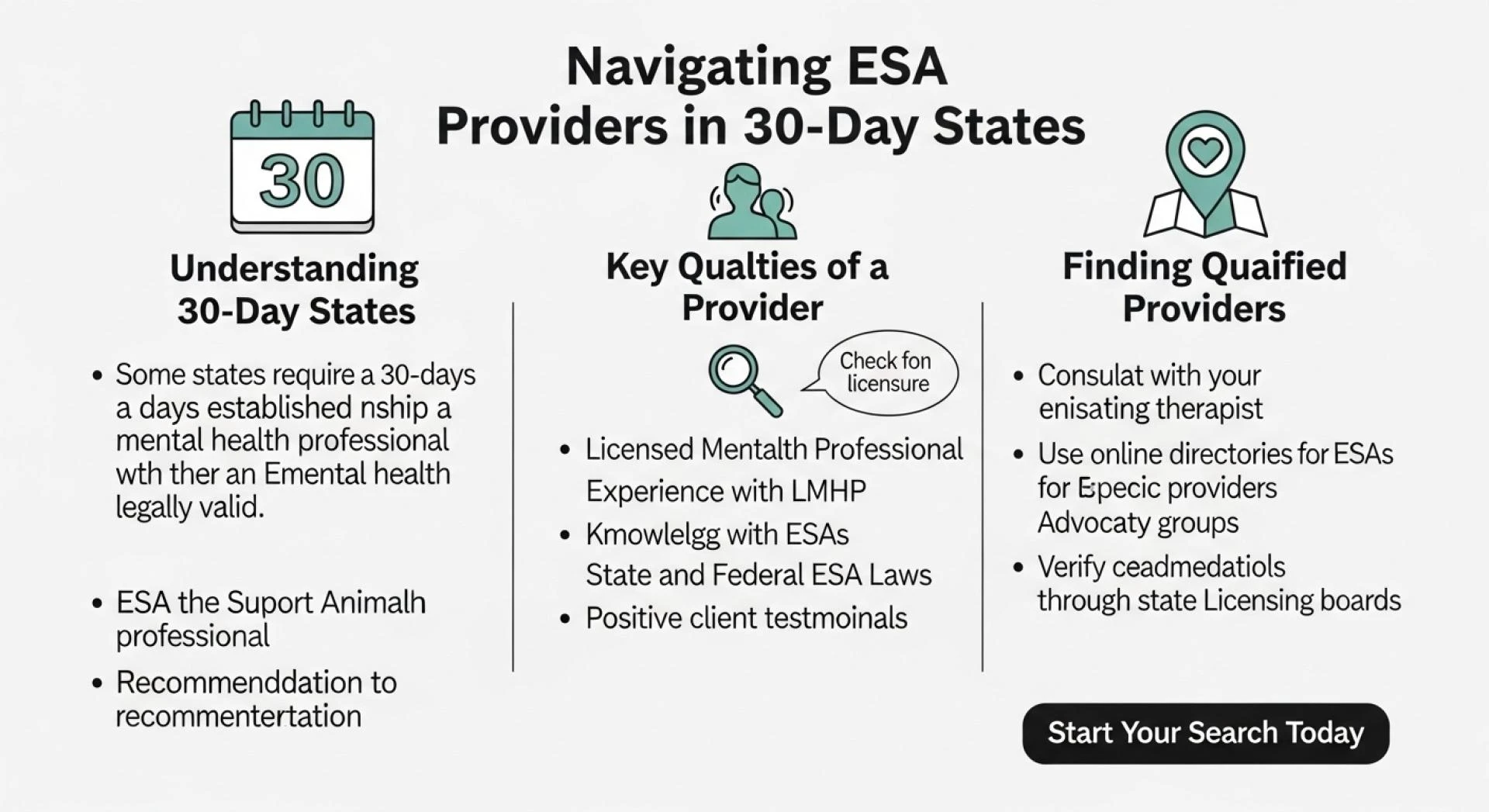

Emotional Support Animals (ESAs) play an increasingly important role in helping individuals manage mental and emotional health conditions such as anxiety, depression, PTSD, and chronic stress. For many tenants, an ESA provides comfort, emotional balance, and stability that improves daily life and housing security. As awareness grows, so does the need for legally valid ESA letters issued by qualified professionals.
Finding a legitimate ESA provider can feel confusing, especially in states that follow a “30-day relationship” requirement before an ESA letter can be issued. These rules exist to protect tenants, landlords, and licensed professionals from fraud while ensuring that emotional support needs are genuinely evaluated. This guide explains how to find qualified ESA providers in 30-day states, what to expect during the process, and how to avoid common pitfalls.
Understanding 30-Day ESA States
A 30-day ESA state requires that a tenant establish a professional relationship with a licensed mental health provider for at least 30 days before receiving an ESA letter. This rule prevents instant approvals and encourages proper mental health evaluation.
States with these requirements aim to ensure ESA letters reflect legitimate clinical judgment rather than automated approvals. For tenants, this creates stronger legal protection. For landlords, it offers confidence that documentation meets professional standards.
Ethical platforms such as RealEsaLetter support this process by connecting tenants with licensed providers who follow state-specific timelines and evaluation standards.
What Makes an ESA Provider Qualified
A qualified ESA provider must meet several criteria:
- Hold an active mental health license
- Practice within the tenant’s state or meet state telehealth rules
- Conduct a real clinical evaluation
- Maintain professional accountability
- Follow federal and state housing laws
Licensed professionals include psychologists, psychiatrists, licensed clinical social workers, and licensed professional counselors. Their role involves assessing whether an emotional support animal helps reduce symptoms related to a mental or emotional condition.
Qualified providers prioritize ethical care over speed, ensuring ESA letters hold up during landlord verification.
Why Speed-Based ESA Services Create Problems
Many websites promise instant ESA letters within minutes. These services often skip clinical evaluations or rely on automated questionnaires. In 30-day states, such letters frequently lead to denial.
Landlords increasingly recognize invalid documentation and may reject letters lacking proper provider credentials or relationship timelines. Tenants then face stress, delays, or housing insecurity.
Working with licensed professionals who follow state timelines provides stronger protection and credibility.
Establishing a 30-Day Provider Relationship
Establishing a 30-day provider relationship involves more than a single consultation and is designed to confirm genuine mental health need. The process usually begins with an initial intake and mental health screening, followed by ongoing communication or follow-up sessions with the licensed provider.
During this time, the therapeutic relationship is properly documented, and an ESA recommendation is made only after a thorough evaluation. This approach helps ensure the ESA letter reflects clinical judgment rather than convenience. Tenants should keep records of appointments and communications, as landlords may request verification of the provider relationship.
Montana ESA Letters Explained
Montana follows federal Fair Housing Act guidelines and does not have a statewide ESA statute, but documentation standards still matter. Tenants seeking an esa letter montana must work with a licensed mental health professional who can verify the emotional need for an ESA.
Landlords in Montana may request reliable documentation and confirm provider credentials. While pet fees cannot be charged for ESAs, tenants remain responsible for damages caused by the animal.
Understanding Montana ESA Laws
When discussing montana esa laws, it is important to understand how federal housing protections apply. Under the Fair Housing Act:
- Landlords must provide reasonable accommodation for ESAs
- Breed, size, or weight restrictions do not apply
- Additional pet rent or deposits are prohibited
- Documentation may be verified but not excessively questioned
Montana landlords can deny requests only if the animal poses a direct threat or causes undue property damage.
ESA Registration Myths Explained
Many tenants encounter websites offering ESA registration numbers, badges, or certificates. This leads to confusion and legal issues. is esa registration a scam is a common question, and the answer is yes.
There is no government-recognized ESA registry. Housing providers rely on licensed mental health letters, not registration databases. Paying for registration alone does not grant housing rights. Understanding this distinction helps tenants avoid wasted money and denied accommodations.
Identifying Fraudulent ESA Platforms
The internet contains many misleading services. fake esa sites exposed typically share these warning signs:
- Guaranteed instant approval
- No licensed provider listed
- Missing license numbers
- No evaluation or follow-up
- Emphasis on certificates over letters
Ethical platforms clearly explain the evaluation process, provider credentials, and state compliance requirements.
How Landlords Evaluate ESA Requests
Landlords must balance tenant rights with property responsibilities. A frequent question from tenants is can a landlord deny an esa.
Yes, but only under specific circumstances, such as:
- Invalid or unverifiable documentation
- Animal poses a direct safety risk
- Accommodation causes undue financial burden
Denial cannot be based on personal preference, breed bias, or emotional discomfort with animals.
Why ESA Requests Are Sometimes Declined
Tenants often wonder why we turn down esa letter requests. Common reasons for ESA request denial include situations where the provider does not hold proper licensing or when there is no clearly established therapeutic relationship between the tenant and the mental health professional.
Requests may also be declined if the ESA letter is missing required details or if it is submitted after documented lease violations. In some cases, evidence of misrepresentation can further weaken a request. Understanding these factors helps tenants prepare stronger, more accurate documentation and significantly reduces the risk of rejection.
ESA Approval Rates and What Influences Them
ESA approvals depend on documentation quality, provider legitimacy, and tenant communication. esa approval rates are significantly higher when letters come from licensed professionals who follow state guidelines.
Factors that improve approval chances include:
- Clear clinical explanation
- Accurate provider credentials
- Timely submission
- Professional tenant-landlord communication
Ethical evaluation processes lead to smoother approvals and fewer disputes.
How to Choose the Right ESA Platform
When choosing the right ESA platform, tenants should prioritize credibility over speed to avoid complications or denied requests. A reliable service should provide access to licensed mental health professionals, follow state-specific legal requirements, and offer clear, upfront pricing without hidden charges. Transparent timelines are also important so tenants understand the evaluation process and expected approval period.
In addition, ongoing professional support helps ensure that documentation remains accurate and compliant. Platforms that focus on educating tenants and conducting proper evaluations, rather than rushing approvals, generally provide stronger legal protection and greater peace of mind.
Telehealth and ESA Evaluations
Telehealth has expanded access to mental health care, including ESA evaluations. Many 30-day states allow telehealth relationships if providers meet licensing requirements.
Tenants should confirm that providers hold valid licenses in the correct state and document follow-up communication across the 30-day period.
Communicating With Landlords Effectively
Clear and respectful communication improves outcomes. Tenants should submit ESA letters professionally and avoid oversharing medical details. Landlords are entitled to verification but not diagnosis disclosure. Keeping communication factual and timely builds trust and reduces conflict.
Responsibilities After ESA Approval
After receiving ESA approval, tenants carry important responsibilities to maintain a positive and lawful housing arrangement. The emotional support animal must remain well-behaved and under control at all times to avoid disturbances or safety concerns for others.
Tenants are also responsible for preventing property damage and may be held financially accountable if their animal causes harm to the unit or shared areas. In addition, all local animal regulations, such as vaccination, licensing, and leash requirements, must be followed.
While landlords cannot charge pet fees or deny approved accommodations without valid reasons, they retain the right to take action if an ESA poses a genuine safety risk or causes significant property damage.
Long-Term ESA Documentation Management
ESA letters should remain current. While no federal expiration date exists, many providers recommend annual renewal to reflect ongoing mental health needs. Maintaining updated documentation ensures continued housing protection.
The Role of Ethics in ESA Services
Ethical ESA services protect both tenants and landlords. Proper evaluations reduce abuse of accommodation laws and preserve ESA credibility. Tenants benefit from stability, while landlords gain confidence in documentation validity.
Building a Compliant ESA Path
Finding a qualified ESA provider in a 30-day state requires patience, awareness, and informed decision-making. Rushed approvals and registration shortcuts often lead to denial and frustration. By focusing on licensed professionals, proper timelines, and ethical platforms, tenants can secure legally protected housing accommodations.
When ESA documentation is handled responsibly, emotional support animals continue providing meaningful mental health benefits while maintaining fairness within the housing system.



























Sign in to leave a comment.