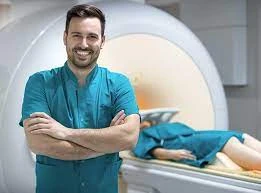

Radiography technician-behind the scenes medical professionals who are not at the top of minds but in demand niche in the healthcare careers. If you are residing in Singapore and are interested in this career, then you might have questions like : What does a radiographic technician do? What skills do they need? How much do they make? How to get a radiography technician job in Singapore?
Before you set off exploring this exciting new career path, you require some information. Luckily, this blog has all the answers to your questions and much more. Read on further for a closer look at the crucial role of a radiographer.
What Is Diagnostic Radiography?
Fundamentally, diagnostic radiography is the process of creating diagnostic images of the human body using advanced equipment. The study of radiography mainly encompasses radiological technology and radiography practice. Typically, radiologists use these images to treat the damage or sickness that has happened to the patient.
In reality, they are the essential members of the healthcare teams. Their main work is to apply their professional training to provide compassionate and patient oriented treatment.
Radiographers deal with a variety of procedures and equipment including Computed Tomography(CT), ultrasound, Magnetic Resonance Imaging(MRI) and X-ray.
However, the specialized contexts in which they work comprises: mammography, fluoroscopy, nuclear medicine and interventional radiology. Besides patient treatment, they are active in the areas of health care such as education, research, and administration.
Radiography Technician Job Description
A radiography technician works with a radiologist to treat and diagnose patients using diagnostic imaging examinations like CT- scans, X-rays and MRI scans. The major work is to prepare the equipment and patients for radiology procedures, perform the tests and maintain the equipment.
How To Become A Diagnostic Radiographer?
Becoming a Diagnostic Radiographer can take up to a few years of education and training. Outlined below are the steps on how to become a radiography technician:
Pursue Your Education
Like other healthcare careers, it is a prerequisite to have a bachelor degree in diagnostic radiography or even in a closely related field. The duration of such courses is four years.
However, it is your personal desire that you want to go for masters or postgraduate courses that would take 2 years to complete. One thing that you need to be mindful regarding the selection of courses is that the course you have selected is recognized and endorsed by the Allied Health Professionals Council (AHPC).
However, there is always a chance of learning skills to become successful healthcare professionals via the usage of practical learning approaches.
Apart from weekly lectures and tutorials, you may gain exposure to a professional placement to prepare yourself for a healthcare profession. In the end, you usually work on thesis projects and study on the research data in preparation for professional practice in the final year.
Fulfill A Residency
Following qualifications, you can go for completing residency. Basically, a residency is an internship in which you can receive hands-on- instruction at a hospital, often. It generally lasts for four to five years. The first year is typically spent on practicing surgery and general medicine, and the consequent years are devoted to radiography.
The residency program is a good source of experience for doctors, physicians, and radiographers. Throughout the time of residency, you can experience advising patients, evaluating imaging the study data and working among other physicians.
Enroll In A Fellowship Program
Mostly, graduates attend and enroll themselves in a fellowship program. The span of these programs mainly varies between one and two years, when you can learn more about radiology specialization.
The areas of specialization are:
Chest RadiologyNeuroradiology Interventional radiologyCardiovascular radiologyPediatric RadiologyMusculoskeletal Radiology
The main motive behind the fellowship is to provide you with the latest training, whereby you can study advanced procedures related to the job.
Become Licensed And Board-Certified
After the completion of your degree, residency and fulfillment of the fellowship program, you are ready to put all that you have learned into practice and work as an independent diagnostic radiographer.
But, all this is not possible without the license of your area. Nowadays, employers even prefer licensed radiographers who are board-certified.
Once you obtain all these qualifications, you are well-equipped and prepared to apply for a full time job as a diagnostic radiographer.
What Skills Help Technicians Find Jobs?
The above written qualifications are important for the beginning of your radiography career. But, knowledge plus skill will give you 100% success. Let’s have a look at the popular skills that you need to inculcate in yourself, if you want to become a successful radiologist:
Communication SkillsAnalytical SkillsAttention To DetailMathematical ReasoningTeamworkVerbal CommunicationTime ManagementReliabilityCritical ThinkingProblem-Solving
Jobs In Radiology
If you want to decide a career option in the field of radiology, there are a variety of positions you can pursue with an education in radiology. Following are the different jobs in the field of radiology. Let’s have a look:
Nuclear Medicine Technologist
The primary duty of the nuclear medicine technologist is to utilize and administer special radioactive drugs to patients so that they can track through nuclear imaging tests. These drugs and tests are useful for the patients who are suffering from the ailments of liver, brain, and heart.
MRI Technician
An MRI technologist or technician is one who is well-trained in the operation of an MRI machine. The technician is well versed with the usage of MRI machines and can understand the results easily.
His primary work is to help the patients through the testing process, review their results of the tests and deliver the information to the patient’s doctor or physician.
Ultrasound Technician
An ultrasonography or ultrasound technician is a medical professional who is specialized in operating ultrasound machines and other high frequency imaging equipment.
Their major work is to detect the problem inside the patient and help the physician in such conditions. For pregnant women, the ultrasound machines are used to ensure the health of the baby inside the womb of the mother.
Cardiovascular Technician
The cardiovascular technician works directly under the cardiologist or radiologist. His main work is to provide diagnosis and care to cardiac and vascular health-related diseases.
Specialized imaging technology is used to treat the cardiovascular system of the patient and delivers the final results to the concerned care physician.
Radiology Specialist
Radiology specialist or technician is the one who focuses their training and education on a certain practice. The area of specialization could be mammography, CT scanning or X-ray scanning. Thus, a radiologist has more clear ideas and can provide more detailed information and can help in a better way in the concerned field.
Radiologist
The radiologist is the medical doctor who has specialization in finding and treating disease or any illness using imaging technologist. He often works with the radiologic technician who assists them in the work and treatment of patients.
Radiation Therapist
A radiation therapist is specialized in treating patients by administering radiation. Majorly, these therapists work with the cancer patients and their chemotherapy treatments.
Radiology Manager
A radiology manager is the one who oversees, or you can say administers, the many radiology departments and technicians of the healthcare facility or hospital.
Their main work is to create the schedules of the staff, train the employees and to basically ensure that the healthcare practices of the hospital are following the laws and policies of the healthcare system or not.
Final Thoughts
In the end, if you are looking for a job of radiographer or sonographer or any job in the radiology department in Singapore, then there is a Nucleus Health consultancy services in Singapore, who acknowledge medical talent and thus offer Singapore medical jobs.
The passionate and experienced consultants work collaboratively with candidates and help them in achieving success.
0




























Sign in to leave a comment.