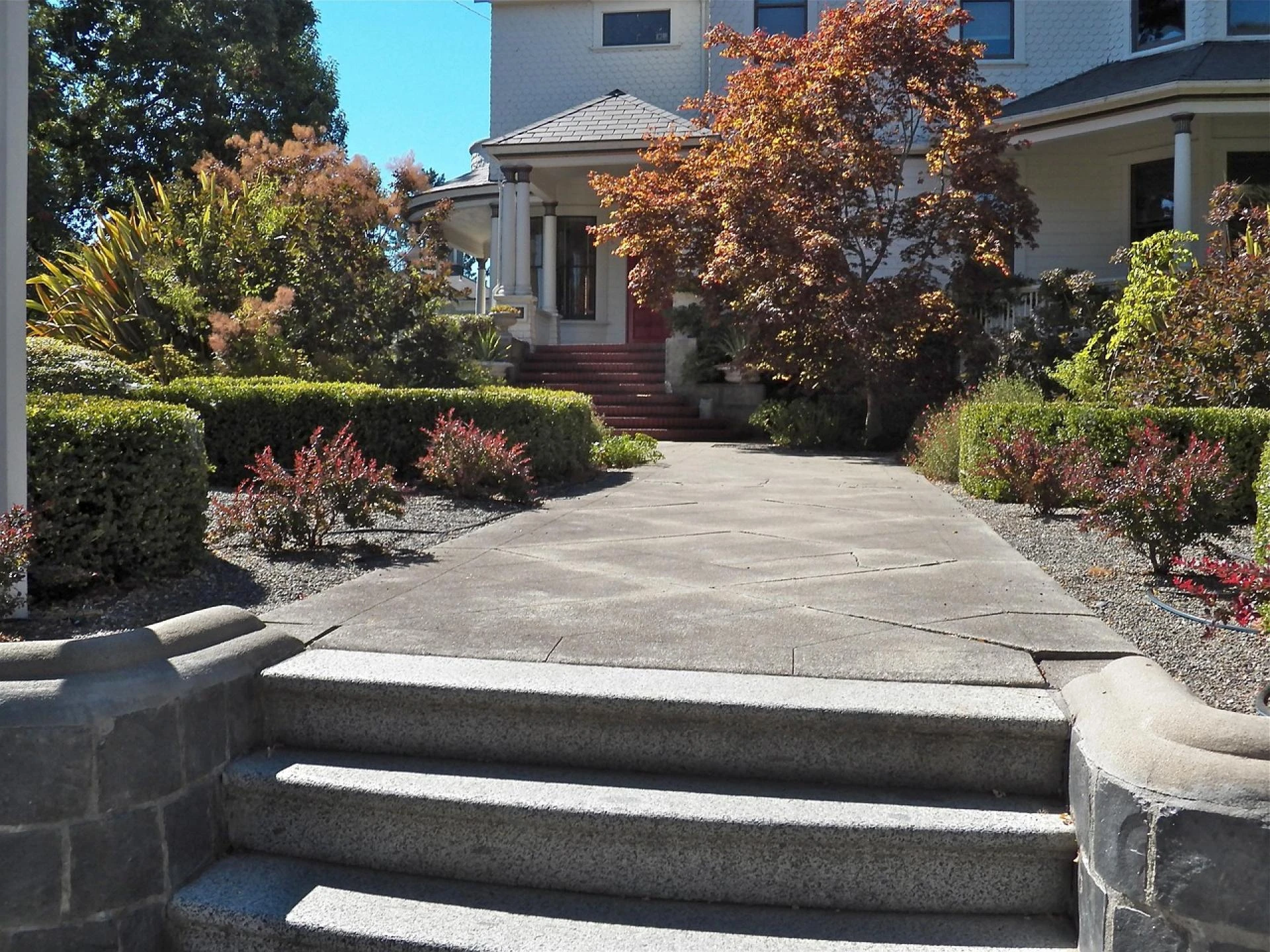

- A well-framed entry or walkway extends an inviting, warm welcome to your home or business.
- Layering, symmetry, coloring, and lighting all work together to create visual flow.
- Thoughtfully designing your framing turns a potentially boring functional area into a focal point.
Entrances and pathways don’t just get people from the parking lot or curb to your front door – they’re the welcome mat to your home or business. Think of them like an inviting visual thread that connects spaces and invites people in.
Thoughtfully framing these areas can transform them into a focal point for your property, upping the personality, structure, and charm of almost any building. Here’s how to frame your entrances and pathways for maximum impact.
1. Think in Layers
From fashion to hairstyles to even a great tiramisu, layering adds a certain “je ne sais quoi” to just about anything. It’s a key element in framing, too. So don’t just flank your doorway or path with identical items – think in layers. Sprinkle in features in the foreground, midground, and background to maximize visual impact.
Start at the curb. Plant low ground cover, then further in add some medium-high planters or shrubs. Finish with a flourish at the door, with tall, bold elements like an archway or trellis. Layering like this guides the eye forward and makes everything feel visually richer.
2. Use Repetition
Did you know that our brains seek patterns and familiarity? That makes repetition a simple trick to add unconscious appeal. Placing similar elements – such as lanterns or planters – at regular intervals along a walkway gives your entry a secretly pleasing rhythm.
Using square planter boxes for this technique works especially well. They’re geometric and architectural while teeming with eye-catching greenery. Use them symmetrically for a formal look, or stagger them in a repeated pattern for something more relaxed yet still connected.
3. Consider Symmetry and Asymmetry
If repetition is the great beat, then symmetry is the melody that turns random notes into beautiful music. It creates balance and order. Think:
- Two matching planters at the base of your porch
- A pair of hanging baskets on either side of your door
- Identical topiaries at the entrance to your property
Funny enough, asymmetry is powerful, too, especially if you’re after an organic or modern vibe. Try a single, oversized potted plant set off by a bench or sculptural piece on the opposite side of a pathway.
With asymmetry, you can capture a look that’s somehow perfect without feeling matchy-matchy. The trick is to match the visual weight of the pieces you’re using so the view still feels balanced.
4. Incorporate Color
Color has such an influence on thought and emotion that there’s an entire academic field devoted to it – color psychology. It’s a powerful way to frame a pathway or entrance. A front door color that contrasts with the house itself, brightly glazed planters, or a boldly toned gate can spark a feeling.
Of course, one false move with color and you create chaos. Pick a palette and repeat it with the materials, flowers, and foliage you use throughout your space – the tighter the palette, the more intentional your choices come off.
5. Emphasize With Lighting
Well-placed lighting serves many purposes, including making pathways safer to traverse. But it can also be a transformative design element, accentuating your entrance and adding enticing drama after dark.
Use low-level path lights to trace curves and edges, and incorporate uplighting to put trees and architectural elements in the spotlight. You can also use lighting to frame areas, placing fixtures at your gateway or around a trellis. For even more of a pop, light planters, columns, and other vertical pieces from below to create striking shadows that add dimension.
6. Check Every Angle
Most of us check the mirror before we leave the house, spinning a bit to catch how we’ll look to others from the front, side, and back. Take a cue from this habit when framing a path or entrance. Does your entrance draw your attention when driving down your street? How does it look from the driveway or when peering out your windows?
Seeing things from a different perspective can give you fresh inspiration. It’s a chance to play with all of the design elements noted here to up their impact from every angle.
Final Thoughts
In the end, it’s really about balance – taking all of these ideas and blending them to create a beautiful, inviting entrance. Just remember that while the best designs feel effortless, they’re usually the result of a lot of thought, planning, and trial-and-error. By using these pathway and entrance ideas as your jumping-off point, you’re well on your way toward turning your entryway into an unforgettable space.


































Sign in to leave a comment.