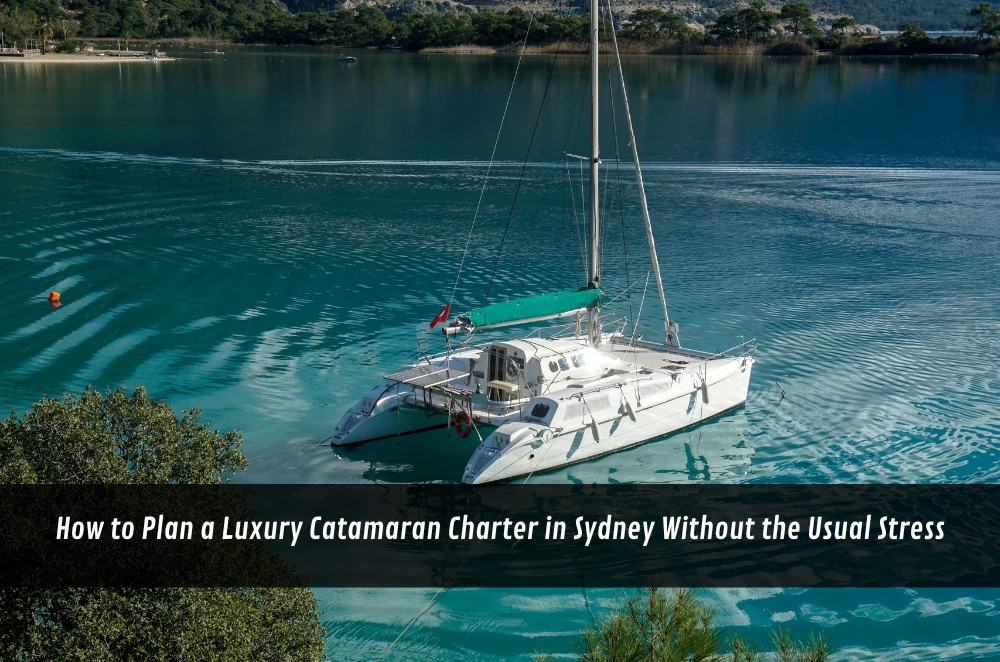

Sydney Harbour can make any gathering feel bigger than it is, but it adds moving parts that land venues don’t have.
A luxury catamaran charter in Sydney feels premium when comfort and timing are designed first, and the extras are added last. Catamarans can suit groups well because they’re often stable, social, and set up for mingling rather than sitting in rows.
Sydney Harbour rewards organisers who plan for movement, not perfection.
What “luxury” looks like on the harbour
Luxury is shade that actually covers the group, seating that doesn’t force people to perch, and amenities that stay clean as the day goes on. It’s also safe boarding and a crew who keeps things smooth without making the experience feel micromanaged.
Comfort beats hype every time.
Wind, chop, and wharf congestion can change the vibe quickly, so a realistic run sheet matters as much as the boat.
Decision factors to get right before you pay a deposit
1) Start with the purpose
A birthday, client event, and engagement celebration can share the same views, but they need different run sheets and different “must-haves”. If speeches, a cake moment, or a proposal is part of the plan, build in a calm pause and don’t stack it right after boarding.
2) Match the boat to the group, not the photo
Consider mobility, footwear, and how many people will want to stand and mingle versus sit and eat. Bigger groups usually need more space and clearer structure to avoid bottlenecks.
If the pickup is painful, everything feels harder.
3) Pick timing that works with Sydney reality
Early sessions can feel calmer, but they demand punctuality. Late afternoons can be stunning, yet they often collide with peak wharf activity and slow arrivals from traffic and last-minute work handovers. Either way, leave buffer for docking and boarding because those minutes add up fast.
4) Confirm inclusions versus add-ons
Inclusions are where budgets quietly blow out.
Two charters can look similar until you price what’s assumed: ice, eskies, serving gear, cleaning, crew support, fuel, pickup points, and how strictly time is measured. To sanity-check what’s typically included (and what’s commonly optional), compare your run sheet against nearby catamaran hire for celebrations before locking anything in.
5) Decide the food and drink plan early
Catering and BYO affect transport, storage, serving, and rubbish. If BYO is involved, assign two people to own supplies and loading so the organiser isn’t doing wharf logistics in party clothes. If alcohol is involved, plan water and food first, and set a simple cutoff so the end-of-charter pack-down stays calm.
6) Set the tone with one clear “anchor moment”
Pick one moment that defines success: a toast, a short speech, or a photo block. Then protect it with buffer instead of cramming in more “stuff”.
Common mistakes that create day-of stress
Boarding time is the silent schedule killer.
People rush the first hour because they underestimate boarding, and that’s when guests decide whether the day feels premium or messy. Vague details backfire too, because you’ll spend the charter answering the same questions instead of enjoying it.
Overpacking food and décor while underpacking comfort items (a light layer for wind, sunscreen, motion comfort) is another classic miss.
A simple 7–14 day action plan
Days 1–2: Confirm date window, headcount range, and the one key “moment” (speech/cake/photos).
Days 3–4: Choose departure time and pickup logic based on how guests will actually travel.
Days 5–7: Draft a three-block run sheet: boarding + settle, main cruise, calm “moment” slot with buffer.
Days 8–10: Lock the food plan and assign roles (arrivals, supplies, music/photos).
Days 11–14: Send a one-paragraph guest note: arrival time, what to bring, footwear guidance, and the key moment to be on time for.
Operator experience moment
On group charters, the first ten minutes set the tone for everything that follows. When boarding is calm and the first drink or snack is intentional, the day instantly feels premium. When boarding is chaotic, the rest of the charter quietly spends time recovering.
Local Sydney mini-walkthrough for SMB organisers
Choose a pickup spot that suits rideshares and public transport, not just parking.
Ask guests to arrive 15–20 minutes early, because Sydney groups rarely land all at once.
In summer, prioritise shade, water, and sunscreen before worrying about styling.
In cooler months, assume it’s windier on the water than on land and recommend a light layer.
Schedule speeches/photos for a calmer segment, not while manoeuvring near busy wharves.
Have a nearby post-charter plan, because Sydney traffic can make “we’ll decide later” feel messy.
Practical opinions
If the plan is complicated on paper, it will be harder on the day.
A shorter run sheet with buffers usually beats a long list of extras.
The clearest luxury signal is a relaxed organiser halfway through.
Setting expectations so everyone enjoys it
Weather is a variable, not a villain.
A harbour charter isn’t a restaurant, nightclub, and photoshoot all at once, and treating it like one is how organisers burn out. Keep the brief simple: be early, dress for wind and sun, and know when the key moment is happening.
Clarity feels like luxury.
That clarity gives the crew room to deliver a smoother experience even if conditions or route choices need to change.
Key Takeaways
- Luxury comes from comfort, flow, and realistic timing more than add-ons.
- Decide early on purpose, pickup logistics, and inclusions versus extras.
- Use a three-block run sheet with buffers and assign roles to reduce organiser load.
- Communicate what to bring and plan for wind and weather changes on the harbour.
Common questions we hear from Australian businesses
How far ahead should we book for a team event?
Usually the earlier the better once a date window exists; in Sydney, Fridays and the November–December period tighten quickly. A practical next step is to shortlist two time windows (not one) so there’s flexibility.
What’s the simplest way to control cost without it feeling “cheap”?
In most cases, costs stay under control when inclusions are clear and the run sheet stays simple, because late add-ons are where budgets creep. A practical next step is to write a “must-have” list (timing, shade, food plan) and remove anything that doesn’t serve the purpose.
What should staff bring so they’re comfortable and presentable?
Usually a light layer, sun protection, sensible shoes, and a phone charger covers most situations. A practical next step is to send a short packing note 48 hours prior; on Sydney Harbour it can feel cooler on the water than on land.
What if the weather turns on the day?
It depends on conditions and the operator’s safety call, but the best outcomes happen when expectations are set early. A practical next step is to plan a “Plan B” for the key moment so it can happen during a calmer segment; in Sydney, wind direction can change which areas feel most comfortable.

























Sign in to leave a comment.