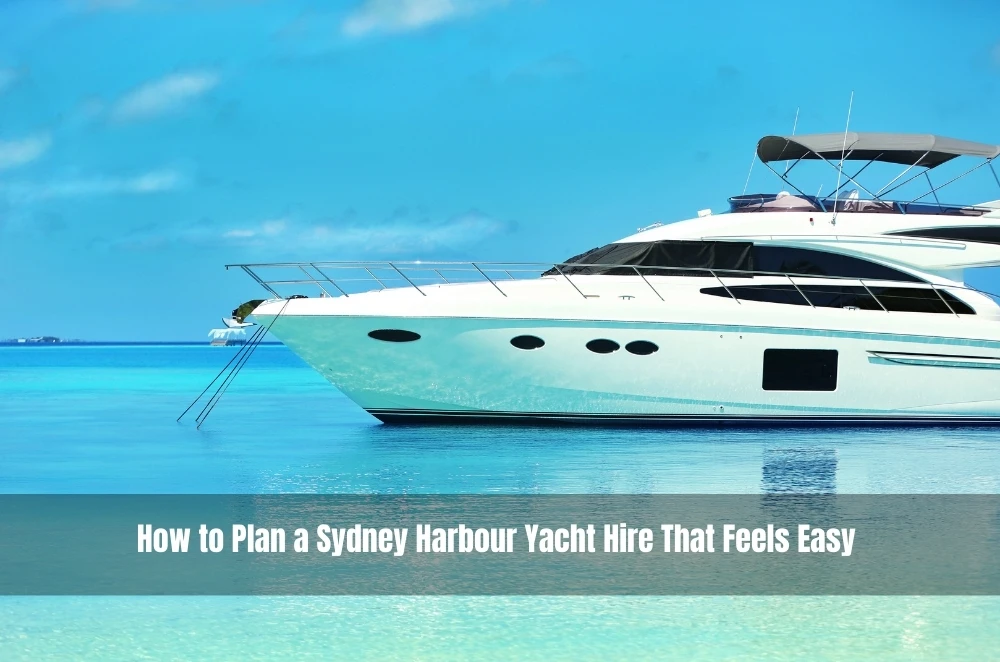

Sydney Harbour does most of the heavy lifting: the views are built in, the photos look good, and everyone arrives in a better mood than they expected.
What trips people up is the organising—small decisions that sound minor online but matter a lot once you’re actually stepping onboard.
If you want the day to feel “effortless”, plan it like you’re hosting a good dinner, not like you’re buying a product.
Pick the feeling first, then choose the charter that supports it.
Start with the outcome (keep it simple)
Before you look at boats, write one sentence: “We want a ___ experience for ___ people, for ___ hours, where ___ is the main thing.”
That line keeps you from chasing shiny features you won’t use.
It also makes comparing options way less confusing because you’re comparing outcomes, not marketing names.
Typical outcomes are: a milestone celebration, a quiet proposal, a client afternoon that stays professional, a team wind-down, or “we just want a classic harbour cruise and a sunset moment.”
Decision factors that actually change the day
Timing and duration: A short charter can be perfect—tight, fun, no one gets tired.
But longer time buys calm, especially if you want food onboard or you’ve got a group that never arrives all at once.
Comfort vs capacity: The number a boat can take and the number that feels good are not the same thing.
If you want people standing, mingling, moving around for photos, you need space that suits that, not just seats.
Weather resilience: Sydney can be gorgeous and still feel cold on the water.
A bit of cover and wind protection can be the difference between “this is unreal” and everyone huddling in one corner.
Food, drink, and service level: BYO is flexible, but it can quietly turn the organiser into a logistics manager.
Catering costs more, yet it often makes the whole thing feel smoother because nobody’s asking who brought the ice.
Route and “moments”: You don’t need a complex itinerary.
Two or three planned beats (a big view, a calmer stretch, a sunset pass) usually lands better than a checklist.
Common mistakes that wreck the vibe (and how they happen)
People choose a boat charters around Pittwater and Northern Beaches because it looks impressive, then realise there’s not enough shade or it’s awkward for mingling.
It’s nobody’s fault—photos don’t show wind, glare, or whether ten people can actually move around comfortably.
Another classic is assuming inclusions.
Ice, glassware, a spot to prep food, speaker connections, towels—these vary more than first-timers expect.
Arrivals are the sneaky one.
Even organised groups arrive in waves, and if the meet-up point isn’t crystal clear, the charter starts with phone calls instead of excitement.
And then there’s the “too much planned” trap.
Most groups don’t want five activities; they want one good flow and enough time to enjoy it.
A simple 7–14 day plan (so you’re not scrambling)
Days 1–2: Lock the basics: date window, headcount, rough start time, and the one priority that matters most (privacy, photos, swim, hosting, comfort).
If there are kids, mobility needs, or a hard finish time, write that down now—not later.
Days 2–4: Shortlist two options and compare them like-for-like: layout, cover, inclusions, boarding location, and what you must bring.
If you want a quick reference point for typical durations, group sizes, and what’s often included, the Sydney Harbour yacht experiences for day trips can help you sanity-check your shortlist without overcomplicating it.
Days 4–6: Decide food and who “owns” the small stuff on the day.
If you’re the main host, assign one reliable person to handle arrival messages, music, and the inevitable “where do I put this?” questions.
Days 6–10: Write a simple run sheet—five lines is enough: meet-up point, boarding window, first highlight moment, food timing, final highlight.
Send it to guests in one message with what to wear and what to bring (yes, including a jacket).
Days 10–14: Confirm final numbers and check the forecast with a comfort mindset, not a hope mindset.
Even if the sky’s blue, plan for wind and temperature drops later in the session.
Operator Experience Moment
The charters that feel “premium” aren’t always the fanciest; they’re the least chaotic.
When the organiser chooses one clear outcome, communicates the meet-up properly, and leaves breathing room in the plan, guests relax faster and the day runs itself.
Local SMB mini-walkthrough (Sydney Harbour + Pittwater)
A Sydney small business hosting clients picks a weekday afternoon to dodge weekend crowd energy.
They choose a meet-up spot that works for rideshares and has a dead-simple landmark.
They start mid-afternoon so the vibe builds into golden hour without running too late.
They keep food light (grazing or canapés) so people can talk without plates getting in the way.
They tell everyone to bring a layer because it’s often cooler on the water than on land.
They nominate one coordinator so the main host stays focused on clients, not logistics.
Practical Opinions
Comfort and cover beat “best-looking boat” when your date can’t move.
Two or three planned moments is plenty; the rest should feel unhurried.
A clear meet-up message is the cheapest upgrade you can make.
Key Takeaways
- Decide the outcome first, then choose timing, layout, and inclusions to match it.
- Compare options by comfort and what’s included, not by package names.
- Use a five-line run sheet so the day flows without you managing everything.
- Plan for wind and temperature shifts so guests stay happy.
Common questions we hear from Australian businesses
How far ahead should we book?
It depends on the season and the specific time slot you’re aiming for.
Next step: lock your headcount and pick a date window (two or three options) before you start enquiries.
In Sydney, weekend and warm-weather dates tend to tighten up faster than people expect.
What should guests wear on a harbour charter?
Usually smart-casual with sensible shoes and a layer you can throw on when the wind picks up.
Next step: send one short message that covers shoes, a light jacket, and sun protection so nobody has to guess.
On Sydney Harbour (and up toward Pittwater), it can feel noticeably cooler once you’re away from the shore.
Is a longer charter always better value?
In most cases, value comes from not feeling rushed, not from adding hours for the sake of it.
Next step: sketch your run sheet and see if your “must-have” moments fit comfortably in the time you’re considering.
In Sydney, sunset timing and harbour traffic can change how full the same duration feels.
How do we keep it professional for client hosting?
Usually it comes down to smooth arrivals, confirmed inclusions, and a simple plan that supports conversation.
Next step: assign a non-host coordinator for meet-up and logistics so the main host stays present.
In busy Sydney foreshore areas, a clear landmark and a firm meet-up time reduce most of the friction.



























Sign in to leave a comment.