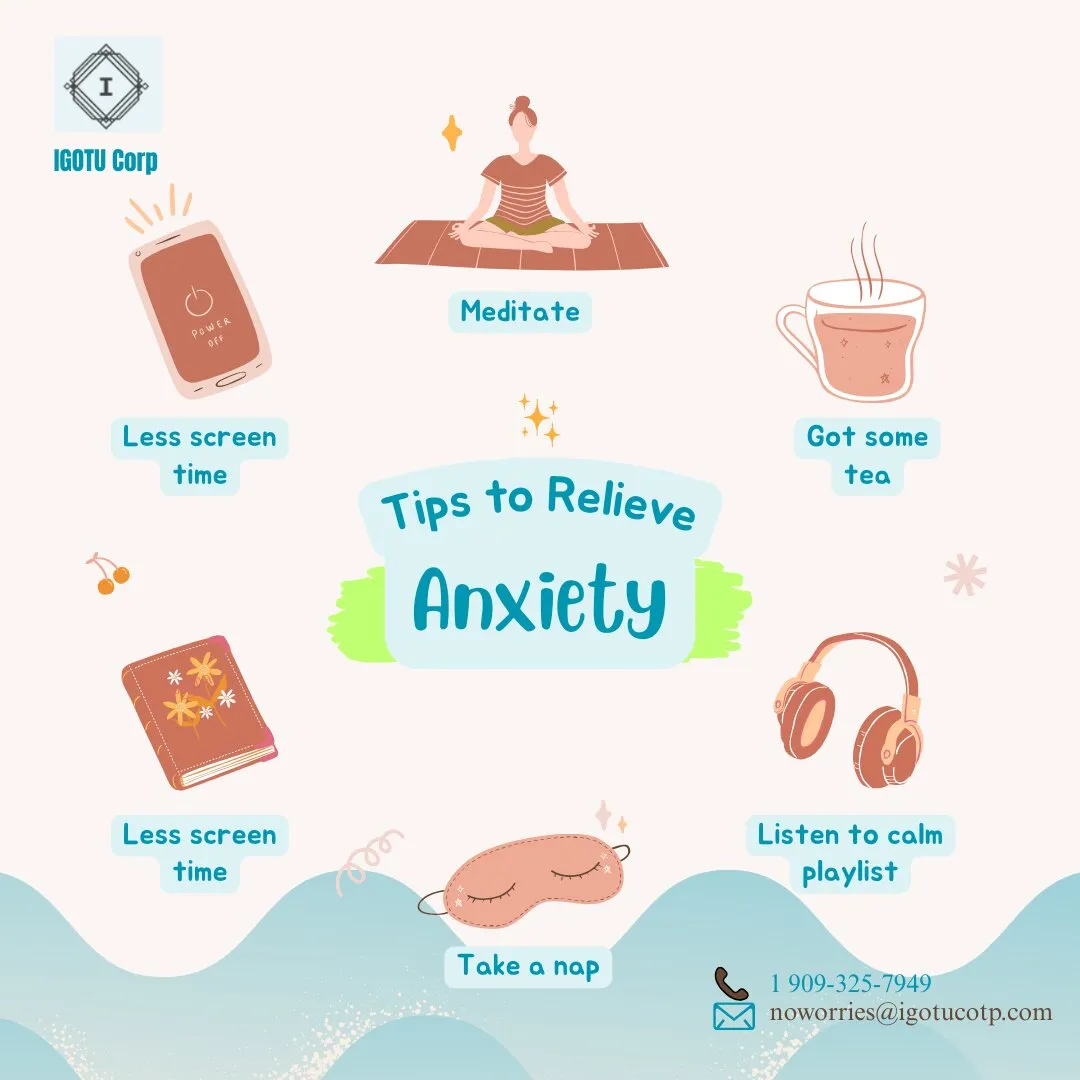

Anxiety rarely waits for a convenient time to strike. It hits in the middle of a work presentation, during a quiet evening at home, or right as you try to fall asleep. Suddenly, your heart is racing, your mind is flooded with worst-case scenarios, and your entire body enters a "fight-or-flight" survival mode.
While long-term healing requires digging into the roots of our emotional systems, we also need practical tools to find relief in the moments when anxiety feels entirely overwhelming.
How to Reduce Anxiety Immediately
When your nervous system is dysregulated, trying to "think your way out" of anxiety rarely works because the rational part of your brain has taken a back seat to survival. Instead, you have to use your body to send safety signals back to your brain.
Here are three immediate, physical strategies to interrupt a rising wave of anxiety:
- The 5-4-3-2-1 Grounding Method: Bring your awareness back to the physical room around you. Name 5 things you can see, 4 things you can touch, 3 things you can hear, 2 things you can smell, and 1 thing you can taste. This shifts your brain's focus away from internal panic and back to external reality.
- Box Breathing: Inhale deeply through your nose for a count of 4, hold that breath for 4, exhale slowly through your mouth for 4, and hold empty for 4. Repeating this for just two minutes lowers your heart rate and stabilizes your nervous system.
- Temperature Change: Splash ice-cold water on your face or hold an ice cube in your hand. The sudden temperature shift triggers the mammalian dive reflex, which physically slows down your heart rate and breaks the loop of racing thoughts.
Moving Beyond Quick Fixes to True Regulation
While immediate coping skills are essential for fast relief, they are like putting a band-aid on a deep wound. To experience lasting wellness, we have to look closer at what our anxiety is trying to tell us.
Anxiety is often an indicator that our emotional system is overloaded, boundaries are being crossed, or old traumas are being touched. True emotional regulation means moving past simply managing symptoms and instead learning to understand your emotional triggers through specialized approaches like Emotion-Focused Therapy (EFT) and Cognitive Behavioral Therapy (CBT).
Finding a Safe Space to Heal
No one is meant to navigate persistent anxiety or major life transitions in isolation. Modern life is demanding, but prioritizing your mental health has become highly accessible. Whether through the comfort and flexibility of online therapy sessions or traditional in-person care, professional support gives you the dedicated, non-judgmental space to heal.
Anxiety might be a natural stress response, but it doesn't have to dictate how you live your life. By combining immediate physical grounding tools with structured, personalized therapeutic support, you can reclaim your peace of mind and build a healthier, happier life from the inside out.




























Sign in to leave a comment.