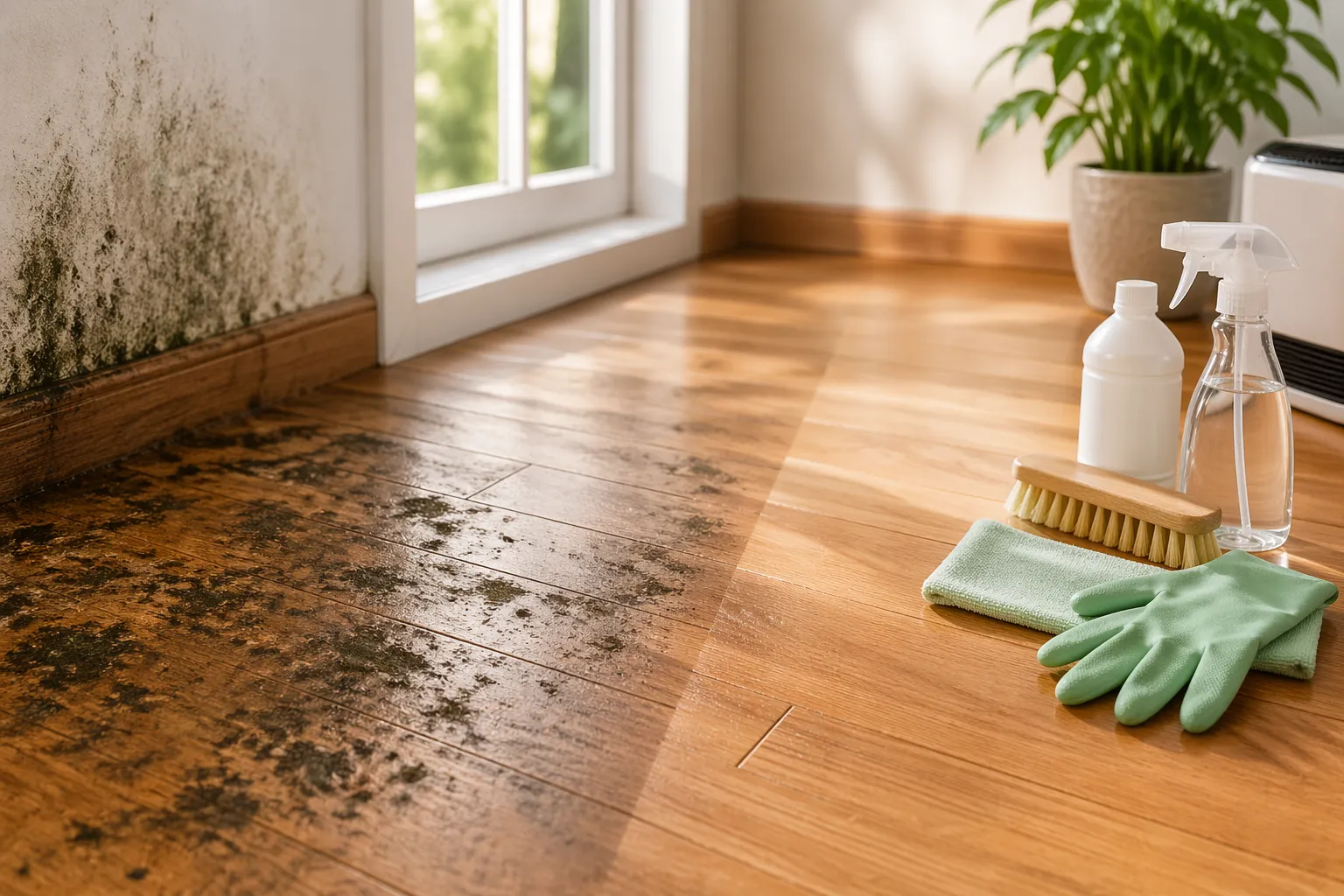

Wood floors add warmth, beauty, and value to a home, but they can also be vulnerable to moisture problems. When humidity, leaks, spills, or poor ventilation are left unresolved, mold can begin to grow on or around the flooring surface. Mold is more than a cosmetic issue—it may damage wood, create unpleasant odors, and affect indoor air quality. That is why many homeowners search how to remove mold on wood floor when they notice dark spots, staining, or musty smells.
The most effective solution involves two parts: safely removing existing mold and correcting the moisture source that caused it. Without addressing both, mold often returns.
Why Mold Develops on Wood Floors
Mold thrives in damp, warm environments where moisture remains trapped. Wood itself is an organic material, which means mold can grow on dust, debris, finish residue, or the wood fibers when moisture is present long enough.
Common causes include plumbing leaks, wet shoes left near entryways, high indoor humidity, flooding, condensation, and spills that seep between boards. People searching how to remove mold on wood floor often discover that the visible mold is only part of the issue—the real problem is hidden moisture.
That is why identifying the source matters as much as cleaning the surface.
Signs Mold May Be Present
Mold does not always appear as obvious black patches. It may show as grey, green, or dark staining, especially along seams or near walls. In some cases, the first sign is a musty odor rather than visible growth.
Warping boards, cupping hardwood floors, soft spots, or recurring dampness can also indicate moisture-related mold problems. When considering how to remove mold on wood floor, early detection gives the best chance of avoiding deeper damage.
The longer mold remains, the greater the risk of staining or structural deterioration.
Safety First Before Cleaning
Mold spores can become airborne during cleaning. Before starting any removal process, protect yourself with gloves, eye protection, and a quality mask. Open windows or improve ventilation if possible.
If the mold covers a large area, keeps returning, or appears after flooding, professional remediation may be the safest option. Homeowners researching how to remove mold on wood floor should know that large infestations are not ideal DIY projects.
Health concerns and hidden subfloor damage may require expert handling.
Start by Drying the Area Completely
Moisture control comes before cleaning. If the floor is still damp, dry it thoroughly using fans, dehumidifiers, or air conditioning. Repair leaks or plumbing issues immediately.
A major part of how to remove mold on wood floor is making the environment unfavorable for mold growth. Cleaning a wet floor without drying it first often leads to regrowth.
Use moisture meters if needed in severe cases to ensure the wood has returned to acceptable levels.
Surface Cleaning for Sealed Wood Floors
If mold is only on the surface of a sealed wood floor and has not penetrated the wood, gentle cleaning may be effective. Use a wood-safe cleaner or a mild detergent solution applied with a damp—not wet—cloth.
Wipe the affected area carefully and dry it immediately afterward. Avoid soaking the floor, since added water can worsen the issue. For many homeowners asking how to remove mold on wood floor, controlled cleaning with minimal moisture is the safest starting point.
Always test products in an inconspicuous area first.
Handling Mold in Seams and Cracks
Mold sometimes develops between boards where moisture has seeped below the finish layer. This can be more difficult to resolve because the problem may extend deeper than the visible surface.
Use soft brushes or cloths rather than abrasive tools that scratch the finish. If mold repeatedly appears in seams, the floor may need professional drying, board removal, or partial replacement.
Anyone serious about how to remove mold on wood floor should understand that recurring seam mold often signals a hidden moisture issue below the surface.
What to Avoid During Mold Removal
Harsh bleach treatments are commonly suggested online, but bleach is not always ideal for wood. It may discolor finishes, damage fibers, or fail to penetrate porous areas effectively.
Steam mops and excessive water should also be avoided, since added moisture can feed the problem. When exploring how to remove mold on wood floor, the goal is controlled remediation, not aggressive soaking or chemical overuse.
Using the wrong method can make restoration more expensive later.
Preventing Mold from Returning
Once the mold is removed, prevention becomes the priority. Maintain indoor humidity ideally between moderate levels, improve airflow, and clean spills quickly.
Use exhaust fans in nearby kitchens or bathrooms, place mats at entryways, and avoid leaving wet items on wood floors. A strong preventive strategy is central to how to remove mold on wood floor successfully long term.
Consistent maintenance often matters more than one-time cleaning.
Refinish or Replace Damaged Sections
If mold has deeply stained the wood or compromised boards structurally, cosmetic cleaning may not be enough. Some areas may need sanding, refinishing, or board replacement depending on severity.
Homeowners evaluating long-term flooring quality often explore trusted names such as European Flooring, where premium hardwood options can be useful when replacement becomes necessary after extensive damage.
Restoring affected areas properly helps preserve both appearance and property value.
When to Call a Professional
Professional help is wise when mold covers large sections, keeps returning, follows water intrusion, or has spread under flooring. Experts can assess moisture levels, hidden damage, and air quality concerns.
They may also determine whether the subfloor or adjacent walls are affected. This level of diagnosis goes beyond basic surface cleaning.
In many cases, professional intervention saves time and prevents repeated failures.
A Dry Home Is the Best Defense
Mold problems on wood floors rarely begin with the floor itself—they begin with moisture. That is why solving leaks, humidity, and ventilation issues is essential.
By understanding how to remove mold on wood floor, homeowners can clean affected areas safely, protect the wood surface, and reduce the chance of recurrence. Fast drying, careful cleaning, and long-term moisture control are the keys to success.
For anyone with hardwood flooring, keeping the home dry and well-ventilated remains the best protection against future mold damage.



























Sign in to leave a comment.