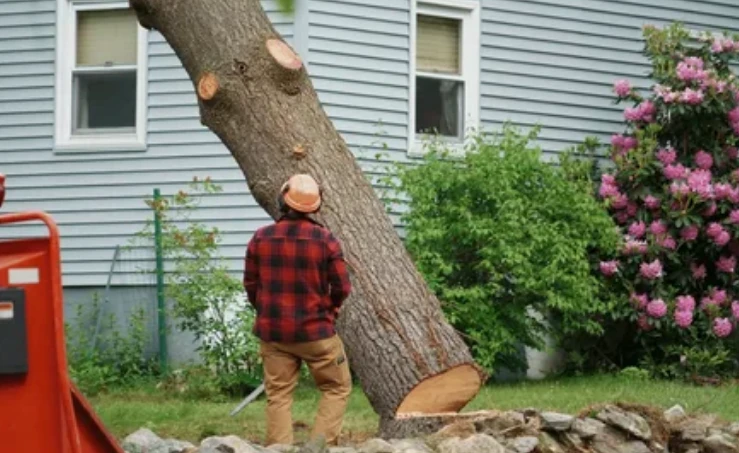
When you have a dead or hazardous tree on your property, it is capable of creating great risks for your home, loved ones, and overall landscape. The rotting tree can fall over when there is a storm, or its branches can fall out of nowhere, leading to destruction or harm. The good news is that professional tree removal services can assist you in managing such dangers safely and effectively. Here in this article, we will walk you through the process of how to safely remove a tree and discuss how a reputable service such as ccrmitigationpros can assist you in getting the job done right.
1. Determining a Hazardous Tree
Prior to even thinking about removal, it is necessary to evaluate whether or not your tree is actually hazardous. Some indicators that a tree should be removed are:
Dead or Dying Tree: When a tree is dead, it will be brittle and prone to breaking or falling. Dead trees will have little or no leaves or branches, or the bark will be cracked and peeling off.
Visible Damage: Trunk cracks, leaning to one side, or large branches that are hanging by their tips are warning signs that the tree is unstable.
Root Issues: A tree with roots exposed or rotting can be at risk of falling, particularly during heavy rain or wind.
Disease or Infestation: If the tree is diseased or has been infested with insects (such as termites or beetles), it could be structurally unsound.
It's important not to overlook such signs since an apparently sickly tree can turn hazardous in no time.
2. Evaluating the Risk
Tree removal is not merely cutting down the tree. It involves a professional evaluation of the risk involved. Considerations such as the location of the tree in relation to your house, power lines, and other buildings need to be taken into account. If the tree is located in a hard-to-reach place or near critical infrastructure, it's advisable to leave the task to experts who possess the right tools and expertise.
A ccrmitigationpro professional or certified arborist will carry out a risk assessment to ascertain the most suitable method of removing the tree in a safe manner and with the least amount of possible damage to your property.
3. Why Professional Tree Removal Services Are the Way to Go
Removing a tree may look like a task for a DIY project, but actually, it's hazardous when one lacks proper training and tools. Here's why professional tree removal services are important to use:
Expertise and Experience: Professionals possess the experience to judge the situation and apply the correct technique to safely cut down the tree. They are able to handle difficult cases, like trees that are growing close to power cables, or those that must be removed in small, controlled parts.
Safety Equipment: Tree removal services come equipped with the appropriate safety gear, including helmets, ropes, chainsaws, and aerial lifts. Attempting to remove a tree without this gear puts you at risk of serious injury.
Insurance and Liability: Professional tree removal companies are insured, so if something happens, they are responsible for any damage or injury that takes place on the job. Without a company being insured, any damage to your property or injury might be your responsibility.
Efficiency: Professionals are able to cut down trees quicker and more efficiently than a regular homeowner and will not disrupt your landscape nearly as much.
4. The Tree Removal Process
If you have chosen to proceed with the removal of trees, this is what the procedure will generally involve:
Step 1: Receiving an Estimate
The first thing to do is to contact a trustworthy tree removal company such as ccrmitigationpros to request an estimate. They will send someone to your location, check the condition of the tree, and give you an estimate of the cost. The cost will vary depending on the size of the tree, its location, and the extent of the removal.
Step 2: Preparing the Area
Prior to the removal process, the surrounding area of the tree will have to be cleared of obstructions. This means furniture, cars, or other structures that may get in the way. You can also have to move pets and children temporarily for their safety while the process is being carried out.
Step 3: Cutting Down the Tree
With the aid of specialized tools, the tree removal crew will safely cut the tree down. If the tree is big, it can be felled section by section to avoid destruction of surrounding buildings. This is a precise process that demands expertise so that the tree can fall in a controlled manner.
Step 4: Stump Removal
After the tree has been cut down, the stump will require removal. Grinding the stump out is a typical way to get rid of the leftover tree base. A tree removal professional will grind the stump down below the ground level, leaving your yard even and open to replanting or landscaping.
Step 5: Tree Disposal
Once removed, the tree debris (branches, logs, and leaves) needs to be addressed. An efficient tree removal company will generally arrange disposal, chipping the wood or taking it away, depending on your preference. Some companies may also deliver the possibility of making mulch or firewood out of the wood.
5. Tree Removal Costs
Removing a dead or hazardous tree can be quite expensive, varying greatly based on various factors, such as:
Tree Size: Trees of larger sizes take more effort and time to be removed.
Location: Those that are hard to reach or are close to power lines will cost more for removal.
Removal Complexity: When the tree is close to buildings or in a sensitive position, the process of removal becomes complicated and therefore costly.
Stump Removal: Stump grinding or removal typically adds an extra charge on top of the actual removal of the tree.
It’s worth noting that while professional tree removal may seem expensive, the risks associated with DIY removal or leaving the tree standing far outweigh the cost. The peace of mind knowing the tree is safely gone is invaluable.
6. Choosing the Right Tree Removal Service
When selecting a tree removal service, consider the following:
Reputation: Find a company with positive reviews and a history of success. It is a good idea to check testimonials and references.
Credentials: Make sure the company has the required licenses and certifications. An arborist certification is a good sign of knowledge and expertise.
Safety Practices: The company should have strict safety practices and high-quality equipment.
Insurance: Always check that the service is insured to cover both you and them if something goes wrong.
A reputable service such as ccrmitigationpros has the knowledge and experience to carry out tree removal with the highest care, keeping your property safe and the process as stress-free as possible.
Conclusion
Removing a dead or hazardous tree from your property is necessary for safety and peace of mind. While it may be tempting to take the task into your own hands, hiring professional tree removal services ensures the job is done properly, reducing the risk of accidents and damage. If you’re in need of a trusted service to safely remove a tree, consider reaching out to ccrmitigationpros. With their expert team and commitment to safety, your tree removal needs will be in good hands.
4o mini































Sign in to leave a comment.