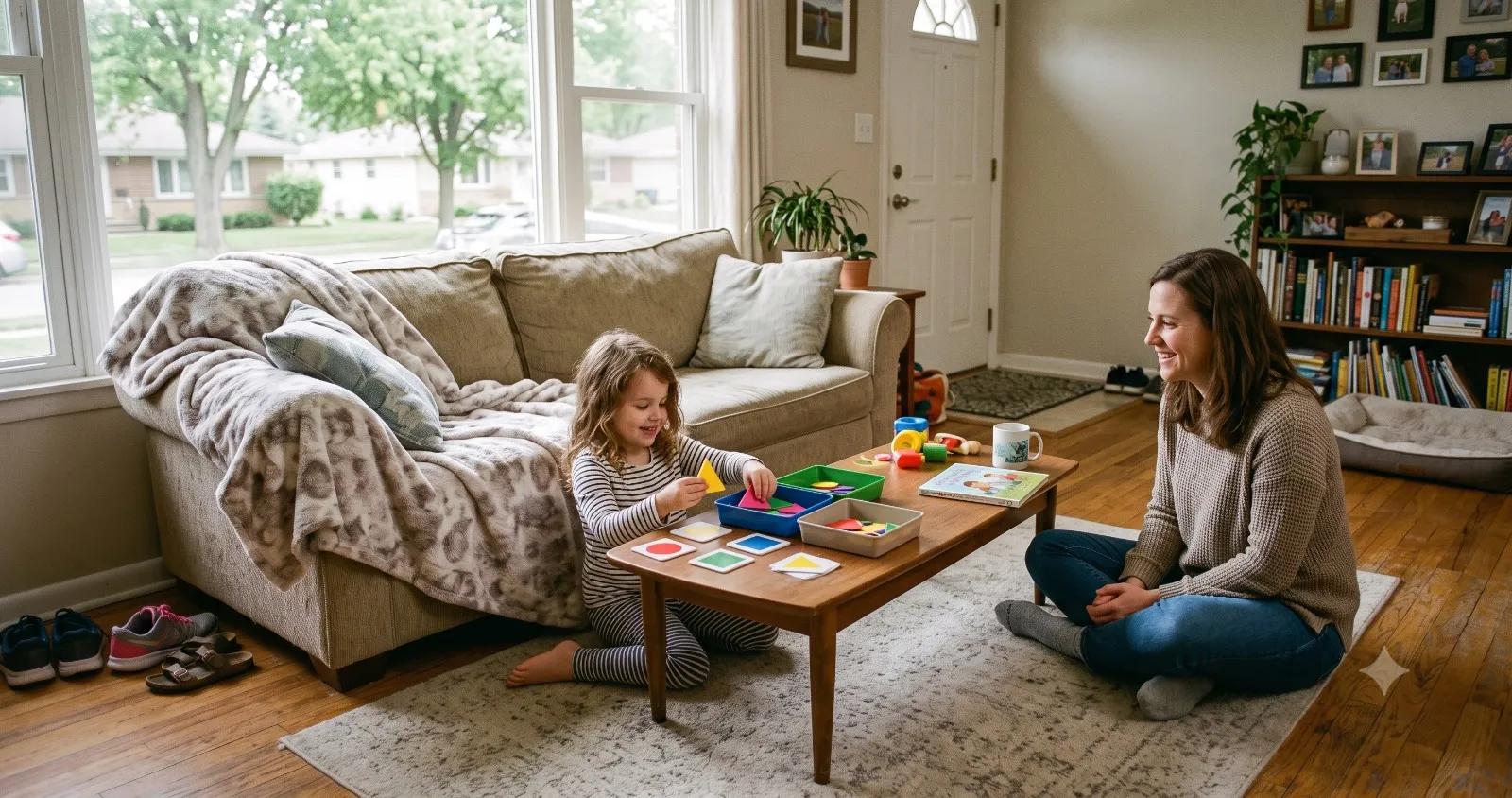

The decision between center-based and home-based ABA rarely comes down to one factor. For many Illinois families, the tipping point is generalization: skills learned in a clinical setting do not automatically transfer to a child's home, school, or community, but skills taught where the child actually lives tend to stick. That practical reality is one of the most clinically consistent arguments for in-home services, and families who have tried both formats often arrive at home-based ABA after discovering that their child's behavior at home had not improved despite months of center-based progress.
Logistics also shape the choice in ways that clinical discussions sometimes underestimate. A child requiring ten to twenty hours of therapy per week creates a substantial transportation burden if sessions happen at a center. Families managing work schedules, siblings, and medical appointments alongside therapy find that having a therapist come to the house removes one significant logistical pressure. For younger children who are still not toilet trained or who have significant support needs during transitions, eliminating the travel itself reduces meltdowns and keeps sessions more productive from the start.
Illinois Medicaid plans, including those administered by managed care organizations like Molina Healthcare and Aetna Better Health of Illinois, cover home-based ABA for eligible children. Commercial insurers operating in Illinois are required under state law to cover ABA therapy without arbitrary caps on age or visit limits, following the passage of autism insurance reform legislation. Families should verify whether their plan has a preferred network for home-based services, as some plans route authorizations differently for in-home versus center-based modalities.
The Clinical Case for Home-Based Services
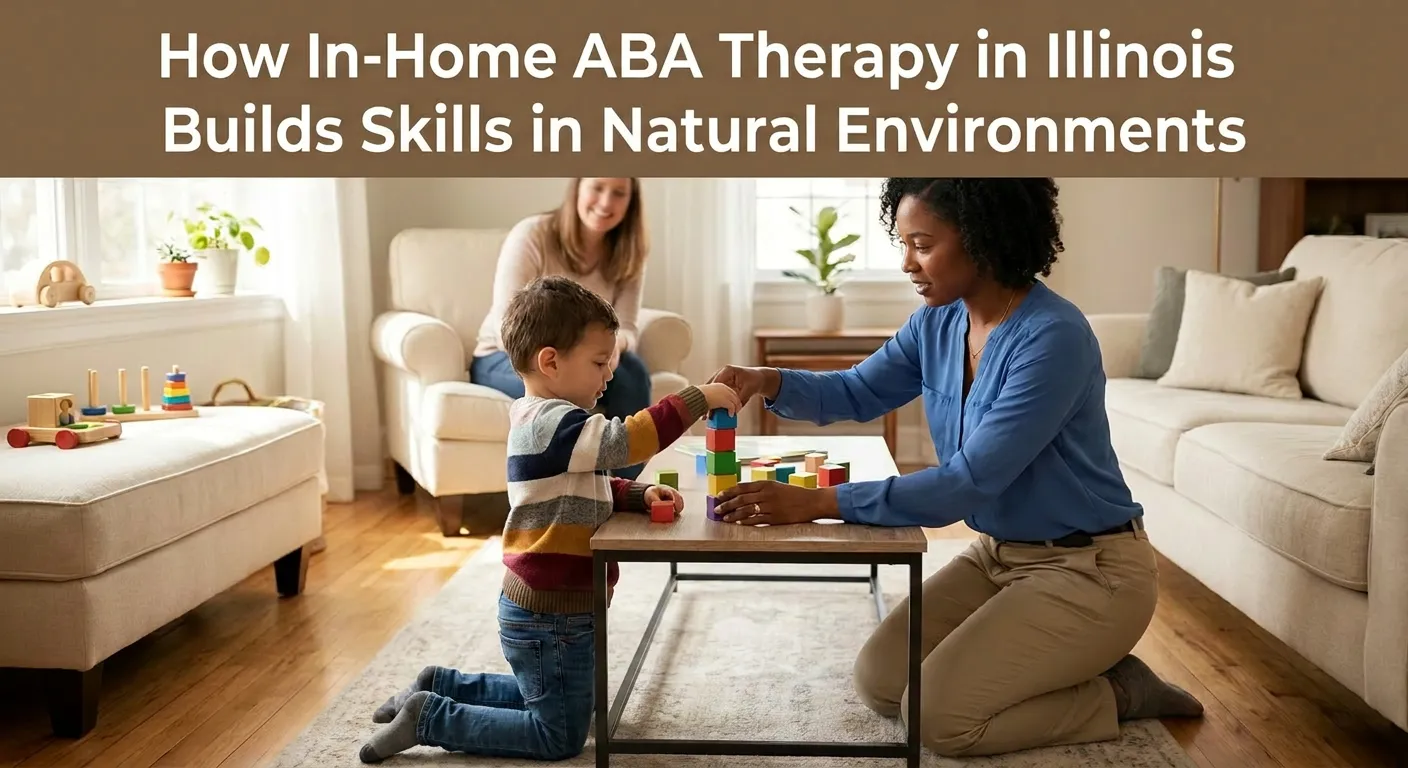
Early ABA research was conducted largely in clinical and university settings, but the field has shifted considerably. Studies comparing in-home and center-based outcomes for young children have generally found comparable results on standardized measures, with some evidence that naturalistic teaching approaches common in home settings produce better generalization. The home provides a richer array of natural reinforcers and communication opportunities than a therapy room, which clinicians can leverage throughout each session.
Families who want to make an informed choice should speak with BCBAs who can discuss what specific goals are best suited to each setting. Families working with an aba provider chicago il that offers both models can sometimes access a hybrid approach, using center-based sessions for structured skill acquisition and in-home visits for generalization and parent training.
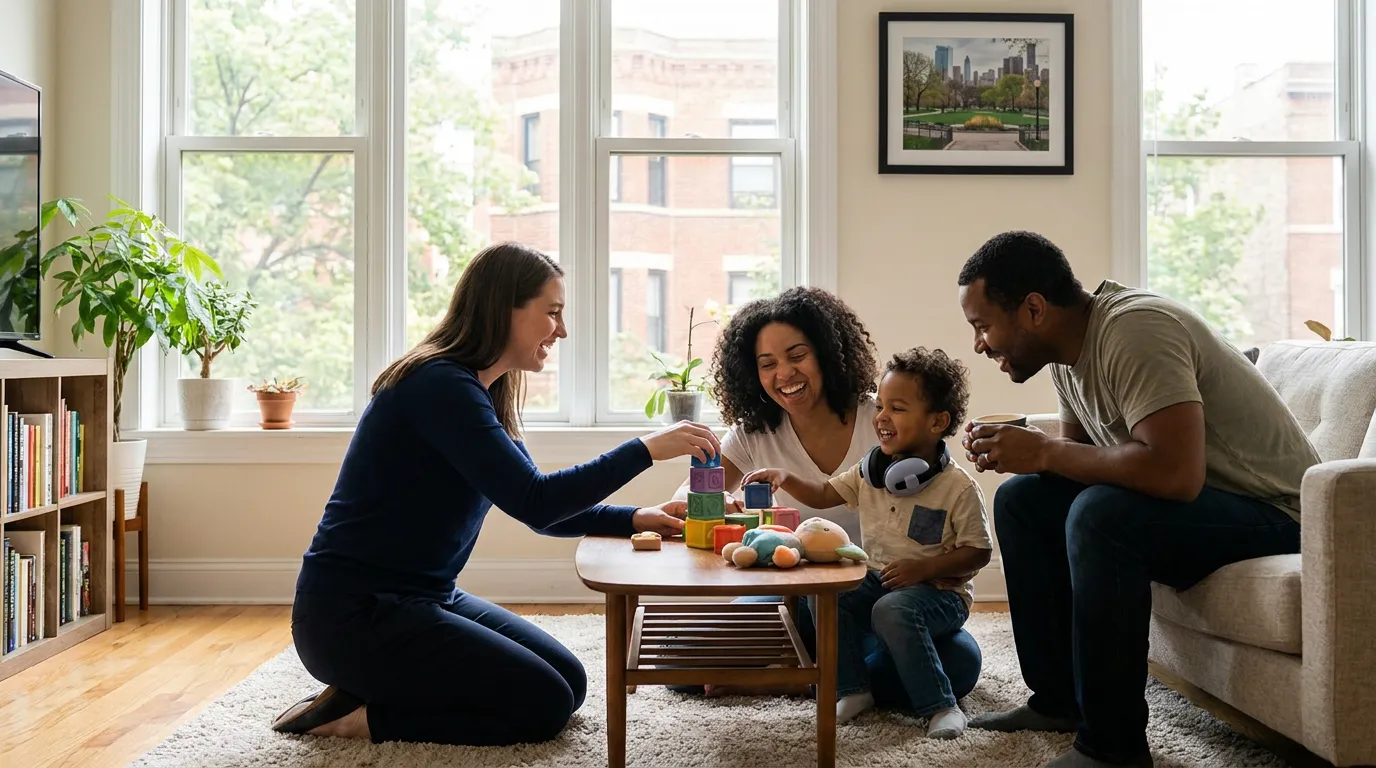
Parent involvement is substantially higher in home-based programs, and the research supports this as a benefit rather than a burden. When parents observe sessions, practice techniques during natural daily routines, and ask questions of the RBT and BCBA in real time, they become more effective at supporting their child outside of formal therapy hours. That extended practice across the whole day accelerates skill development in ways that a few center hours per week cannot match.
What Families Should Ask Before Choosing
Asking a potential provider about their approach to parent training gives useful information about how seriously they take generalization. A provider who describes parent training as a scheduled component with measurable goals is different from one who treats it as informal coaching at the end of a session. Those differences compound over months of treatment.
Families should also ask how the BCBA handles challenging behavior that occurs during home sessions. The home setting brings real-world triggers that a center can control or avoid, and a skilled BCBA sees this as an opportunity rather than a complication. Providers who have strong protocols for managing and reducing challenging behavior in naturalistic settings are better equipped to deliver meaningful in-home services.




























Sign in to leave a comment.