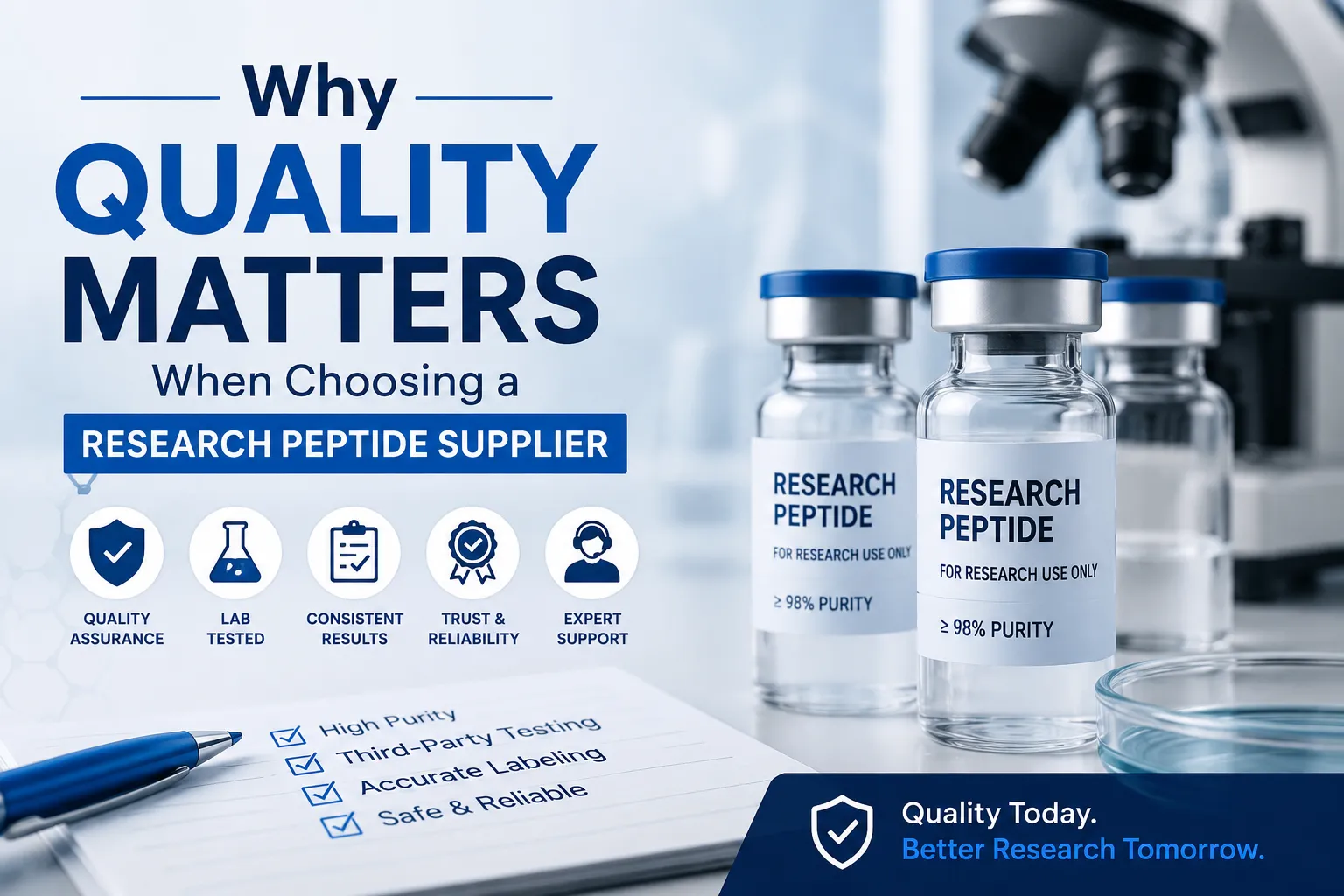

The market for research peptides has grown quickly over the past few years, and with that growth has come a flood of suppliers, price points, and marketing claims that make it hard to tell a credible source from a risky one. Whether you're sourcing peptides for a laboratory study, an academic project, or another research application, the supplier and product you choose directly affects the reliability of your results. Below are seven factors worth evaluating carefully before you place an order.
1. Third-Party Testing and Certificates of Analysis by Research Peptides (COAs)
The single most important thing to check before buying research peptides is whether the supplier provides a Certificate of Analysis from an independent, third-party laboratory. A COA should confirm:
- Purity percentage (ideally 98% or higher, verified by HPLC)
- Molecular weight confirmation via mass spectrometry
- Batch or lot number that matches the product you received
- Testing date so you know the COA isn't outdated or reused across batches
Be cautious of suppliers who only provide in-house testing data or none at all. In-house results can be a starting point, but independent verification removes the conflict of interest and gives you confidence that what's on the label matches what's in the vial.
2. Supplier Reputation and Track Record
A supplier's history says a lot about consistency and reliability. Look for:
- How long the company has been operating
- Reviews or citations from researchers or institutions
- Transparency about their manufacturing or sourcing process
- Responsiveness of customer support to technical questions
New suppliers aren't automatically untrustworthy. But a longer track record, combined with consistent COAs across many batches, is a stronger signal than flashy marketing or unusually low prices.
3. Purity Standards and Manufacturing Practices
Purity isn't just a number on a COA. It reflects the manufacturing process behind it. Reputable suppliers manufacture under controlled, documented conditions. Many disclose their synthesis method, such as solid-phase peptide synthesis, along with their purification steps. Ask whether the peptides are:
- Synthesized and purified in a controlled facility
- Free of residual solvents and heavy metals, as confirmed by testing
- Consistent in purity across different batches, not just one sample batch used for marketing
Inconsistent purity between batches is one of the most common problems researchers run into. It can compromise the reproducibility of your results.
4. Proper Storage, Handling, and Shipping Practices
Peptides are sensitive to heat, light, and moisture. Improper handling can degrade a product before it even reaches your lab. Before buying, consider:
- Whether the supplier ships with cold-chain packaging (ice packs, insulated containers) when required
- How the product should be stored on arrival. Lyophilized peptides are usually stored frozen. Reconstituted peptides need refrigeration and have a shorter shelf life.
- Whether the supplier includes clear storage and handling instructions with the shipment
A supplier that documents storage requirements clearly understands peptide stability. This helps you avoid unknowingly working with a degraded product.
5. Regulatory and Labeling Compliance
Research peptides are intended for lab and research use only. Legitimate suppliers make this clear on their packaging and website. Before ordering, check that:
- Products are labeled "for research use only" or equivalent
- The supplier makes no direct or implied claims about human consumption, dosing, or therapeutic use
- Marketing materials avoid medical claims that conflict with the product's research classification
This isn't just a legal checkbox. It's also a useful filter for supplier credibility. Companies that blur the line between research-grade products and consumer health claims often cut corners elsewhere too.
6. Pricing Transparency and Value
Price matters, but the cheapest option is rarely the safest one. When comparing suppliers, look at:
- Price per milligram, not just the sticker price of a vial
- Whether the price includes third-party testing, or if that's an added cost
- Bulk or subscription discounts, and whether they compromise batch consistency
- Return, replacement, or refund policies if a batch fails to meet stated specifications
A slightly higher price from a supplier with verified purity and consistent quality control is usually a better value. Repeatedly ordering from a cheap source with variable results costs more in the long run.
7. Packaging, Documentation, and Traceability
The last factor is easy to overlook. But it matters for both safety and research integrity: how well-documented and traceable each order is. Strong suppliers typically provide:
- Clear lot numbers on vials that match the COA
- Reconstitution guidelines specific to the peptide (correct diluent and concentration)
- Accessible customer or technical support for questions about a specific batch
- Secure, tamper-evident packaging
Good documentation isn't just a convenience. It creates an audit trail that supports reproducibility, which is central to any serious research work.
Final Thoughts
Buying research peptides by Core Trust Labs comes down to trust, verification, and consistency. A reliable supplier will welcome scrutiny — offering independent lab testing, clear documentation, transparent pricing, and proper handling at every step. Taking the time to evaluate these seven factors before you order can save you from wasted budget, compromised results, and unnecessary risk down the line.























Sign in to leave a comment.