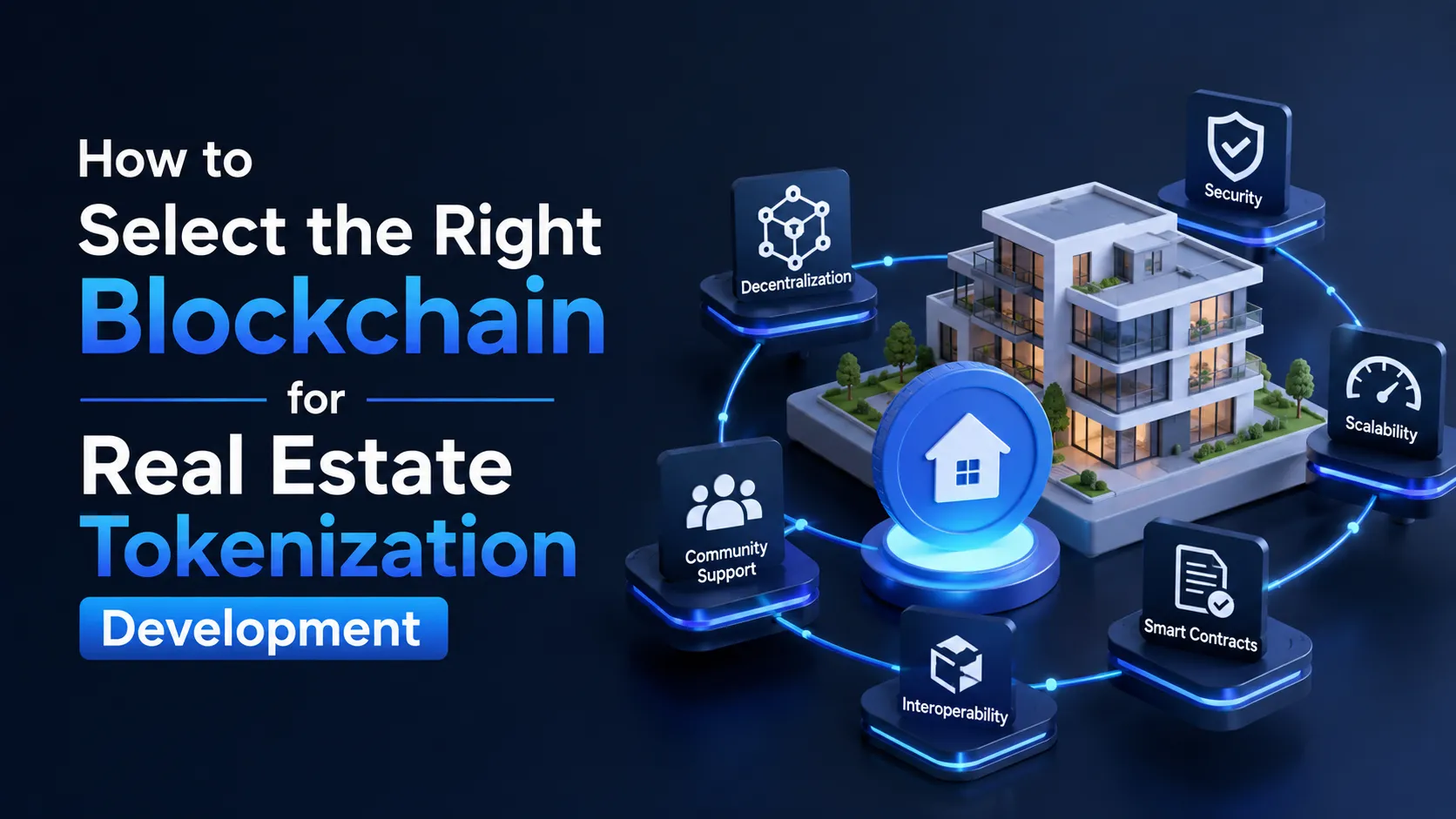

The real estate industry has entered a new phase where digital ownership models are becoming more common. Property owners, investors, and businesses are looking at blockchain technology to divide high-value real estate into digital tokens that represent ownership or investment rights. This approach opens opportunities for fractional ownership, broader investor participation, and easier management of digital assets.
However, the success of any Real Estate Tokenization initiative depends greatly on the blockchain selected for the project. Every blockchain network offers different capabilities, transaction costs, governance models, developer support, security mechanisms, and compatibility with regulations. A poor choice can create operational challenges, increase expenses, or limit future expansion.
Whether a business plans to tokenize residential properties, commercial buildings, hospitality assets, or industrial projects, selecting the right blockchain should be one of the earliest decisions during real estate tokenization development. This article explains the factors that should guide that decision and how organizations can evaluate blockchain platforms for long-term business value.
Why Blockchain Selection Matters
Many organizations focus on smart contracts or token standards before deciding which blockchain network best suits their objectives. In reality, the blockchain forms the technical foundation for every activity, including token issuance, investor transactions, ownership transfers, reporting, and compliance.
The selected network influences transaction speed, operating expenses, user experience, integration possibilities, and maintenance requirements. It also affects how investors interact with digital assets throughout the investment lifecycle.
A professional Real Estate Tokenization company usually begins every project by analyzing business requirements rather than recommending a blockchain immediately. This approach helps avoid technical limitations later in the project.
Understand Your Tokenization Goals First
Before comparing blockchain platforms, organizations should define what they expect from the project.
Some common objectives include:
- Fractional ownership of commercial buildings
- Rental income distribution
- Real estate investment funds
- Luxury property investments
- Cross-border property investments
- Private investment opportunities
- Asset-backed security tokens
Different objectives require different blockchain capabilities. A blockchain suitable for institutional investments may not be the best choice for public investment platforms. This planning stage plays an important role in successful Real Estate Tokenization Platform Development.
Evaluate Security Standards
Real estate assets often represent investments worth millions of dollars. Because of this, blockchain security deserves careful evaluation.
Security should include several aspects:
- Network stability
- Smart contract security
- Validator reliability
- Resistance to malicious attacks
- Historical network performance
- Security audit availability
Established blockchain networks generally have more mature security ecosystems because developers and researchers continuously review their protocols. Businesses should also conduct independent smart contract audits before launching tokenized assets.
Experienced providers offering Real Estate Tokenization Development Services generally include security testing throughout the development process instead of treating it as a final step.
Review Transaction Costs
Every blockchain charges transaction fees for recording activities.
These costs may include:
- Token creation
- Investor onboarding
- Property transfers
- Dividend distribution
- Voting mechanisms
- Asset management updates
If transaction costs remain high, investors making smaller investments may lose interest due to unnecessary expenses.
Organizations planning frequent investor interactions should estimate expected transaction volumes over several years before selecting a blockchain. This financial analysis provides a realistic picture of long-term operating costs.
Consider Transaction Speed
Real estate transactions traditionally involve paperwork and lengthy approval processes. Digital tokenization aims to simplify many of these operations.
Although property ownership transfers may not happen every minute, investor activities such as purchases, sales, distributions, and voting can generate regular blockchain transactions.
A blockchain network with stable processing capacity provides a better experience for investors and administrators. Delays during peak periods may affect platform performance and investor confidence.
Transaction speed should always be evaluated alongside network reliability rather than considering performance numbers alone.
Study Regulatory Compatibility
Real estate investments are governed by financial regulations, securities laws, taxation policies, and regional compliance requirements.
The selected blockchain should support compliance mechanisms such as:
- Identity verification
- Investor eligibility
- Geographic restrictions
- Permission management
- Transaction records
- Audit history
Many Real Estate Tokenization Services include compliance modules that integrate with blockchain infrastructure. Selecting a blockchain capable of supporting these requirements reduces operational complexity during project deployment.
Compare Public, Private, and Consortium Blockchains
Organizations generally choose among three blockchain categories.
Public Blockchain
Public blockchains allow anyone to participate in the network.
Advantages include:
- Large user communities
- High decentralization
- Broad ecosystem support
- Wide wallet compatibility
However, transaction fees and network congestion may vary depending on usage.
Private Blockchain
Private blockchains operate within controlled environments.
Benefits include:
- Better organizational control
- Restricted access
- Faster internal operations
- Easier governance
These networks are often selected for enterprise property management rather than public investment marketplaces.
Consortium Blockchain
Consortium blockchains involve multiple approved organizations sharing network management.
They work well when banks, developers, legal firms, and investment companies participate in property tokenization together.
Choosing among these models depends on business structure rather than technical popularity.
Check Smart Contract Support
Smart contracts automate many functions during Real Estate Tokenization.
Typical smart contract responsibilities include:
- Token issuance
- Ownership transfers
- Revenue sharing
- Dividend payments
- Investor voting
- Property governance
- Compliance validation
The blockchain should provide mature smart contract capabilities supported by active developer communities and documentation.
Reliable smart contract functionality reduces manual administrative work throughout the investment lifecycle.
Review Ecosystem Support
A blockchain with an active ecosystem provides valuable resources for long-term project maintenance.
Organizations should evaluate:
- Development tools
- Software libraries
- Wallet support
- Documentation
- Technical forums
- Community activity
- Third-party integrations
A larger ecosystem generally offers better support for solving technical challenges and integrating new business features over time.
A reliable Real Estate Tokenization Development company usually considers ecosystem maturity before recommending any blockchain solution.
Look for Token Standard Compatibility
Different blockchain platforms support different token standards.
Token standards define how digital assets behave and interact with wallets, exchanges, and applications.
Organizations should verify whether their selected blockchain supports:
- Security tokens
- Fractional ownership tokens
- Asset-backed tokens
- NFT-based property records
- Multi-asset token standards
Future compatibility with financial platforms also depends on selecting widely accepted token standards.
Integration with Existing Business Systems
Real estate businesses already operate various software systems.
These may include:
- Property management software
- Accounting platforms
- CRM systems
- Investor portals
- Payment gateways
- Identity verification platforms
- Document management systems
The blockchain should integrate efficiently with these existing systems.
During real estate tokenization development, API availability and integration capabilities should receive the same attention as blockchain performance.
Assess Long-Term Network Stability
Technology changes rapidly, but real estate investments often remain active for decades.
Organizations should evaluate:
- Blockchain development activity
- Governance model
- Upgrade history
- Community participation
- Financial sustainability
- Institutional adoption
Selecting a blockchain based solely on current popularity can create future challenges if project development slows significantly.
Long-term stability matters more than short-term market trends.
Think About Investor Experience
Investors expect digital platforms to be simple and convenient.
A blockchain should support:
- Easy wallet connections
- Fast transactions
- Low fees
- Simple ownership verification
- Secure authentication
- Efficient asset transfers
If investors find the platform difficult to use, adoption rates may decline regardless of the property's investment potential.
Investor experience should remain a priority throughout Real Estate Tokenization Platform Development.
Examine Cross-Chain Compatibility
The blockchain industry continues to expand with multiple networks serving different purposes.
Cross-chain compatibility allows digital assets to interact with multiple blockchain ecosystems.
Potential benefits include:
- Wider investor access
- Better liquidity opportunities
- Multiple wallet options
- Easier integration with financial platforms
Organizations planning future expansion should consider interoperability during blockchain selection rather than adding it later.
Evaluate Developer Availability
The availability of experienced blockchain developers directly affects project timelines and maintenance costs.
Organizations should consider:
- Developer community size
- Learning resources
- Hiring availability
- Documentation quality
- Software development kits
- Testing frameworks
Choosing a blockchain with limited developer availability may increase project expenses over time.
Working with a Real Estate Tokenization company that has practical experience across multiple blockchain platforms provides additional flexibility when selecting technology.
Future Business Growth Considerations
Business requirements rarely remain unchanged after launch.
Future additions may include:
- Additional properties
- International investors
- Rental income automation
- Lending services
- Property marketplaces
- Digital governance
- Secondary trading
Selecting a blockchain capable of supporting future business plans reduces the need for expensive platform migration later.
Organizations should prepare a technology roadmap before finalizing blockchain selection.
Questions to Ask Before Selecting a Blockchain
Before making the final decision, businesses should ask:
- Does the blockchain support our investment model?
- Are transaction fees reasonable for expected activity?
- Can compliance requirements be integrated?
- Does it support security token standards?
- Is the developer ecosystem active?
- Can it integrate with existing software?
- Does it provide reliable security?
- Will it remain relevant for many years?
- Is investor onboarding simple?
- Can additional features be added in the future?
Answering these questions provides a practical framework for selecting the most suitable blockchain platform.
Common Mistakes to Avoid
Organizations often make avoidable mistakes during blockchain selection.
Some of the most common include:
- Selecting a blockchain based only on popularity
- Ignoring regulatory requirements
- Underestimating transaction costs
- Skipping security assessments
- Choosing incompatible token standards
- Overlooking system integration
- Ignoring investor experience
- Focusing only on short-term expenses
- Not consulting blockchain specialists
- Planning without future business requirements
Avoiding these mistakes can reduce redevelopment costs and operational disruptions later.
Conclusion
Choosing the right blockchain is one of the most important decisions in any Real Estate Tokenization project. The selected platform affects security, transaction costs, compliance, investor experience, integrations, and long-term business operations. Organizations should compare blockchain networks based on business objectives instead of market popularity and involve technical, legal, and financial teams during the evaluation process. A structured approach helps reduce future complications and supports reliable real estate asset tokenization throughout the investment lifecycle. Blockchain App Factory provides Real Estate Tokenization Services, helping businesses plan, develop, and manage secure digital property investment platforms with industry-focused expertise.
FAQs
1. Why is blockchain selection important for Real Estate Tokenization?
The blockchain serves as the foundation for token issuance, ownership records, investor transactions, and compliance activities. Choosing the right platform supports efficient operations and long-term project stability.
2. Which blockchain is commonly used for real estate tokenization development?
The choice depends on project goals, regulatory requirements, transaction volume, and integration needs. Public, private, and consortium blockchains each suit different business models.
3. What factors should businesses compare before choosing a blockchain?
Businesses should review security, transaction costs, processing speed, compliance support, smart contract functionality, ecosystem maturity, developer availability, and integration capabilities.
4. Can Real Estate Tokenization Platform Development support cross-border investments?
Yes. With proper regulatory planning and blockchain selection, tokenized real estate platforms can support investors from different regions while following applicable legal requirements.
5. Why should businesses work with a Real Estate Tokenization Development company?
An experienced Real Estate Tokenization Development company can evaluate business objectives, recommend suitable blockchain networks, develop secure smart contracts, integrate compliance features, and provide ongoing technical support throughout the project.

























Sign in to leave a comment.