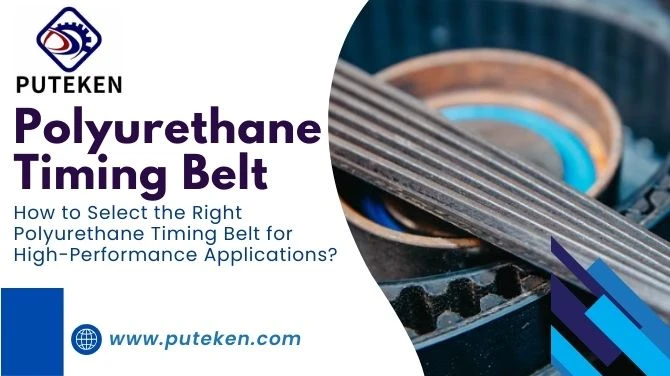

In today’s fast-paced industrial environment, the demand for precision, durability, and efficiency in power transmission systems has never been greater. Among the various components that contribute to the smooth operation of machinery, the Polyurethane Timing Belt stands out as a versatile and high-performance solution. Known for its exceptional strength, flexibility, and resistance to wear and chemicals, the polyurethane timing belt is widely used in applications ranging from automation and robotics to packaging and medical devices.
At Shanghai Puteken Transmission System Co., Ltd., we understand that selecting the right Polyurethane Timing Belt is crucial to achieving optimal performance and longevity in your machinery. With a wide variety of belt types, materials, and specifications available, making the right choice can be complex. This comprehensive guide aims to simplify the selection process by providing engineers, maintenance professionals, and decision-makers with the essential knowledge needed to choose the perfect polyurethane timing belt tailored to their high-performance applications.
Why Polyurethane Timing Belts Are Ideal for High-Performance Applications?
Before diving into the selection criteria, it is important to understand why Polyurethane Timing Belts are preferred in demanding industrial settings. Polyurethane offers superior abrasion resistance, excellent chemical and oil resistance, and outstanding flexibility compared to traditional rubber belts. Additionally, these belts often incorporate high-strength tensile cords made from materials such as fiberglass, Kevlar, or steel, which provide excellent dimensional stability and tensile strength.
These properties make polyurethane timing belts ideal for applications requiring precise timing, high load capacity, and resistance to harsh environmental conditions. Whether you are designing a new machine or upgrading an existing system, choosing the right polyurethane timing belt can significantly enhance your equipment’s reliability and efficiency.
Key Factors to Consider When Selecting a Polyurethane Timing Belt:
Selecting the right Polyurethane Timing Belt involves evaluating several critical factors to ensure compatibility and optimal performance. These include:
1. Material Composition
The base material of the belt affects its durability, flexibility, and resistance to environmental factors. Polyurethane belts are available in various grades, each offering different levels of hardness, abrasion resistance, and chemical tolerance. Additionally, the tensile cords embedded within the belt—commonly fiberglass, Kevlar, or steel—determine the belt’s strength and elongation characteristics.
2. Tooth Profile and Pitch
The tooth profile must match the pulley system to ensure smooth engagement and minimize backlash. Common profiles include trapezoidal, curvilinear, and HTD (High Torque Drive). The pitch, or distance between teeth, affects load capacity and noise levels. Selecting the correct tooth profile and pitch is essential for efficient power transmission.
3. Belt Width and Length
The belt’s width influences its load-carrying capacity, while the length must correspond precisely to the pulley arrangement. Accurate measurements and specifications prevent slippage and excessive wear.
4. Load and Speed Requirements
Understanding the operational load and speed is crucial. Polyurethane timing belts come in various tensile strengths and speed ratings. Selecting a belt that can handle your machinery’s demands ensures longevity and reliable performance.
5. Environmental Conditions
Consider the operating environment, including temperature ranges, exposure to oils, chemicals, moisture, and dust. Some polyurethane belts are specially formulated to withstand extreme conditions, ensuring consistent performance.
Types of Polyurethane Timing Belts and Their Applications
Polyurethane timing belts come in several types, each suited for specific applications:
- Standard Polyurethane Timing Belts: Suitable for general industrial use with good abrasion and chemical resistance.
- Steel Cord Reinforced Belts: Offer high tensile strength for heavy-duty applications.
- Kevlar Cord Reinforced Belts: Provide excellent flexibility and strength, ideal for precision machinery.
- Food Grade Polyurethane Belts: Made from FDA-approved materials for hygienic applications in food and pharmaceuticals.
Installation and Maintenance Best Practices
Proper installation and maintenance are key to maximizing the life and performance of your Polyurethane Timing Belt:
- Correct Tensioning: Avoid over-tightening or under-tightening to prevent premature wear.
- Pulley Alignment: Ensure pulleys are aligned to reduce belt stress and uneven wear.
- Regular Inspection: Check for cracks, wear, or contamination regularly.
- Clean Environment: Keep belts free from dust, oils, and chemicals.
- Timely Replacement: Replace belts showing significant wear to maintain system efficiency.
Case Studies: Successful Applications of Polyurethane Timing Belts
Case Study 1: Automation Industry
A leading automation company upgraded to Kevlar-reinforced polyurethane timing belts, resulting in improved precision and reduced downtime in robotic assembly lines.
Case Study 2: Food Processing
A food packaging firm switched to FDA-approved polyurethane timing belts, enhancing hygiene compliance and belt longevity in high-moisture environments.
How does Shanghai Puteken Transmission System Co., Ltd. Supports Your Polyurethane Timing Belt Needs?
At Shanghai Puteken Transmission System Co., Ltd., we provide comprehensive support for your polyurethane timing belt requirements:
- Technical Consultation: Our experts help you select the right belt based on your application specifics.
- Customization: We offer belts tailored to your size, material, and reinforcement needs.
- Quality Assurance: Our belts meet international standards for durability and performance.
- After-Sales Service: We provide ongoing maintenance advice and troubleshooting support.
Conclusion
Selecting the right Polyurethane Timing Belt is essential for achieving high performance, durability, and reliability in your machinery. By considering factors such as material composition, tooth profile, load requirements, and environmental conditions, you can ensure optimal belt performance and longevity.
At Shanghai Puteken Transmission System Co., Ltd., we are committed to providing premium polyurethane timing belts tailored to your specific industrial needs. Contact us today to learn how our solutions can help optimize your machinery’s performance and reduce operational costs.
Frequently Asked Questions (FAQ)
Q1: What industries commonly use polyurethane timing belts?
A: Industries such as automation, packaging, food processing, medical devices, and electronics benefit from polyurethane timing belts due to their durability and precision.
Q2: Can polyurethane timing belts operate in harsh chemical environments?
A: Yes, polyurethane belts offer excellent resistance to many chemicals, oils, and solvents, making them suitable for harsh environments.
Q3: How do I determine the correct size of a polyurethane timing belt?
A: Measure the pulley diameters, center distance, and required belt width. Consulting with a supplier like Shanghai Puteken ensures accurate sizing.
Q4: What maintenance is required for polyurethane timing belts?
A: Regular inspection, proper tensioning, pulley alignment, and keeping the belt clean are essential for longevity.
Q5: Are polyurethane timing belts customizable?
A: Yes, Shanghai Puteken offers customization in terms of length, width, tooth profile, and material to meet specific application needs.

Sign in to leave a comment.