
Setting up an automatic cashew processing plant is a major investment that requires more than simply purchasing machines. A successful plant needs the right production capacity, factory layout, processing equipment, utilities, skilled support, and a clear plan for future growth.
Whether you are starting a new cashew processing business or expanding an existing facility, careful planning can help improve productivity, maintain kernel quality, and make the investment more efficient.
Here is a practical step-by-step guide to planning a modern cashew processing plant.
1. Define Your Production Capacity
The first step is to determine how much raw cashew you want to process.
Your required capacity will influence almost every other decision, including the machinery configuration, factory space, manpower, utilities, and investment.
Consider:
- Availability of raw cashew nuts
- Target daily production
- Expected operating hours
- Available investment
- Labour availability
- Domestic or export market requirements
- Future expansion plans
It is better to plan the processing capacity around realistic raw-material availability rather than choosing machinery based only on the highest possible output.
2. Select a Suitable Location
Location can have a significant impact on the operating cost of a processing facility.
A suitable location should provide convenient access to raw cashew suppliers, transportation, electricity, water, labour, storage, and logistics.
If you plan to export processed kernels, access to major roads, logistics hubs, or ports can also be beneficial.
The factory should also have enough space for raw-material storage, processing, finished-product storage, machinery movement, maintenance, and future expansion.
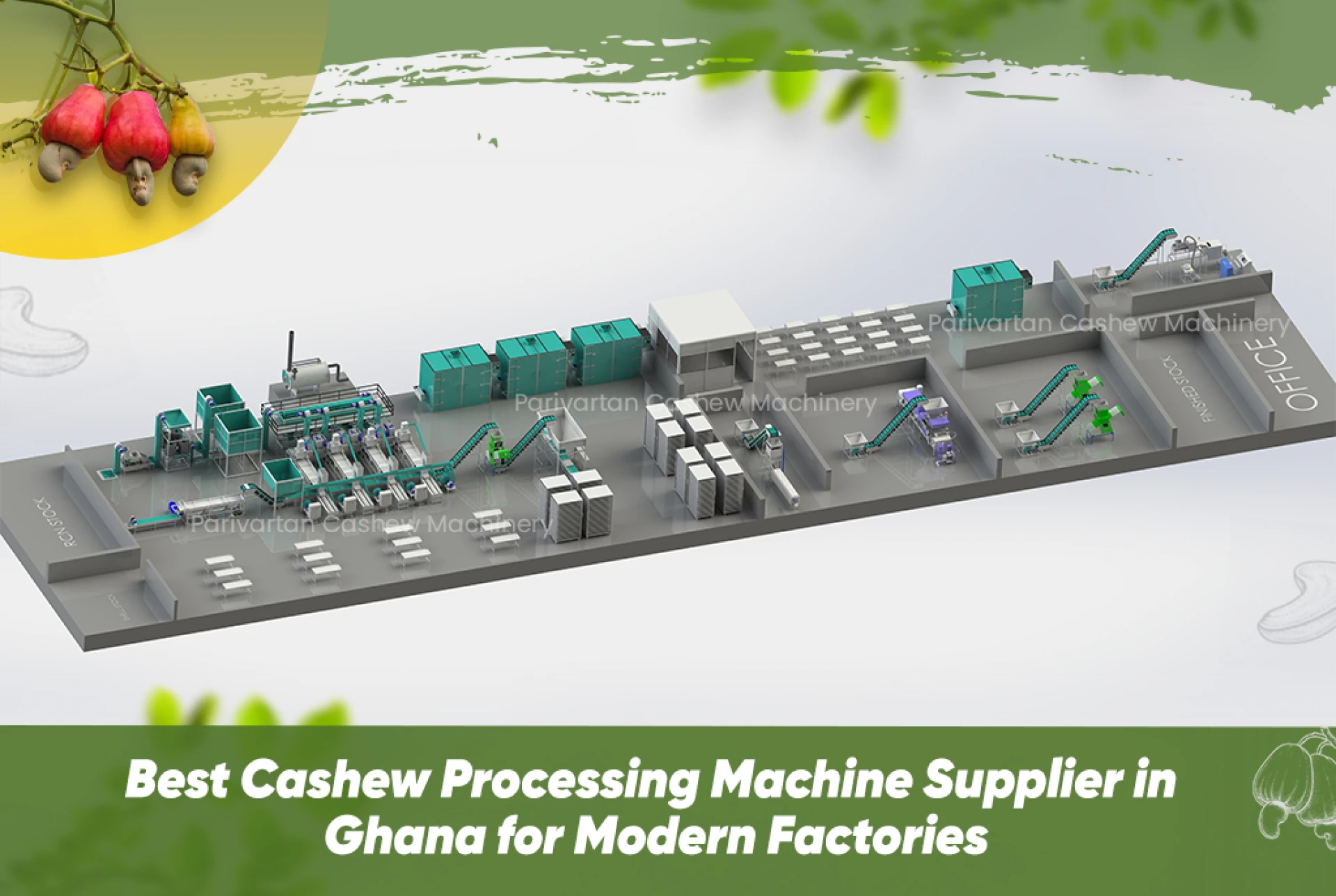
3. Plan an Efficient Factory Layout
A well-planned layout allows cashews to move smoothly from one stage to another without unnecessary handling.
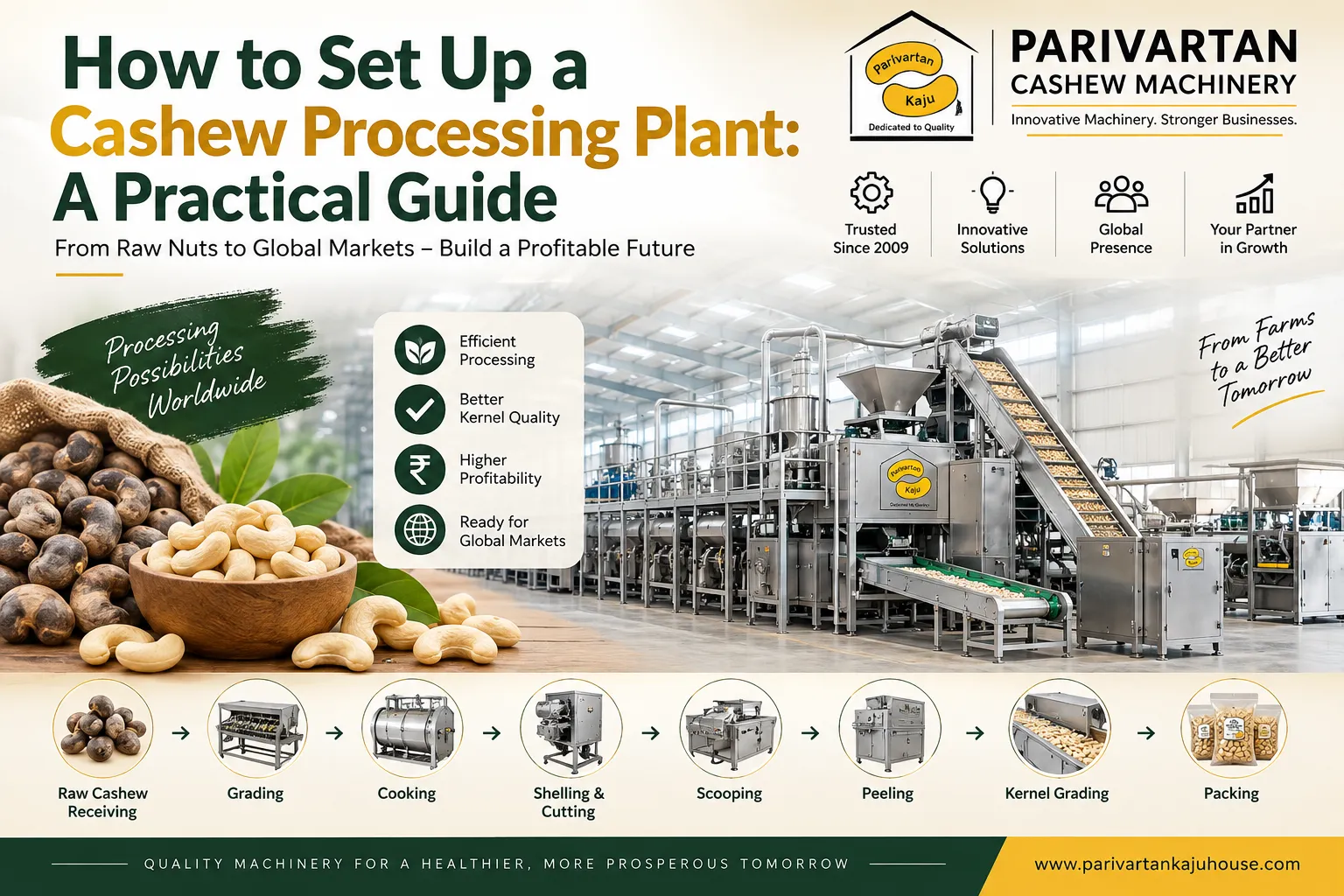
A typical processing flow may include:
Raw Cashew Receiving → Grading → Cooking → Shelling & Cutting → Scooping → Drying → Peeling → Kernel Grading → Packing
The layout should be developed according to the selected machinery and production capacity.
This is one area where working with an experienced Cashew Processing Machine Manufacturer can be valuable. The equipment, material flow, factory space, and installation requirements should be considered together.
4. Choose the Right Processing Machinery
The machinery configuration depends on the level of automation and production requirements.
A modern plant may include equipment such as:
- Raw Cashew Grading Machine
- Automatic Cashew Cooking System
- Automatic Cashew Shelling & Cutting Machine
- Automatic Cashew Scooping Machine
- Automatic Cashew Nut Peeling Machine
- Kernel Grading Equipment
Not every processor requires the same combination of machines. The right selection depends on the desired production capacity, raw-nut characteristics, labour availability, and level of automation.
The objective should be to create an efficient processing flow rather than simply purchasing individual machines.
5. Decide the Level of Automation
Before investing, decide whether the plant should be manual, semi-automatic, or fully automatic.
A manual setup can be suitable for smaller operations, while semi-automatic systems can provide a balance between machinery and manual processing.
For larger commercial operations, a fully automatic system can help reduce repetitive labour requirements and provide a more consistent production process.
The right choice should be based on your current requirements as well as your long-term growth plans.
6. Focus on Kernel Quality and Recovery
A profitable cashew business is not only about processing more raw nuts. The quality and recovery of the finished kernels are equally important.
Factors such as raw-nut quality, grading, cooking conditions, shelling, cutting, scooping, and peeling can influence the final output.
Therefore, machinery should be selected with attention to controlled processing and gentle kernel handling.
A properly designed production line can help create greater consistency across different processing stages while reducing unnecessary handling.
7. Plan Installation and Commissioning
Once the machinery is selected, installation and commissioning need to be planned carefully.
This may involve:
- Machinery positioning
- Mechanical installation
- Electrical connections
- Conveyor alignment
- Testing
- Calibration
- Trial production
- Operator training
Choosing a supplier that can support the project beyond manufacturing can make the setup process much smoother.
8. Consider After-Sales Support
A processing plant is a long-term investment, so technical support should be considered before purchasing machinery.
Ask about:
- Installation assistance
- Spare parts
- Maintenance
- Troubleshooting
- Operator training
- Technical support
- Future upgrades
Parivartan Cashew Machinery has been working in the cashew processing industry since 2009 and provides customized turnkey solutions for processing projects. The company designs, develops, and installs semi-automatic and fully automatic plants, along with maintenance, processing solutions, and quality-assurance training.
Its project approach covers evaluation, detailed planning, deployment, and project handover, supporting customers through different stages of plant development.
9. Plan for Future Expansion
A good plant should not only meet today's requirements. It should also provide room for tomorrow's growth.
When planning the factory, consider whether additional machinery, processing capacity, storage, or automation can be added later.
This can prevent major changes to the factory layout when production requirements increase.
Why Choose Parivartan Cashew Machinery?
With its focus on innovation, manufacturing, turnkey plant setup, exports, and technical support, Parivartan Cashew Machinery works with cashew processors to develop machinery setups according to their requirements. The company states that its machinery is supplied to African, Middle Eastern, Gulf, and Asian markets and that it provides turnkey solutions for cashew processing plant and machinery setup.
Conclusion
Setting up a Cashew Processing Plant requires careful decisions at every stage—from production capacity and factory layout to machinery selection, automation, installation, and after-sales support.
Instead of choosing equipment based only on price, evaluate how the complete processing system will perform over the long term.
With the right planning and support from an experienced Cashew Processing Machine Manufacturer, you can build a processing facility designed for efficient production, consistent quality, and future growth.




















Sign in to leave a comment.