
Introduction
Riding a two-wheeler brings a sense of freedom, but it also comes with the responsibility of maintaining proper financial and legal protection. In the Indian insurance ecosystem, a bike insurance policy is not just a regulatory requirement under the Motor Vehicles Act; it also serves as your financial safety net against unforeseen liabilities.
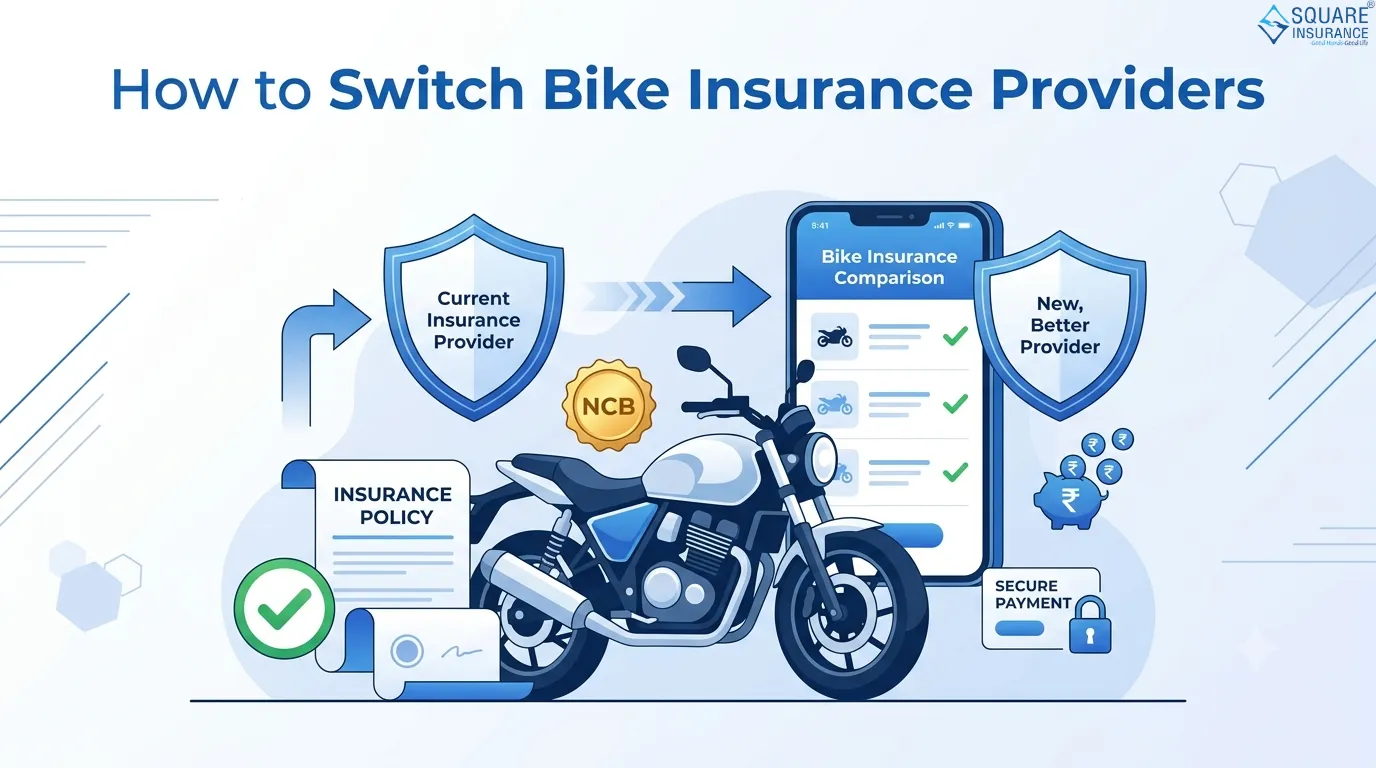
Many policyholders simply renew their existing policy every year without comparing other options. As a result, they may end up paying higher premiums or missing out on better coverage and valuable policy features. How to Switch Bike Insurance Providers - This is a common question among bike owners looking for better benefits, lower premiums, or improved customer service.
Why Should You Consider Switching Your Bike Insurance Provider?
Before diving into the step-by-step process, it is essential to understand the strategic reasons behind changing your insurer. Loyalty to a single insurance company does not always yield the best financial or operational returns. Here are the primary catalysts for making a switch:
- More Competitive Premium Rates: The insurance market is highly dynamic. Different insurers utilize varied underwriting algorithms to assess risk. By evaluating the market, you can often find a competitor offering the identical scope of coverage at a noticeably lower premium.
- Higher Claim Settlement Ratio (CSR): A policy is only as good as its performance during a crisis. If you discover that another insurer possesses a higher Claim Settlement Ratio and a reputation for faster, hassle-free settlement, it is a mathematically sound decision to migrate your policy.
- Superior Add-on Availability: Your operational requirements might change over time. If your current insurer lacks critical riders such as Zero Depreciation, Return to Invoice, or Roadside Assistance, moving to a provider with a robust suite of add-ons is highly advisable.
- Subpar Customer Support: Delayed responses, rigid grievance redressal mechanisms, or an outdated mobile application can make the policy management experience stressful. Switching to a digitally advanced insurer ensures smoother communication.
- Better Insured Declared Value (IDV) Calibration: The IDV is the maximum sum assured that the insurer pays in case of total loss or theft. Some providers artificially lower the IDV to offer cheaper premiums, while others allow you to customize and optimize the IDV for better financial protection.
The Strategic Window: When is the Best Time to Switch?
Timing is paramount when migrating an active insurance contract. The most seamless and cost-effective window to switch your bike insurance provider is during the policy renewal period, ideally 15 to 30 days before your current policy expires.
Why Renewal is the Optimal Time:
- Zero Breakage in Coverage: It ensures your vehicle transitions from one risk-bearer to another without a single day of non-insurance, keeping you legally compliant.
- Effortless No Claim Bonus (NCB) Migration: Your accrued NCB can be declared and verified systematically at the renewal stage.
- No Mid-Term Cancellation Penalties: Switching mid-term requires canceling your existing policy, calculating pro-rata short-period scales, and coordinating refunds, which often results in financial leakage due to administrative charges.
Step-by-Step Process to Switch Bike Insurance Providers Online
Thanks to robust digital infrastructure, transferring your two-wheeler insurance can be completed entirely online within a few minutes. Follow this operational roadmap for a glitch-free transition:
Step 1: Evaluate Your Existing Coverage and Gaps
Analyze your current policy document. Note down your current premium, the specific add-on covers you possess, and your current Insured Declared Value (IDV). Identify what is lacking—whether you need better roadside support or a higher IDV.
Step 2: Compare Quotes Online
Utilize digital insurance aggregation platforms to generate quotes from multiple insurers. Input your vehicle’s make, model, variant, registration year, and RTO location accurately. Look closely at the balance between the premium charged and the IDV offered.
Step 3: Factor in the No Claim Bonus (NCB) Transfer
If you have not made a claim during the previous policy tenure, you are entitled to an NCB discount ranging from 20% to 50% on the Own Damage premium component. When generating quotes with the new provider, accurately input your eligible NCB percentage. The discount will be instantly factored into the new premium presentation.
Step 4: Finalize Inclusions, Exclusions, and Add-ons
Select the plan that aligns with your criteria. Customize your policy by adding necessary riders like Zero Depreciation or Engine Protection. Carefully read the policy exclusions to ensure there are no hidden clauses regarding specific damages.
Step 5: Input Vehicle and Previous Policy Details
Provide your personal details, engine number, chassis number, and previous policy number. Ensure that the information exactly matches your vehicle's Registration Certificate (RC). Any discrepancy can compromise claim validity in the future.
Step 6: Complete the Digital Secure Payment
Once the details are verified, proceed to the secure payment gateway. Pay the premium via credit card, debit card, net banking, or UPI.
Step 7: Download Your New Policy Document
Upon successful payment processing, the new insurance policy document will be generated instantly and dispatched to your registered email address. Download it, verify the printed details, and store a digital copy on your smartphone or in DigiLocker.
Critical Factors to Keep in Mind During the Transition
To ensure that your switch achieves its intended objective without any legal or financial roadblocks, adhere to these professional safeguards:
- Avoid Policy Lapse: If your policy lapses even for a single day, you may lose your accumulated No Claim Bonus if it is not renewed within 90 days of expiry. Furthermore, an expired policy necessitates a mandatory physical vehicle inspection before a new policy can be issued, adding operational delays.
- Verify Cashless Garage Networks: Check the network garage list of the new insurer. Ensure that workshops near your residential location or daily commute route are tied up with the new provider for cashless claim facilities.
- Truthful Disclosures: Always disclose previous claim histories accurately. Insurers verify data through central repositories; concealing a previous claim to claim an unauthorized NCB can lead to a flat rejection of future claims.
Conclusion
Switching your bike insurance provider should never be viewed as a cumbersome chore. It is a prudent financial practice that ensures your asset is guarded by the most competent risk-bearer at a fair price point. By understanding your vehicle's specific needs, leveraging your No Claim Bonus, and systematically comparing digital quotes, you can upgrade your service standards and coverage breadth seamlessly. For an effortless, transparent, and guided experience during your next renewal cycle, platform ecosystems like Square Insurance offer tailored comparisons and dedicated support to help you execute this transition with absolute confidence.
Frequently Asked Questions (FAQs)
1. Will I lose my accumulated No Claim Bonus (NCB) if I switch to a new bike insurance company?
No. The NCB belongs to you as a driver/rider for maintaining a safe record, not to the vehicle or the insurance company. You can transfer your accumulated NCB discount (up to a maximum of 50%) to your new insurer smoothly at the time of renewal by providing details of your previous policy.
2. Is a vehicle inspection mandatory when switching bike insurance providers?
If you switch your insurance provider before or on the exact date of your current policy's expiry, no vehicle inspection is required. However, if your policy has already lapsed, the new insurer will typically mandate a digital or physical vehicle inspection before granting coverage.
3. Can I switch my two-wheeler insurance provider in the middle of the policy term?
Yes, mid-term switches are legally permissible, but they are generally not recommended. You will need to inform your current insurer, officially cancel the policy, and request a refund on a short-period scale, which often attracts heavy administrative deductions. It is far more cost-effective to switch at the time of renewal.
4. What happens if there is a gap between my old policy expiry and the new policy start date?
Riding a two-wheeler with even a one-day gap in coverage is a legal offense under Indian law and leaves you completely vulnerable to third-party financial liabilities. If a gap occurs, you must avoid riding the vehicle until the new policy becomes active, and you may have to undergo a vehicle inspection process

























Sign in to leave a comment.