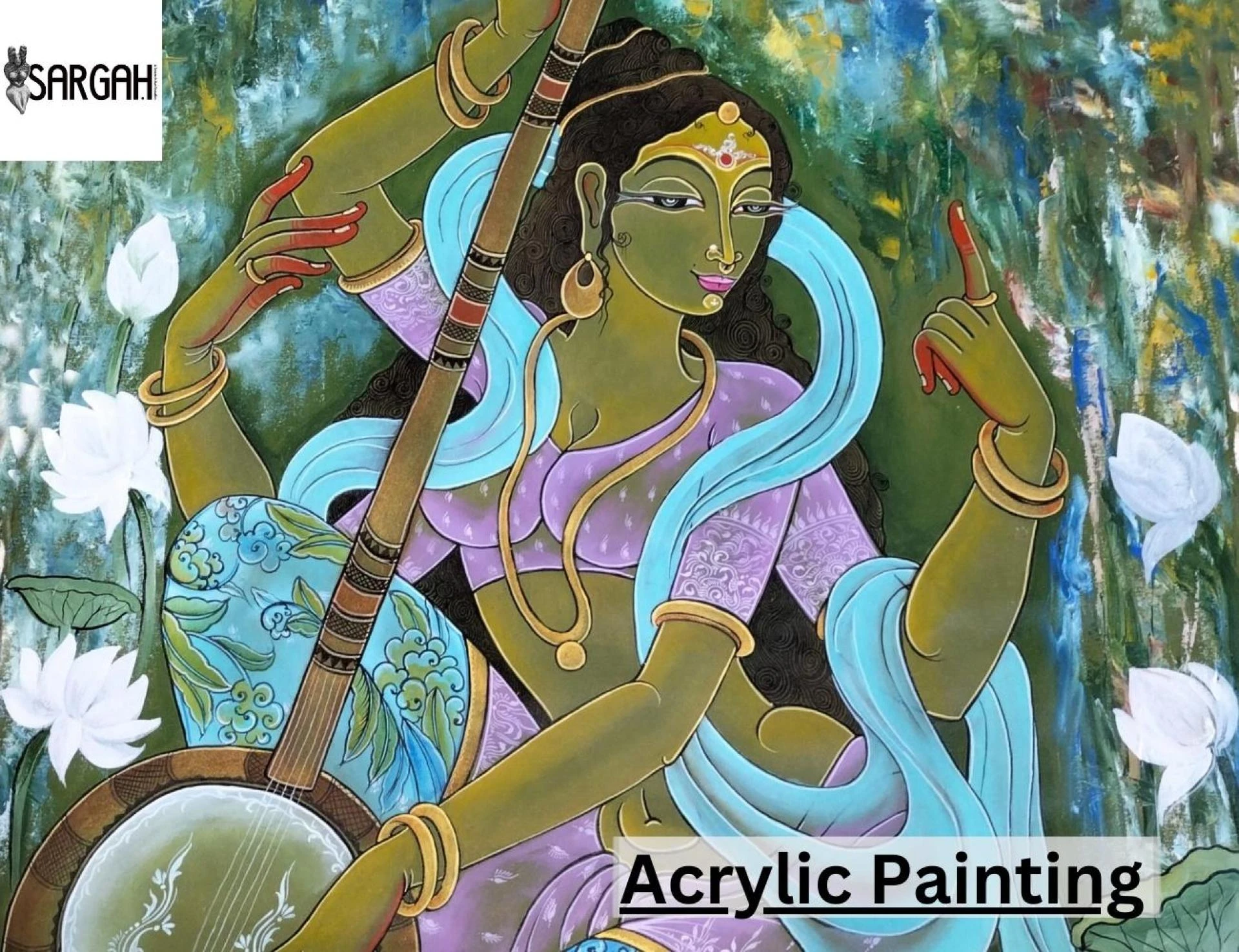

Providing the visuals of oil painting and watercolor, acrylic painting as a form of art is versatile and elegant.
But that does not mean that acrylic painting is an easy concept.
One has to practice for months to learn the colour compositions and the water-to-paint ratio for painting with acrylic colours.
From contemporary to Indian art styles, acrylic painting on canvas embodies its own persona and style.
There are a few guidelines and warrants that an artist has to follow in terms of taking care of the acrylic painting. The painting must be kept safe from dust and extreme heat conditions.
To learn more about acrylic paints and how to take care of an acrylic painting keep reading the blog.
What are the properties of acrylic painting?
From the composition of the solvents used for mixing with the colours of the acrylic paint to the forms of brushes, the properties of acrylic painting are definitely more diverse than regular water paint and oil paintings.
In order to understand the aspect of taking care of acrylic paintings, let us take a look at the general properties of an acrylic painting.
When you are painting, you will want to use water-soluble paints. Acrylics dry in less than thirty minutes and are generally used for painting on top of other colors. In contrast, oil paints dry slowly and should not be mixed with water-soluble paints.The acrylic paint will flow around the edges of the acrylic film. When you are using acrylic paint, you must make sure that the paint is completely dry before putting it on another layer.Those were some of the general characteristics of painting with acrylic colours. Dust and excess heat play a major role in offsetting the extravagant look of the painting.
There are other aspects such as humidity and close proximity to water that the artist has to look out for while painting with acrylic colours.
Let us discuss the implications these factors can have in the context of taking care of the acrylic painting.
What measures can you take to protect your acrylic painting?
Cleaning aspects
Varnishing a painting is a process of applying a varnish, typically in a thin layer, to a painting in order to protect it from the effects of UV light. This process can be accomplished by using various varnishes or through the use of a paint sprayer.
Protection from heat
Acrylic paint will become soft around 60 degrees Celsius, indicating that it is time to put the paint down. There are many ways to prevent this from happening. If you're using a hot table, it's important to ensure that the table's temperature is under 60 degrees Celsius.
Sensitivity aspects
Acrylic paint is an excellent paint to use because it is water-based, dries quickly, and has a soft, flexible film that is easily abraded or dented with fingernail pressure. This property of acrylic paint can make it difficult to apply texture without accidentally destroying the surface.
Growth of mold
There is one problem that has become increasingly prevalent in the art world and that is mold growth in acrylic paintings. The most important thing to do is to make sure that you have enough ventilation in your home so that air can flow through your paintings easily.
Final Thoughts
From personifying Indian art forms and traditional Indian culture to presenting mundane human activities on an elevated platform, acrylic paintings are definitely awed for the spectators.
Acrylic painting on canvas requires attention to detail and efficiency. If you are starting out as a beginner-level artist, take a few tips from the blog and apply them accordingly.


























Sign in to leave a comment.