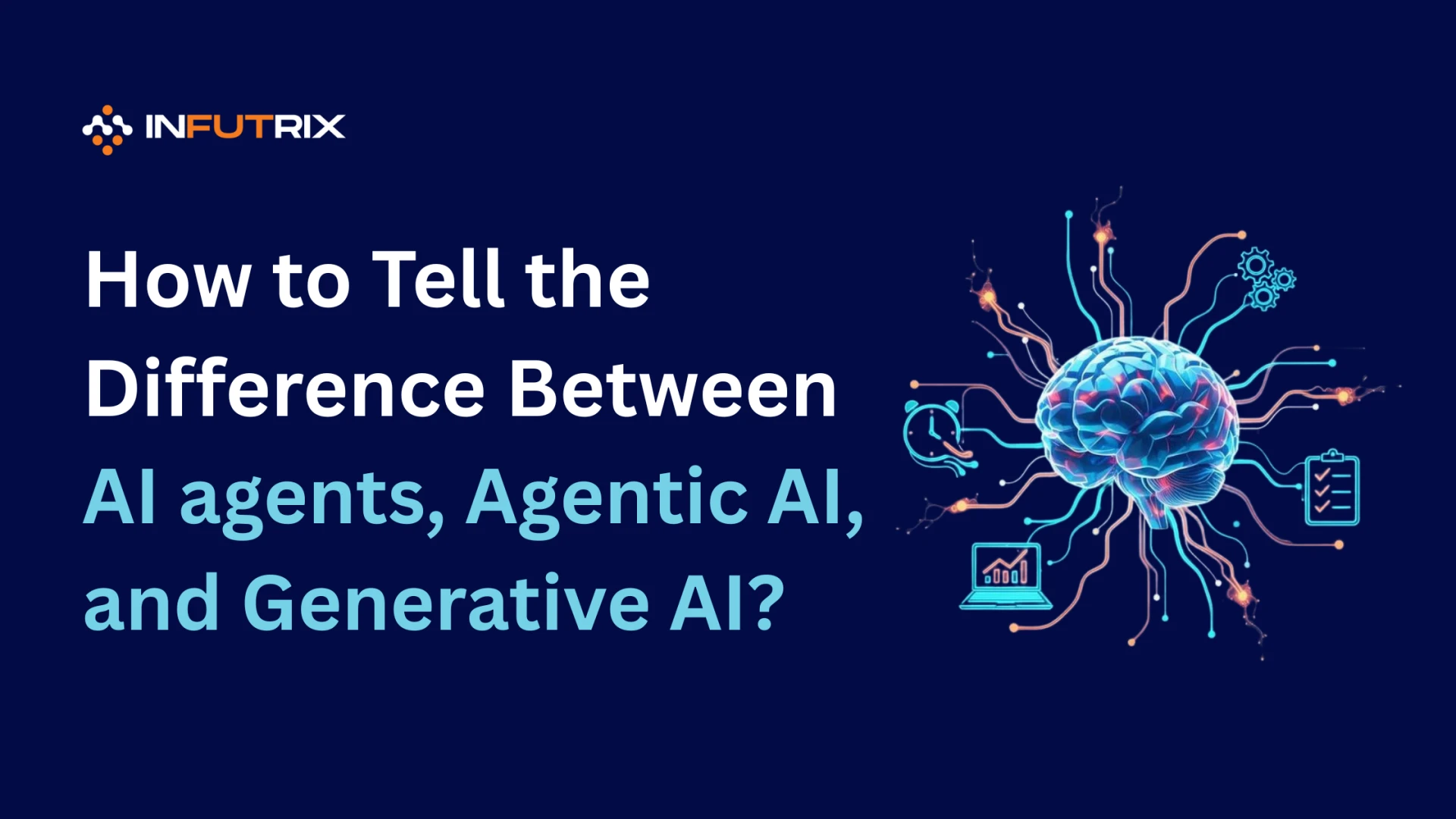

Let’s understand the difference through a scenario. Say you have three talented colleagues, each with different capabilities.
The Planner (Gen AI)
You give him a task: “Write an email to introduce our new product in the market.”
He drafts the email, clear, structured, and persuasive. But once he finishes, he stops. He doesn’t send the email or schedule it.
The Problem Solver (AI Agents)
He can not only write emails, but also handle the logistics. He can check your calendar, add tasks to your project board, upload the email to your CRM, and schedule it in your system. He operates within the boundaries you set.
The Innovator (Agentic AI)
Finally, there’s the innovator. You tell him: “Launch our latest product campaign successfully.”
He goes further than everyone else. He studies past campaigns to identify the best-performing channels. He creates the launch plan and schedules social media posts. He tracks real-time engagement and adjusts the campaign content if performance dips. He doesn’t just follow instructions he strategically figures out what needs to be done.
What Each of These Systems Can Do For Your Business?
Generative AI, AI Agents, and Agentic AI; each one of them represents a different position on the AI curve and solves a distinct class of problems.
Picking the right fit means knowing what it can do, where it fits, and how it scales with your business.
Gen AI
What is it: Generative AI models can create new content(images, text, videos, code). Here are its key features:
- They are trained on large datasets
- Generate creative outputs(images, videos, etc)
- Works on learned patterns and user prompts
- Common examples: ChatGPT, Gemini, Midjourney
What it can do: Generative AI is a powerful tool that can boost the productivity of your team through automating tasks like:
- In product development, it can generate ideas, storyboards, and prototypes.
- In banking and finance, it can detect fraud by testing security mechanisms
- In marketing, it can create personalized campaigns for A/B testing.
Don’t get caught up in the terminology chaos and check out our detailed guide to understand the difference between LLMs, Gen AI, AI Agents, and Agentic AI.
AI Agent
What is it: An AI agent is a system designed to fulfill specific tasks. They can work autonomously but with a defined set of instructions and external tools that support their actions. It performs:
- Tasks within defined boundaries
- Actions that follow a fixed structure
What it can do: Agentic AI can automate any task within your enterprise that follows a static procedure. Here’s what it can do:
- Customer Support: Handle queries, escalate issues when necessary, and learn from past interactions.
- Operations: Manage routine processes like processing forms, updating CRMs, and scheduling appointments.
- IT & Admin: Troubleshoot, run diagnostics, and manage system workflows automatically.
Agentic AI
What is it: Agentic AI is the most advanced system of them all. It can reason, plan, and take actions on its own. Features include:
- Using reasoning and planning to decide the next steps
- Performing a web search to execute actions
- Evolves through multi-step reasoning and feedback loops
What it can do: AI agents can perform any task that requires self-initiation and strategizing.
- Decision-Making: Predict issues (like supply delays or churn risks) and take preventive actions.
- Cross-System Coordination: Connect with multiple tools (ERP, CRM, HRMS) and ensure smooth workflow orchestration.
- Self-Improving Processes: Learn from outcomes and enhance existing pipelines in logistics, finance, and operations.
Finally–Where to Get Started?
To get started with AI systems, the key is not to get lost in the terminology. Instead of focusing on what these systems are, focus on what they can do, because at the end of the day, businesses need solutions.
A good starting point is to answer these three questions:
- What processes consume the most time or resources in your business?
- Which decisions require repeated human involvement?
- Where do delays, bottlenecks, or inconsistencies hurt performance the most?
If you feel it’s time to solve these challenges with AI-driven systems, you can always get a detailed consultancy from our expert team at Infutrix.
Explore similar topics on Infutrix Insights.
Sign in to leave a comment.