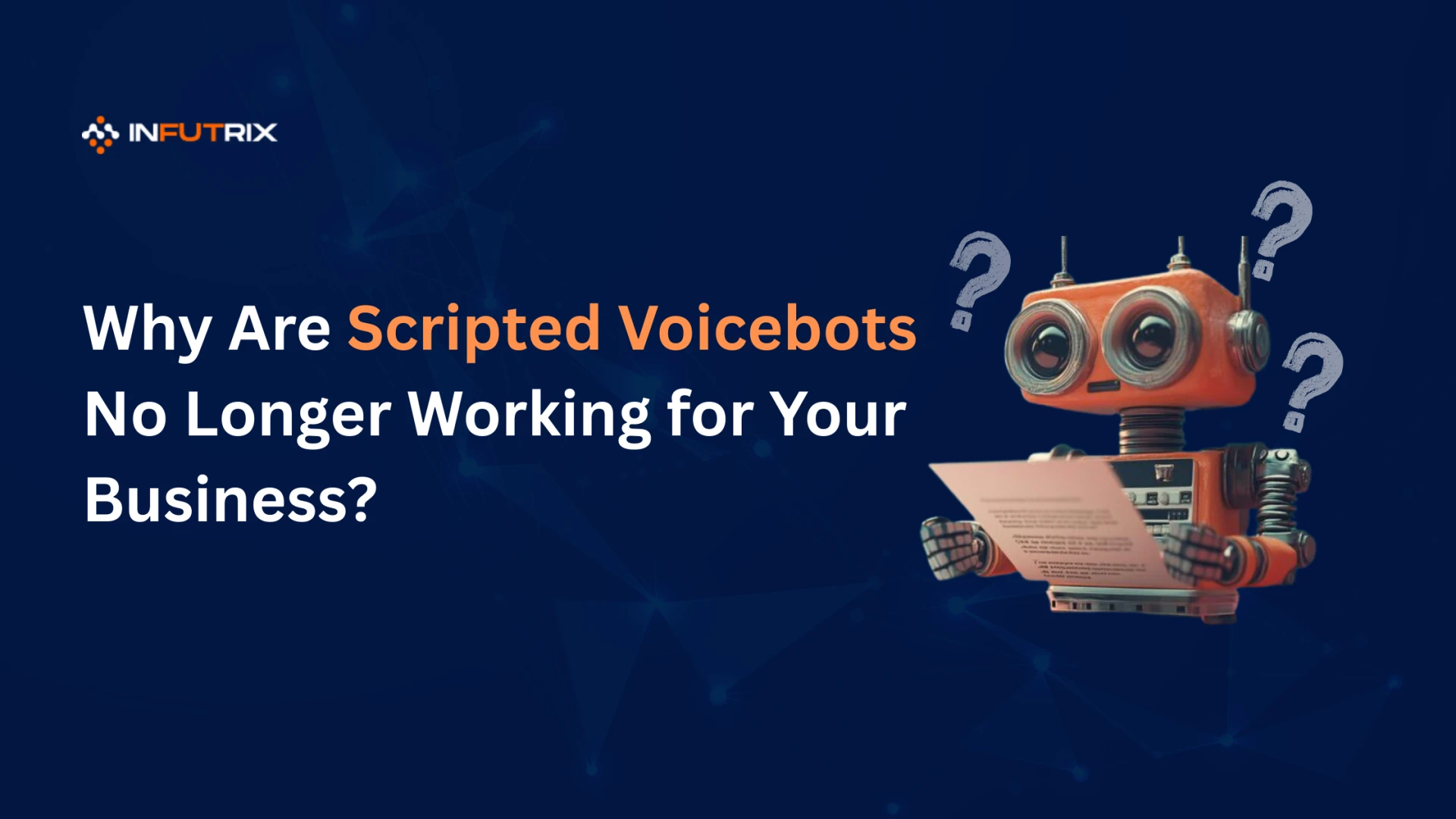

Hear me out if this situation sounds familiar.
“The customer calls the support line to resolve a billing issue. At the same time, your voice software confidently mishears the problem and provides a solution that is entirely irrelevant to the user’s request. After a frustrating loop, the customer hangs up, leaves a negative review, and chooses your competitor instead.”
Most voice systems feel like talking to a polite brick wall. That monotonous, flat tone has become so predictable that users hang up the moment they detect it.
The Moment a User Decides to Hang Up.
Voicebots have only a small window to win a user’s trust. So, when it confidently delivers the wrong solution, the customer gets frustrated immediately, even before hearing what you have to offer.
We’ve seen these three issues that make conversations unbearable:
- A Never-Ending Loop of Irrelevant Solutions
The user slows down, repeats the same line, emphasises every word, hoping the assistant will finally get it right, but it still gives the same irrelevant response.
Which ultimately forces you to ask for human support.
- A Memory that Doesn’t Remember Past Interactions
When the customer finally reaches a human agent, they are met with yet another hurdle: having to narrate the entire situation again because the voice system fails to recall prior interactions.
They have to narrate the issue again to finally get what they have been demanding for the past 20 minutes.
- Processes that Fail to Escalate Issues
There are specific phrases a voicebot uses that make customers scream, “Human Support, please!” in under 60 seconds. This usually happens when the bot jumps between unrelated topics, a clear sign that it won’t be able to respond in context.
The Cost Your Business Pays for Rule-Based Automation
These experiences don’t just push customers to leave bad reviews; they also mean you’re paying twice: once for the automation, and again for additional human support.
Here’s what you’ll start to notice:
- Decline in Confidence Scores
Customer confidence scores measure how much customers trust your brand. Let’s get this straight: a customer either trusts you or they don’t. So when that score drops, it’s a strong signal that you may never see them again.
- Increase in Fallback Response
Fallback responses never happen in isolation.
The moment context breaks, users change how they speak, intent signals weaken, and the model’s confidence drops. Each fallback increases the likelihood of another, which eventually drives your fallback rate even higher.
- Constant Processing Delays
You start noticing longer gaps between questions and responses as the model struggles to understand intent. This usually means the system hasn’t been properly trained and tested on real call transcripts.
How Businesses Should Reconsider Voice AI as We Advance?
Voicebots often degrade as real-world conditions evolve, and the system outgrows the environment in which it was trained, reflecting inefficient model training.
Here’s what to consider instead:
- Retrieval Augmented Generation
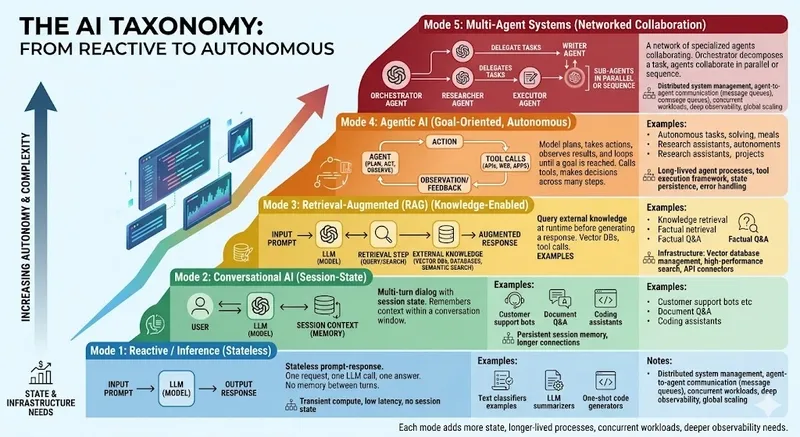
RAG improves model performance by connecting it to external data sources to maintain up-to-date, accurate, and contextually relevant answers, rather than relying on static, internally trained models.
It retrieves data from an external knowledge base and augments responses to form a final response.
- Voice-first Agentic AI
Voice systems powered by Agentic AI are more than just getting an intelligent machine to handle calls. It’s an ecosystem that constantly grows, learns, and gets better. The voice aspect captures the tone of user interaction, the urgency, and the words that drive them to seek immediate results.
- Domain-Specific Language Models (SLMs)
Modern voice AI stacks use small or domain-specific language models trained on industry-specific data, such as call transcripts, policies, and workflows.
These compact powerhouses handle customer interactions at a fraction of the cost.
Their compact size enables them to run on low computational power, use a few parameters, and employ simple architectures.
How Infutrix Addresses the Challenges of Traditional Systems?
When you look closely, you’ll realize that traditional bots often suffer due to rigid and static scripts. So, while developing and deploying voice software, our team at Infutrix ensures:
- Instead of keyword-based scripts, we choose a model that reads intent and context across the entire conversation.
- Developing a mechanism that interprets meaning, emotions, and urgency
- Connecting with live knowledge bases (RAG-powered), CRMs, support platforms, and enterprise data
It's time to leave scripted voicebots behind and embrace enterprise-grade voice AI.
Read Related Topics: Infutrix Insights























Sign in to leave a comment.