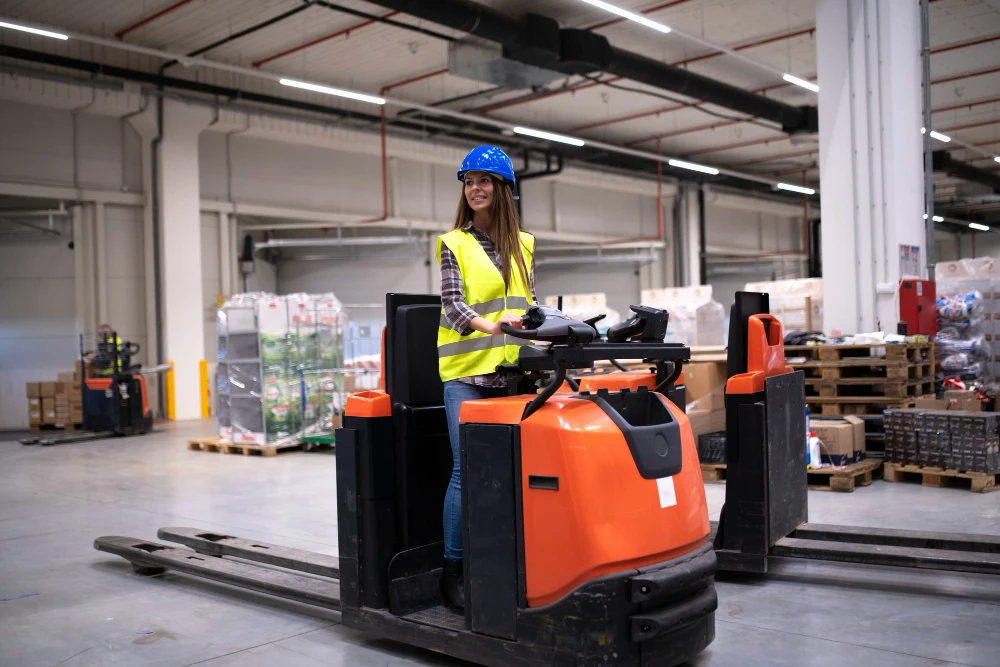

Forklifts are essential tools in warehouses, factories, and other industrial settings, enabling businesses to move heavy loads quickly and efficiently. However, operating a forklift comes with its share of risks, especially when it comes to worker safety and overall efficiency. Proper forklift training is crucial to ensure that employees not only follow safety guidelines but also maximize their productivity. In this blog, we’ll outline the key steps to effectively train your staff to operate forklifts safely and efficiently.
1. Understand Legal and Regulatory Requirements
Before you begin any forklift training program, it’s important to familiarize yourself with the legal requirements in your country or region. In many countries, such as the United States, OSHA (Occupational Safety and Health Administration) mandates that operators must be certified to operate forklifts. The certification typically involves both classroom training and practical assessments. If you're also looking for reliable forklift movers to assist with heavy lifting tasks, make sure to research the regulations specific to your region to ensure your training program meets these standards.
2. Develop a Comprehensive Forklift Training Program
A successful forklift training program should be both comprehensive and structured. A good program should cover several key areas, including:
Forklift Types and Their Functions: Different types of forklifts are designed for different tasks, from standard counterbalance forklifts to narrow aisle and reach trucks. Operators should know which forklift to use for specific tasks.
Safety Procedures: This includes understanding how to load and unload materials safely, operating forklifts in narrow or high-traffic spaces, and performing pre-operation checks on the forklift.
Load Handling: Operators should be trained on how to properly lift, carry, and place loads. Incorrect load handling can lead to accidents, equipment damage, or even injuries.
Forklift Controls and Features: Train staff on the basic controls of the forklift and any additional features, such as lift height adjustments, tilt functionality, or specialized attachments.
Emergency Procedures: Employees should know what to do in the event of an accident, malfunction, or fire. Ensure that forklift operators are familiar with emergency exits, fire extinguisher locations, and first-aid kits.
3. Provide Classroom Instruction
Classroom instruction is an essential part of forklift training. It provides employees with the necessary theoretical knowledge to understand how forklifts operate, the risks involved, and the importance of safety. Topics covered in classroom training should include:
- Forklift operation principles
- Safety regulations and laws
- Hazards associated with forklift operation
- Load limits and weight distribution
- Personal protective equipment (PPE) required
Make sure the classroom instruction is interactive, with plenty of opportunities for employees to ask questions. Consider using videos, diagrams, or manuals to help clarify complex concepts.
4. Offer Hands-On Training
Once the theoretical knowledge is in place, it’s time for practical, hands-on training. This is where employees learn to operate forklifts under supervision. It’s crucial that this training is conducted in a controlled environment with minimal distractions, allowing employees to focus on learning proper techniques.
Key aspects to cover during hands-on training include:
- Starting and stopping the forklift safely
- Navigating tight spaces and obstacles
- Operating the forklift in reverse
- Loading and unloading pallets
- Performing a pre-use inspection (checking fuel levels, tire pressure, lights, etc.)
It’s important to provide constructive feedback during hands-on training, so trainees understand areas for improvement. Supervisors should be present to monitor the trainees' progress and ensure safe practices are followed at all times.
5. Test Competency and Certification
After the training, conduct a competency test to assess the skills learned during both the classroom and hands-on sessions. This may include a written exam on safety rules and forklift operation, as well as a practical test where employees demonstrate their ability to operate the forklift safely and efficiently.
Once an employee has successfully completed the training and passed the competency test, issue them a certification of completion. This certificate should be renewed periodically, as most safety organizations require re-certification after a set number of years (usually every 3 years).
6. Focus on Continuous Improvement and Refresher Courses
Forklift training is not a one-time event. Ongoing training and refresher courses are essential to maintaining safe and efficient operations. Regular refresher courses help reinforce safety procedures, introduce new technology, and address any specific challenges employees may be facing.
Regular evaluations of forklift performance and safety are also crucial. If issues arise, consider offering additional training or guidance to correct bad habits. Encouraging employees to report any safety concerns or near-misses can help prevent future accidents and improve overall safety.
7. Foster a Safety Culture
Training staff to operate forklifts safely and efficiently is only part of the equation. It’s important to foster a culture of safety in the workplace. Encourage open communication about safety, reward safe practices, and hold staff accountable for any unsafe behavior. When employees feel that safety is a priority, they’re more likely to take the training seriously and work to reduce risks.
Conclusion
Effective forklift training is essential to ensure that your staff operates forklifts safely and efficiently. By adhering to legal requirements, offering comprehensive training, and regularly evaluating performance, you can significantly reduce the risk of accidents and improve productivity in your warehouse or workplace. Always keep safety at the forefront of your training program, and remember that a well-trained workforce is an asset that will contribute to your business’s success.




























Sign in to leave a comment.