

Introduction
In today’s hyper-competitive digital landscape, businesses are no longer judged by how much they spend on marketing but by how effectively they convert that spend into measurable results. This shift has made marketing analytics a critical component of every successful strategy. Companies that leverage data effectively are able to understand their audience, refine campaigns, and maximize outcomes, while those that ignore analytics often struggle with inefficiency and wasted budgets.
Marketing ROI (Return on Investment) is one of the most important indicators of success. It measures how much revenue is generated for every rupee spent on marketing. Without proper analytics, businesses cannot accurately calculate ROI or identify which strategies are delivering results. This is where data analytics plays a transformative role by providing actionable insights that guide decision-making.
As digital channels continue to expand in 2026, businesses are collecting more data than ever before. However, the real challenge lies in turning this data into meaningful insights. Effective ROI optimization requires not just data collection, but also proper analysis, interpretation, and implementation of insights.
At ClickBox Agency, data analytics is at the core of every marketing strategy. By leveraging advanced tools and data-driven methodologies, the agency helps businesses improve their ROI and achieve sustainable growth. This blog explores how businesses can use data analytics effectively to enhance marketing performance.
What is Marketing Analytics?
Marketing analytics refers to the practice of measuring, managing, and analyzing marketing performance data to maximize effectiveness and ROI. It involves collecting data from various sources such as websites, social media platforms, email campaigns, and paid advertising channels, and using it to gain insights into user behavior and campaign performance.
This process helps businesses understand how their marketing efforts are performing across different channels. It allows them to identify trends, measure engagement, and evaluate the success of campaigns. With the help of analytics, businesses can make informed decisions instead of relying on assumptions.
Another key aspect of marketing analytics is segmentation. By dividing audiences based on demographics, behavior, and preferences, businesses can create targeted campaigns that resonate with specific groups. This leads to better engagement and higher conversion rates.
At ClickBox Agency, marketing analytics is implemented with a strategic approach. The team ensures that data is not only collected but also analyzed in a way that provides actionable insights for ROI optimization.
Importance of Data Analytics in Marketing
Data analytics has become a cornerstone of modern marketing strategies. It provides businesses with the ability to track performance in real time and make adjustments quickly. This agility is essential in a fast-paced digital environment where trends and consumer behavior change rapidly.
One of the main benefits of data analytics is improved decision-making. By analyzing data, businesses can identify what works and what doesn’t, allowing them to focus on high-performing strategies. This reduces waste and increases efficiency, leading to better ROI.
Another advantage is personalization. Data analytics enables businesses to understand customer preferences and deliver personalized experiences. This not only improves engagement but also increases customer satisfaction and loyalty.
ClickBox Agency leverages data analytics to help clients make smarter decisions. By focusing on insights and performance metrics, the agency ensures that marketing efforts are aligned with business goals and deliver measurable results.
Understanding Marketing ROI
Marketing ROI is a metric that measures the effectiveness of marketing investments. It is calculated by comparing the revenue generated from marketing activities to the cost of those activities. A positive ROI indicates successful campaigns, while a negative ROI suggests the need for optimization.
Understanding ROI is essential for businesses to evaluate the success of their marketing strategies. It helps in identifying which campaigns are profitable and which ones need improvement. Without this insight, businesses risk overspending on ineffective strategies.
Another important aspect of ROI is long-term value. While some campaigns may not deliver immediate results, they can contribute to brand awareness and customer loyalty, which ultimately impact ROI over time.
At ClickBox Agency, ROI is a key focus area. The agency uses advanced marketing analytics to track performance and optimize strategies for maximum return on investment.
Key Metrics for ROI Optimization
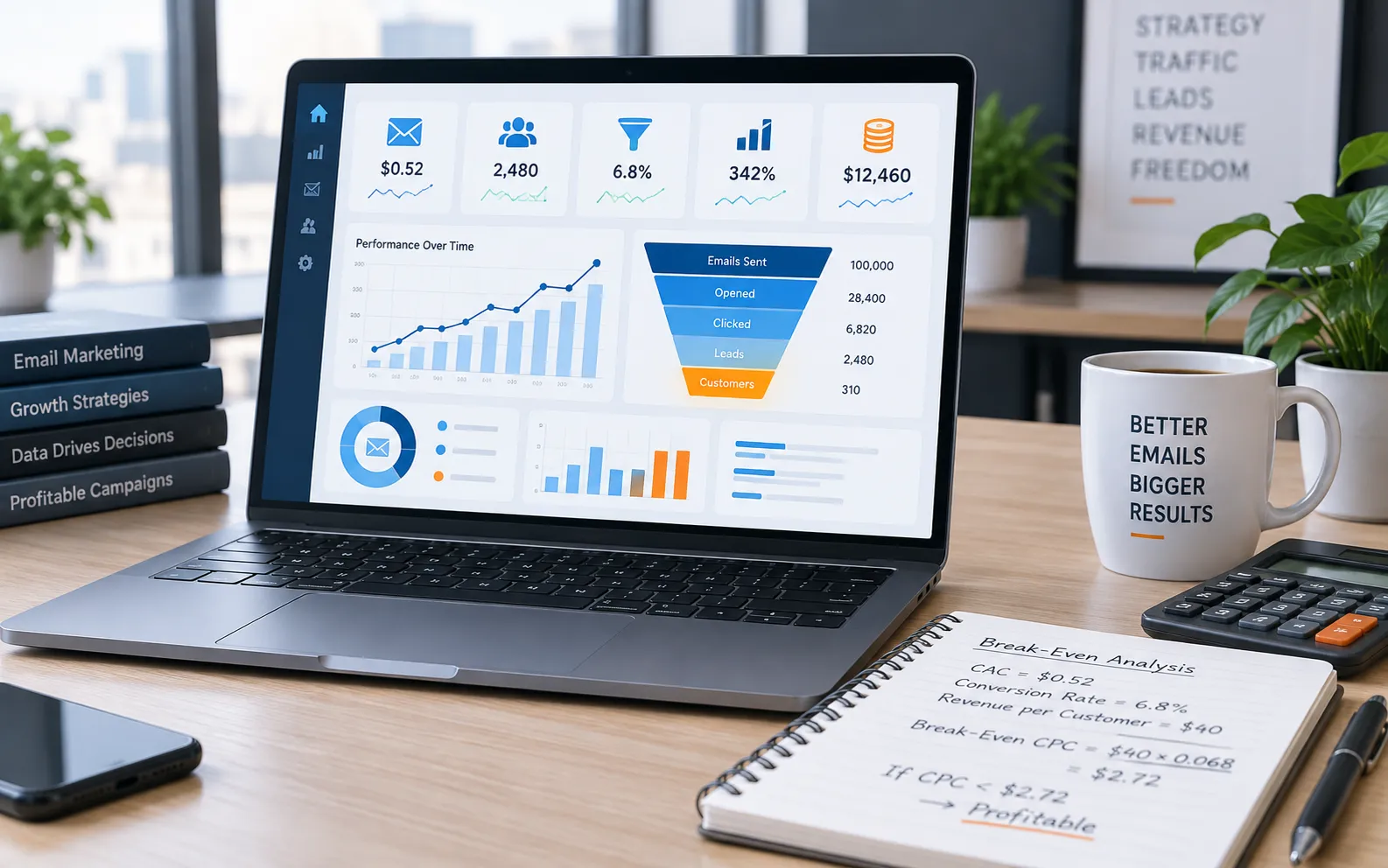
To improve ROI, businesses must track the right metrics. These include conversion rates, customer acquisition cost (CAC), customer lifetime value (CLV), and engagement metrics. Each of these performance metrics provides valuable insights into different aspects of marketing performance.
Conversion rate measures the percentage of users who take a desired action, while CAC indicates the cost of acquiring a customer. CLV represents the total revenue a customer generates over time. Together, these metrics help businesses evaluate the effectiveness of their strategies.
Tracking these metrics allows businesses to identify areas for improvement and optimize their campaigns. For example, a high CAC may indicate inefficient targeting, while a low conversion rate may suggest issues with the user experience.
ClickBox Agency focuses on these key metrics to drive ROI optimization. By analyzing data and implementing improvements, the agency helps businesses achieve better results.
Data Collection and Integration
Effective data analytics starts with accurate and structured data collection. Businesses need to gather information from multiple sources such as websites, social media platforms, CRM systems, email campaigns, and paid advertising channels. This multi-source approach ensures a complete and holistic view of overall marketing performance, helping businesses understand how each channel contributes to user engagement and conversions within their marketing analytics strategy.
Data integration is equally important because raw data from different platforms often exists in separate systems. By combining and unifying this data, businesses can gain a single, consistent view of customer behavior and campaign performance. This eliminates data silos and allows for more accurate analysis, better reporting, and improved ROI optimization. A unified data system also helps marketers understand the complete customer journey across multiple touchpoints.
Proper data collection and integration require the use of advanced tools and technologies that can efficiently track, organize, and process large volumes of data. These tools ensure that user interactions are recorded accurately and transformed into meaningful insights that support strategic decision-making. Without proper integration, businesses may miss critical insights or make decisions based on incomplete information.
At ClickBox Agency, data collection and integration are managed with a highly structured and precise approach. The agency ensures that all marketing data from different channels is properly connected, cleaned, and analyzed. This allows clients to access accurate, reliable, and comprehensive insights that drive better marketing performance and long-term growth.
Using Analytics Tools Effectively
Analytics tools play a crucial role in modern data-driven marketing by helping businesses collect, measure, and analyze customer and campaign data. Platforms like Google Analytics, CRM systems, and marketing automation tools provide deep insights into user behavior, traffic sources, and overall campaign performance. These tools make it possible to understand how users interact with a brand across different touchpoints, which is essential for improving decision-making and overall marketing analytics effectiveness.
However, using these tools effectively requires proper setup and configuration. Businesses must clearly define their goals, configure tracking systems, and ensure that all events and conversions are being recorded accurately. Without correct implementation, the data collected can be incomplete or misleading, leading to poor insights and ineffective strategies. Proper setup ensures that businesses can rely on their data for accurate ROI optimization and performance evaluation.
Another critical aspect is data interpretation. Simply collecting data is not enough—businesses must be able to analyze and understand what the data is actually indicating. This requires experience, analytical skills, and a strong understanding of marketing metrics. When interpreted correctly, data can reveal valuable insights about customer behavior, campaign effectiveness, and growth opportunities.
At ClickBox Agency, analytics tools are implemented and managed with a strategic approach. The team ensures proper setup, accurate tracking, and in-depth analysis to help businesses extract meaningful insights. By leveraging these tools effectively, ClickBox Agency enables clients to improve decision-making, optimize campaigns, and maximize their marketing ROI.
Customer Behavior Analysis
Understanding customer behavior is essential for improving overall marketing performance in a data-driven environment. Through marketing analytics, businesses can track how users interact with their website, which pages they visit, what content they engage with, and the actions they take before converting or leaving. This level of insight helps businesses move beyond assumptions and make decisions based on real user data.
This information allows businesses to identify important patterns and trends in user behavior. For example, they can determine which landing pages have the highest engagement, which content keeps users interested the longest, or where users drop off in the conversion funnel. These insights are critical for understanding what is working well and what needs improvement within the customer journey.
By analyzing customer behavior in detail, businesses can refine their strategies to improve user experience and increase conversions. Adjustments such as improving page layout, optimizing content flow, or simplifying navigation can significantly enhance engagement and drive better results. This leads to stronger ROI optimization and more efficient marketing performance.
At ClickBox Agency, customer behavior analysis is a key part of strategy development. The team uses advanced analytics to understand user journeys and create targeted, data-driven marketing strategies. This ensures campaigns are not only optimized for engagement but also designed to deliver measurable and consistent results.
Campaign Performance Analysis
Campaign performance analysis involves evaluating how effectively marketing campaigns are achieving their intended goals. This process includes tracking key performance metrics such as impressions, clicks, conversions, engagement, and overall ROI. By systematically measuring these indicators, businesses can understand whether their campaigns are generating awareness, driving traffic, and ultimately contributing to revenue growth.
By analyzing these metrics, businesses can clearly identify which campaigns are delivering strong results and which ones are underperforming. For example, a campaign with high impressions but low conversions may indicate targeting or messaging issues. This insight allows marketers to refine strategies, improve ad creatives, and allocate budgets more effectively toward high-performing campaigns, ensuring better ROI optimization.
Continuous monitoring and regular analysis are essential for maintaining consistent marketing performance. Campaigns should not be evaluated only at the end but tracked throughout their lifecycle to allow timely adjustments. This ongoing optimization helps businesses respond quickly to market changes and improve overall efficiency.
At ClickBox Agency, advanced analytics tools and data-driven methodologies are used to monitor campaign performance in real time. The team continuously evaluates key metrics, identifies improvement opportunities, and optimizes strategies to ensure maximum impact. This helps clients achieve stronger results, better ROI, and sustained marketing success.
Conversion Rate Optimization (CRO)
Conversion Rate Optimization (CRO) focuses on improving the percentage of website visitors who take desired actions, such as making a purchase, filling out a form, or signing up for a service. Instead of just increasing traffic, CRO aims to make better use of existing visitors by optimizing key elements like landing pages, calls-to-action (CTAs), forms, and overall user experience. Even small improvements in these areas can significantly impact conversion rates and overall business performance.
Data analytics plays a crucial role in CRO by providing deep insights into user behavior. By analyzing metrics such as bounce rate, session duration, click patterns, and user flow, businesses can identify where users drop off or face difficulties. Tools like heatmaps and session recordings further help in understanding how users interact with different elements on a page. These insights make it easier to identify problem areas and implement data-driven improvements rather than relying on guesswork.
By implementing effective CRO strategies, businesses can increase conversions without necessarily increasing website traffic. This makes marketing efforts more efficient and cost-effective, as higher conversion rates lead to better utilization of existing resources. As a result, businesses can achieve improved ROI while maintaining or even reducing their marketing spend.
At ClickBox Agency, CRO is treated as a critical part of overall ROI optimization. The team continuously analyzes user behavior, tests different variations through A/B testing, and refines strategies to improve conversion rates. By combining data-driven insights with proven optimization techniques, ClickBox Agency helps businesses maximize their results and achieve sustainable growth.
Predictive Analytics for ROI Growth
Predictive analytics uses historical data, advanced algorithms, and machine learning techniques to forecast future outcomes and trends. By analyzing past user behavior, campaign performance, and market patterns, businesses can gain insights into what is likely to happen next. This allows them to move from reactive decision-making to a more proactive and strategic approach, which is essential in today’s fast-evolving digital environment.
By leveraging predictive analytics, businesses can significantly improve their marketing effectiveness. It helps in identifying high-potential audiences, optimizing campaign timing, and delivering personalized experiences. For example, businesses can predict which users are more likely to convert, which campaigns will perform better, and where to allocate budgets for maximum impact. This leads to improved targeting, reduced waste, and enhanced ROI optimization.
As competition continues to intensify in 2026, predictive analytics is becoming a critical advantage for businesses looking to stay ahead. Instead of relying solely on past performance, companies can anticipate future trends and adapt their strategies accordingly. This not only improves efficiency but also enables businesses to respond quickly to market changes and customer needs.
At ClickBox Agency, predictive analytics is integrated into marketing strategies to deliver smarter and more effective campaigns. The team uses data-driven insights to forecast trends, refine targeting, and optimize performance. By adopting this advanced approach, ClickBox Agency helps clients stay ahead of the competition and achieve consistent, measurable growth.
Conclusion
Data analytics is no longer optional—it has become a core requirement for improving marketing ROI in 2026. In a highly competitive digital environment, businesses must rely on marketing analytics to understand customer behavior, measure campaign performance, and identify what truly drives results. Without data-driven insights, marketing decisions become guesswork, often leading to inefficient spending and missed opportunities for growth.
By leveraging advanced marketing analytics, businesses can gain deep insights into user behavior, campaign effectiveness, and overall performance. These insights help in refining strategies, improving targeting, and optimizing marketing efforts across multiple channels. When data is properly analyzed and applied, it becomes a powerful tool for increasing efficiency and achieving stronger ROI optimization.
With the right combination of tools, key metrics, and expert interpretation, businesses can transform raw data into meaningful and actionable insights. This enables them to make smarter decisions, reduce waste, and focus on strategies that deliver measurable impact. Over time, this data-driven approach leads to consistent improvement in performance and sustainable business growth.
ClickBox Agency stands as a trusted partner in this journey, helping businesses fully harness the power of data analytics. By implementing strategic tracking, advanced analytics tools, and performance-focused optimization techniques, ClickBox Agency enables clients to achieve maximum ROI and long-term success in a competitive digital landscape.
Call to Action
Ready to improve your marketing ROI with data-driven strategies?
👉 Partner with ClickBox Agency and unlock the full potential of your marketing analytics today!



























Sign in to leave a comment.