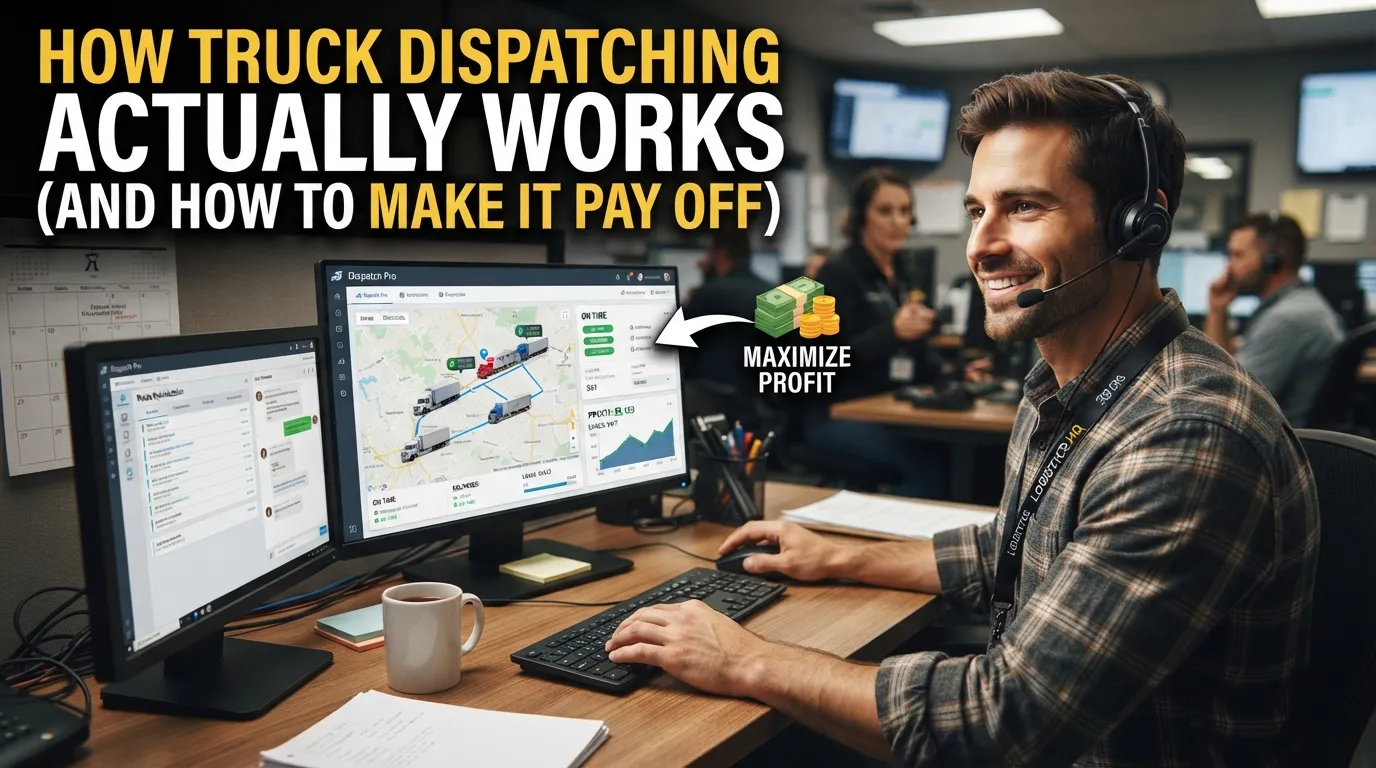

Running a truck in today’s market is tough. Between fuel prices, insurance, maintenance, and
spot market rates that fluctuate daily, keeping your wheels turning is only half the battle. The real challenge is making sure every single mile you drive actually puts money in your pocket.
That is where solid dispatching comes in. Whether you are an owner-operator driving your own rig or running a small fleet, managing freight booking while staying focused on the road is a recipe for burnout. Here is a realistic look at how professional dispatching operates, what makes a dispatch partner worth working with, and how to protect your bottom line.
The Real Role of a Freight Dispatcher
A lot of drivers assume dispatchers just sit around scrolling load boards, picking whatever pays decent, and sending over a rate confirmation. If that is all a dispatcher does for you, you are overpaying.
Real freight dispatching is about managing your entire back office. It is the buffer between you and the headaches of dealing with brokers, billing, and regulatory paperwork.
A proper dispatching service focuses on four main operational areas:
- Market Analysis & Lane Planning: Booking a high-paying load doesn't mean much if it drops you in a dead market where you have to haul out for pennies—or worse, deadhead 300 miles. Dispatchers look two or three steps ahead to build profitable loops.
- Rate Negotiation: Brokers start low. It’s their job. A skilled dispatcher knows current market averages for specific lanes and pushes back to get maximum dollar per mile, along with clear terms for detention, layover, and TONU (Truck Ordered Not Used).
- Credit Checks: Before you accept a load, you need to know if the broker actually pays. Good dispatchers check broker credit ratings through factoring databases to make sure you aren't waiting 90 days for a check that might bounce.
- Admin Work: Setup packets, rate sheets, certificates of insurance, invoicing, and factoring submissions take hours. Outsourcing this keeps you driving safely instead of filling out PDFs on a laptop at a truck stop.
5 Red Flags When Choosing a Dispatch Service
Not all dispatch companies are created equal. The trucking industry has plenty of dispatch services that overpromise and underdeliver. Watch out for these warning signs before signing any agreement:
1. Forced Dispatch Clauses
If a dispatch service tries to force you to take a load you don't want, walk away. As an independent owner-operator, you retain total operational control over your truck. You should always have final approval on every load, route, and rate.
2. Upfront Setup Fees or Long-Term Contracts
Reputable dispatchers charge a percentage or flat fee per load after the work is done. Be wary of companies requiring high setup fees or locking you into 6-month or 12-month exclusive contracts. You should be able to leave if performance drops.
3. Lack of Transparency on Broker Rates
You should always see the original rate confirmation straight from the broker not an edited version created by the dispatcher. If a dispatcher refuses to show you the original broker rate con, they might be skimming extra money off the top beyond their agreed fee.
4. Poor Communication
If a dispatcher is hard to reach while you are trying to onboard, imagine how difficult they will be to reach when you are stuck at a loading dock at 2:00 AM waiting for detention approval. Testing their response time early on is critical.
5. Inexperience with New Authority
If you just received your MC authority, many brokers won't work with you until you've been active for 30, 60, or 90 days. A good dispatcher knows which brokers work with new authorities and has strategies to keep you moving during those early months.
How to Maximize Revenue as an Owner-Operator
Working with a dispatcher is a partnership. To get the best results and keep your rate per mile high, keep these core strategies in mind:
- Know Your True Cost Per Mile (CPM): Before you can decide if a load is profitable, you must know your baseline fixed and variable costs. Factor in equipment payments, insurance, maintenance funds, fuel, permits, and your target personal salary. If your CPM is high, taking low-rate loads barely covers overhead.
- Be Flexible on Regional Lanes: Flexibility opens up higher-paying opportunities. If you insist on driving only one narrow corridor, you limit your load choices. Allowing your dispatcher to explore adjacent, high-demand lanes often yields better gross weekly pay.
- Avoid High-Deadhead Traps: Chasing a headline rate sounds great until you realize it requires hundreds of miles of empty driving to get to the pickup location. Always calculate load earnings based on total miles (loaded miles + deadhead miles).
If you are looking for dedicated back-office management, customized lane strategies, and complete load control, explore our truck dispatch services to see how we help independent carriers boost revenue without taking on unnecessary stress.
Frequently Asked Questions
What is the standard fee for truck dispatching?
Most dispatch companies charge between 5% and 8% of the gross load payout, depending on the equipment type and level of service provided. Some services offer flat-fee structures per load or per week.
Do I still need dispatching if I use load boards?
While you can search and book loads independently using load boards, managing negotiation, broker check-ins, rate packets, and invoicing while driving full-time can be overwhelming. A dispatcher handles these operational tasks so you can focus on driving safely and keeping your rig maintained.
Can a dispatch service help new MC authorities?
Yes. Navigating the initial 30 to 90 days under a new MC authority can be tricky due to broker aging requirements. Experienced dispatchers maintain established relationships with brokerages open to working with new carriers, helping you build operational history faster.
What is the difference between a freight broker and a truck dispatcher?
A freight broker represents the shipper and aims to get freight moved for the lowest possible price while keeping a margin. A truck dispatcher represents the carrier (you) and works to secure the highest possible rate per mile and the best operational conditions for your business.





























Sign in to leave a comment.