

Most of life is lived beneath the surface.
Like an underground river, it moves silently, shaping the land long before we notice the cracks above. We wake up, make decisions, react to people, chase goals, withdraw from conversations, and repeat familiar behaviors, often without ever choosing them consciously. By the time we notice the pattern, it already feels like “just who I am.”
For years, I believed my life was guided by intention and discipline. As an Olympic athlete, I trusted routines. As a student of performance psychology, I trusted data and frameworks. Yet the deeper I went into personal growth, the clearer it became that much of my behavior was not deliberate at all. It was automatic.
This realization is often what brings people to explore deeper paths like Personal Development Coaching. Not because they lack intelligence or ambition, but because they sense something invisible steering the wheel.
The Invisible Hand of Habit
Unconscious habits are not just actions. They are emotional reflexes, mental shortcuts, and protective responses formed long before we had language for them. They decide how we handle conflict, how we relate to authority, how we respond to failure, and how safe we feel resting or striving.
The challenge is not that these habits exist. The challenge is that they operate quietly. When something is quiet, it is easy to confuse it with truth.
I have met high-performing leaders who sabotage intimacy without knowing why. Athletes who train relentlessly yet avoid rest. Travelers who keep moving to avoid stillness. I have been all of them at different moments.
“What feels automatic often feels true, even when it no longer serves you.”
When Awareness Changes Everything
Awareness is disruptive in the best possible way. Once you see a habit clearly, it loses some of its power. But awareness alone is not enough. I learned this the hard way.
In 2004, I traveled to Vietnam for a tennis tournament. I lost in the first round. That defeat stung, but what stayed with me was not the loss. It was what I witnessed afterward.
The streets of Ho Chi Minh City were alive with motion. Scooters flowed through intersections without clear rules, yet accidents were rare. There was no central control, only awareness, adaptability, and trust. Each rider adjusted constantly to the collective rhythm.
Standing there, I realized how much of my own life had been driven by rigid internal rules I had never questioned. Push harder. Control more. Avoid uncertainty. These habits had once helped me succeed, but they were now limiting how fully I could engage with life.
That moment stayed with me. It still informs my work as a Metamorphosis coach today.
Why Habits Prefer Familiarity Over Growth
Unconscious habits are loyal. They protect us from perceived threat, not actual danger. They keep us within known territory, even when that territory feels cramped.
This is why change feels threatening, even when it is desired. Growth asks the nervous system to enter uncertainty. Habits exist to prevent that.
From a performance psychology perspective, this makes perfect sense. From a human perspective, it can feel frustrating and confusing.
People often tell me, “I know what I should do, but I don’t do it.” That sentence is a doorway. It tells us the problem is not knowledge. It is embodiment.
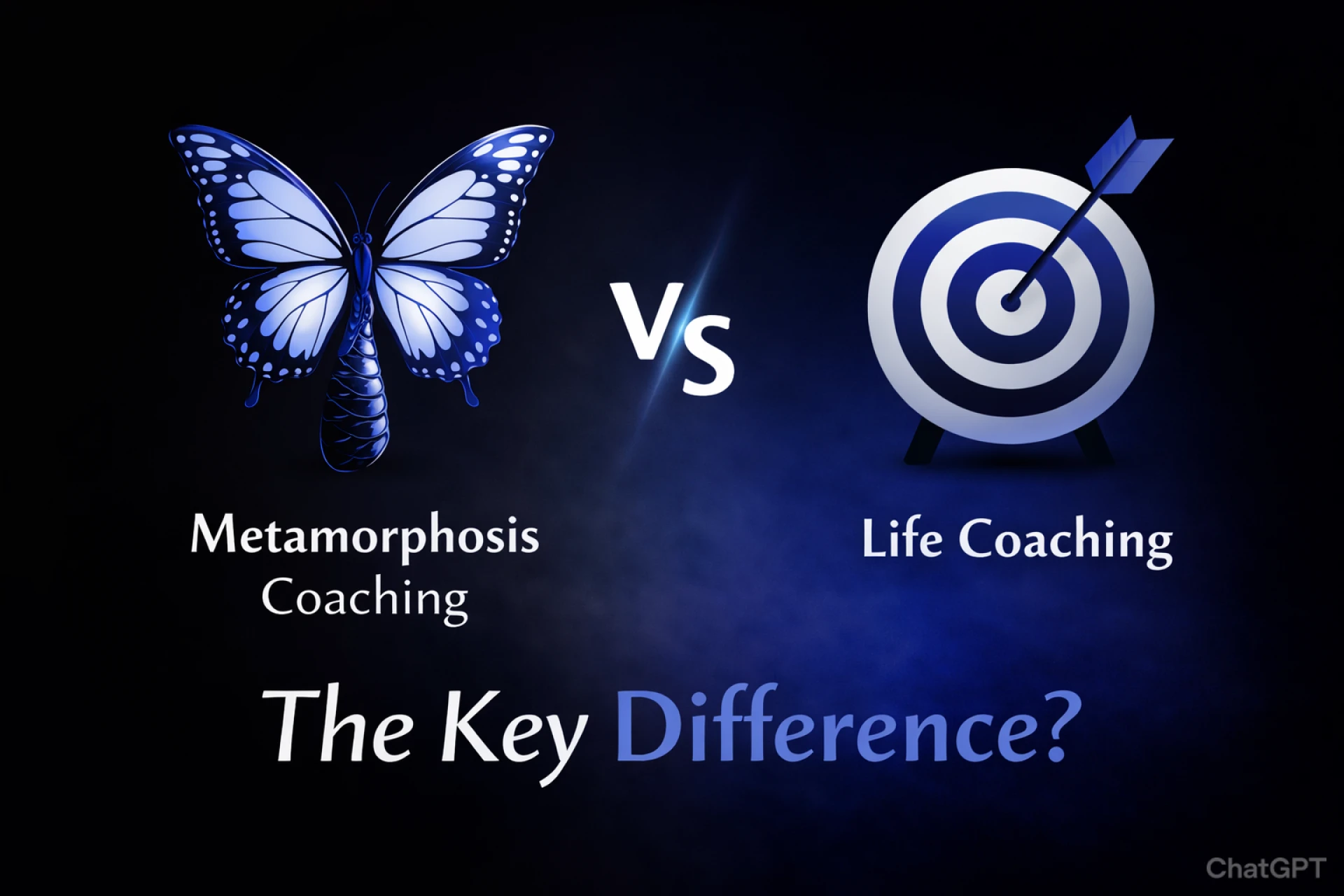
This is where metamorphosis coaching shifts the conversation. Instead of asking how to change behavior, we ask what the behavior is protecting. Instead of forcing new habits, we create enough safety for old ones to loosen.
The Cost of Living on Autopilot
When unconscious habits run the show, life shrinks quietly. Creativity dulls. Relationships repeat familiar scripts. Leadership becomes reactive instead of responsive.
I have seen this in boardrooms and living rooms alike. People doing “all the right things” yet feeling disconnected from themselves. The cost is not dramatic. It is subtle. And that is what makes it dangerous.
“A life on autopilot does not feel broken. It feels numb.”
This numbness is often the first sign that deeper awareness is calling.
A Path Toward Conscious Choice
So how do we begin to reclaim agency without waging war on ourselves?
First, we slow down. Habits thrive on speed. Awareness requires pause.
Second, we listen to the body. Habits live there more than in the mind. Tightness, restlessness, fatigue, and avoidance all carry information.
Third, we replace judgment with curiosity. Habits dissolve faster when they are understood rather than condemned.
This is why structured reflection and support through Personal Growth coaching can be so effective. It creates a container where awareness can deepen without overwhelm.
Lessons From Chaos and Flow
The scooters in Saigon taught me that harmony does not come from control. It comes from presence.
Each rider was responsible not just for themselves, but for the flow. They trusted the system because they were actively participating in it. Conscious engagement replaced rigid rules.
Life works the same way. When you bring awareness to your habits, you stop fighting them and start flowing with intention. You become responsive instead of reactive.
As The Metamorphosis coach, I do not see growth as self-improvement. I see it as self-remembering.
Practical Ways to Work With Unconscious Habits
Here are gentle, grounded practices that create real change:
- Notice one recurring reaction each day without trying to change it
- Track what emotion or need sits beneath that reaction
- Pause for three breaths before responding in familiar situations
- Ask what the habit is trying to protect
- Choose one conscious response, even if it feels uncomfortable
These steps are simple, but they rewire awareness. Over time, choice returns.
An Invitation Back to Yourself
Unconscious habits are not enemies. They are messengers from earlier chapters of your life. They remind you of where you have been and what once mattered.
The work is not to erase them, but to update them.
If you feel called to explore this work more deeply, paths like Personal Development Coaching exist to support that exploration with care and clarity.
Wherever you are, know this. Awareness is not an endpoint. It is a beginning.
When you start living consciously, even small moments become acts of freedom. And slowly, quietly, your life begins to feel like it belongs to you again.
FAQs
What are unconscious habits exactly?
They are automatic emotional and behavioral responses shaped by past experiences, often operating without conscious awareness.
Can unconscious habits really control life decisions?
Yes. They influence reactions, choices, and relationships more than conscious intention until awareness is developed.
Is awareness enough to change habits?
Awareness is the first step. Sustainable change also requires embodiment, safety, and consistent practice.
How does metamorphosis coaching address habits?
Metamorphosis coaching focuses on understanding the purpose behind habits and supporting identity-level change.
How long does it take to change unconscious habits?
There is no fixed timeline. Change unfolds gradually through awareness, compassion, and conscious choice.
May you move through life with curiosity instead of judgment, and awareness instead of force. The moment you notice what has been guiding you, you begin to choose differently.
Sign in to leave a comment.