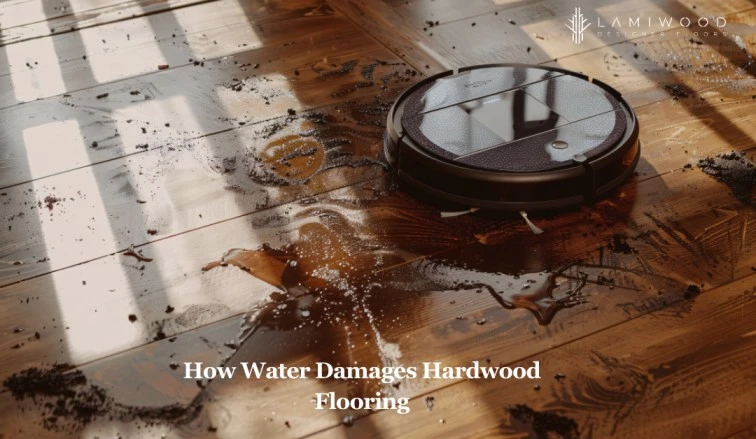

Hardwood flooring is a timeless choice for many homeowners, renowned for its elegance, durability, and natural warmth it brings to any space. However, despite its resilience, hardwood flooring is not impervious to damage, particularly when it comes to water exposure. Understanding how water damages hardwood flooring is crucial for homeowners to protect their investment and maintain the beauty of their floors for years to come.
Absorption and Swelling:
One of the primary ways water damages hardwood flooring is through absorption and swelling. Wood is a porous material, meaning it naturally absorbs moisture from its surroundings. When water comes into contact with hardwood flooring, whether through spills, leaks, or humidity, the wood fibers soak up the moisture, causing them to swell. This swelling can lead to the boards buckling or warping, resulting in uneven surfaces and potential tripping hazards.
Cupping and Crowning:
Water damage can also manifest as cupping and crowning in hardwood flooring. Cupping occurs when the edges of the boards rise higher than the center due to moisture absorption, creating a concave shape. On the other hand, crowning happens when the center of the boards swells more than the edges, resulting in a convex shape. Both cupping and crowning not only detract from the aesthetics of the flooring but also compromise its structural integrity, making it susceptible to further damage.
Mold and Mildew Growth:
Another significant consequence of water damage to hardwood or laminate wooden flooring is the growth of mold and mildew. Moisture-laden environments provide the ideal conditions for mold and mildew spores to thrive and multiply. Once these organisms take hold in the wood fibers, they can spread rapidly, causing discoloration, odors, and even health hazards for occupants. Addressing water damage promptly and effectively is essential to prevent mold and mildew growth and safeguard indoor air quality.
Structural Weakness and Decay:
Prolonged exposure to water can weaken the structural integrity of hardwood flooring, leading to decay and deterioration over time. As water infiltrates the wood fibers, it can break down the lignin and cellulose that give the wood its strength and stability. This degradation can result in soft spots, delamination, and ultimately, irreversible damage to the flooring. In severe cases, water-damaged hardwood may need to be replaced entirely, incurring significant costs for homeowners.
Finish Failure:
Water damage doesn't just affect the wood itself but also the finish or sealant applied to the surface of the hardwood flooring. High levels of moisture can cause the finish to bubble, peel, or flake off, leaving the wood exposed and vulnerable to further damage. A compromised finish not only diminishes the visual appeal of the flooring but also reduces its ability to repel future water intrusion. Regular maintenance and resealing can help protect the finish and prolong the lifespan of hardwood flooring.
Conclusion:
Water damage poses a serious threat to the beauty, durability, and longevity of hardwood flooring. Whether it's from minor spills or major flooding, the consequences can be costly and far-reaching. By understanding how water damages hardwood flooring and taking proactive measures to prevent and mitigate moisture exposure, homeowners can preserve the integrity of their floors and enjoy their natural beauty for years to come. Remember, prevention is key when it comes to safeguarding your investment in hardwood flooring.

























Sign in to leave a comment.