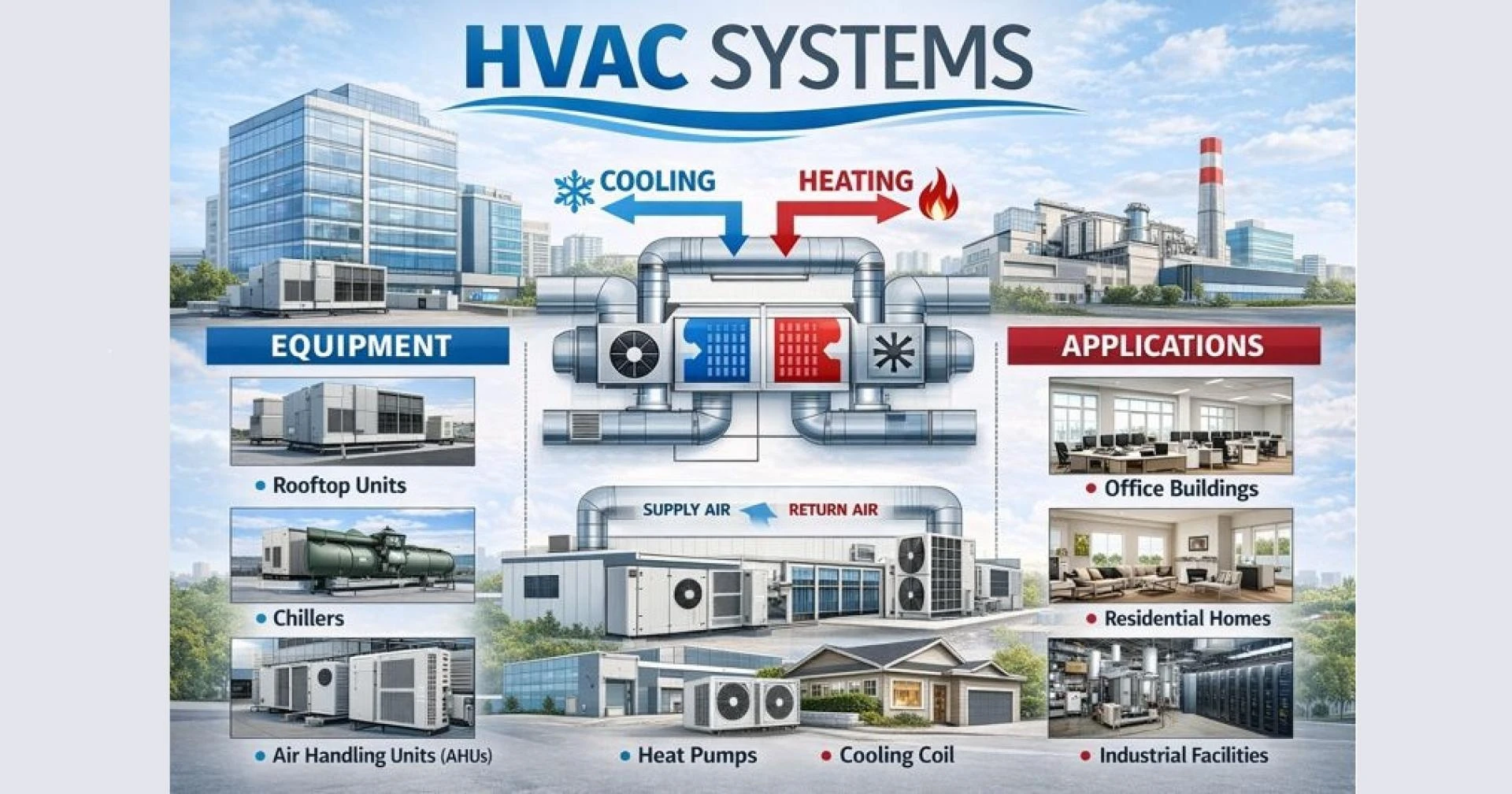

The global HVAC systems market, valued at USD 258.96 billion in 2025, is poised for substantial expansion, projected to hit USD 445.73 billion by 2033, growing at a compound annual growth rate (CAGR) of 7.0% from 2026 to 2033, according to the latest report from Grand View Research, Inc. This surge reflects escalating demand for energy-efficient, smart, and sustainable heating, ventilation, air conditioning, and refrigeration solutions amid rapid urbanization, stricter environmental regulations, and rising consumer focus on indoor air quality.
Surging Demand Driven by Sustainability and Urbanization
Key growth catalysts include global construction booms, particularly in residential and commercial sectors, alongside government incentives promoting low-global-warming-potential (GWP) refrigerants and renewable-integrated HVAC technologies. Policies like the U.S. Inflation Reduction Act and the European Union's Green Deal are accelerating retrofits of heat pumps and IoT-enabled systems, reducing carbon footprints while enhancing energy savings of up to 50% compared to legacy units.
The residential segment led with a 41.4-41.71% revenue share in 2024-2025, fueled by single-family homes and multi-housing developments incorporating ductless mini-splits and smart thermostats. Commercial applications, spanning offices, hospitals, and data centers, are forecasted to register the fastest CAGR of 7.5% through 2033, driven by LEED-certified buildings and post-pandemic indoor air quality mandates.
Detailed Market Segmentation Reveals High-Growth Pockets
Grand View Research's analysis breaks down the market across equipment, application, distribution channels, and regions, offering actionable insights for manufacturers, investors, and policymakers.
Equipment Landscape
Heating equipment commands the largest share at 51.5% in 2025, with heat pumps—expected to grow at a 7.0% CAGR, dominating due to their efficiency in variable climates and compatibility with solar and heat recovery systems. Cooling units, including air conditioners and chillers, follow closely, while ventilation fans and air handling units surge with building automation integration. Air purifiers and dehumidifiers also gain traction amid health-conscious designs.
Application Breakdown
Application 2025 Revenue Share Projected CAGR (2026-2033) Key Drivers
Residential 41.4% 6.8% Housing boom, smart homes
Commercial ~35% 7.5% Retrofits, green certifications
Industrial ~23% 6.5% Manufacturing efficiency, data centers
Industrial HVAC focuses on precision climate control for pharmaceuticals and food processing, bolstered by Industry 4.0 automation.
Distribution Channel Dynamics
Retail stores hold a 40.5% share for hands-on consumer purchases, but online channels are the fastest-growing at 7.7% CAGR, propelled by e-commerce giants offering virtual consultations and direct-to-home delivery. Wholesale channels support large-scale projects, with hybrid digital-physical models emerging.
The Complete Guide About: HVAC Systems Market Report
Regional Powerhouses
Asia Pacific reigns supreme with a 47.0% revenue share in 2025 (46.8% in 2024 data), led by China's 7.9% CAGR and India's explosive 8.3% CAGR from infrastructure megaprojects and hot-humid climates. North America benefits from retrofit incentives, projecting steady growth, while Europe prioritizes heat pumps for net-zero targets by 2050. Latin America and the Middle East/Africa emerge as hotspots via urbanization and oil-funded builds.
Innovation and Competitive Strategies
Leading players like Carrier Global Corporation, Daikin Industries, Johnson Controls, LG Electronics, and Mitsubishi Electric are investing in R&D for AI-optimized systems, low-GWP refrigerants like R-32, and modular designs for easy upgrades. Strategic acquisitions, such as Midea's purchase of European climate firms, underscore consolidation trends. The report highlights IoT and edge computing as game-changers, enabling predictive maintenance that cuts downtime by 30%.
Future Outlook: A Greener, Smarter HVAC Era
As climate change intensifies extreme weather, the HVAC sector stands at the forefront of resilient infrastructure. Grand View Research anticipates sustained momentum through 2033, with opportunities in emerging markets and decarbonization tech. Industry stakeholders are urged to align with ESG standards to capture this $186.77 billion incremental opportunity.
#HVAC #HVACSystems #HVACMarket #HVACTech #HVACLife #MarketResearch #HVACIndustry #Sustainability #EnergyEfficiency #SmartBuildings #Construction #GreenTech #BuildingAutomation #ClimateTech #PropTech

























Sign in to leave a comment.