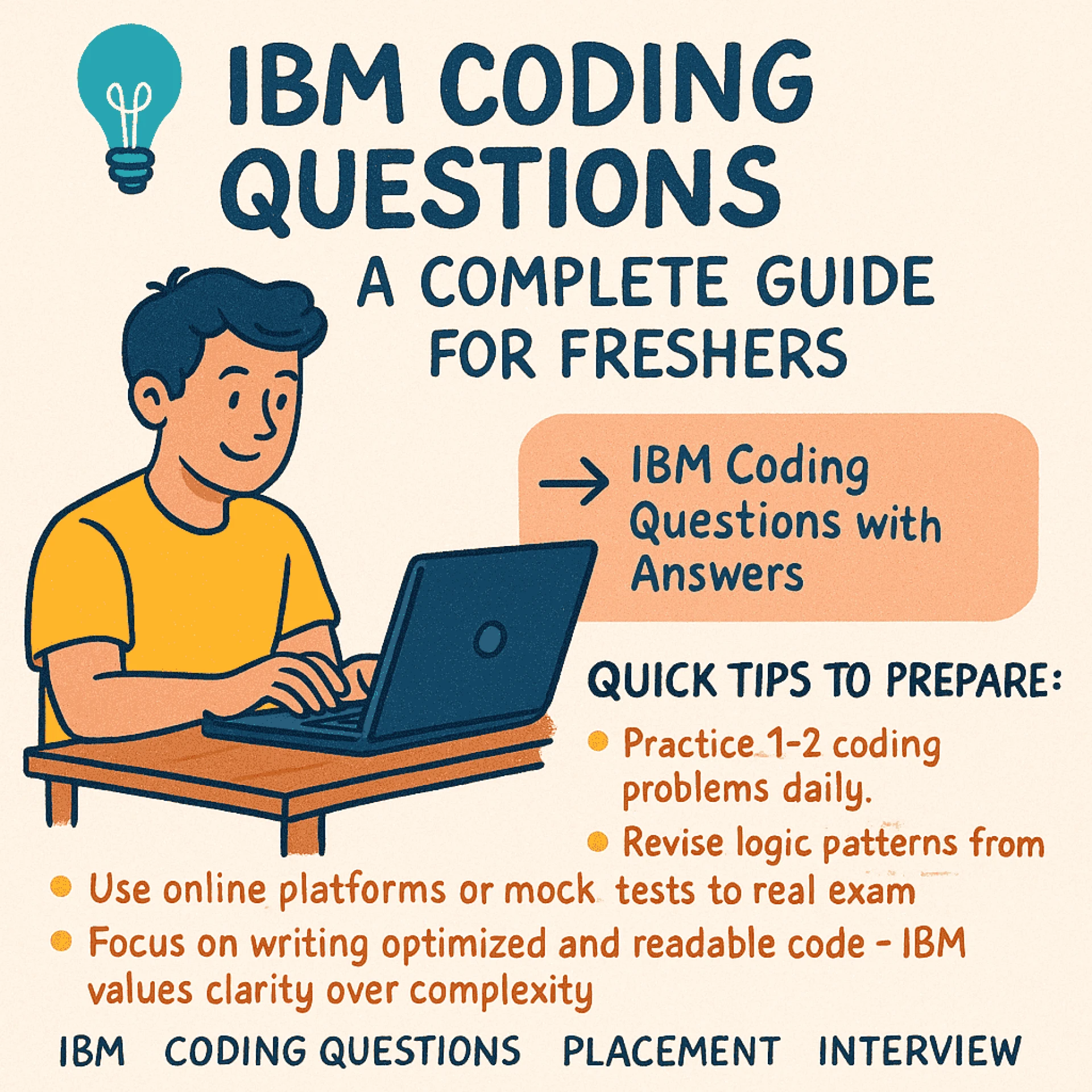
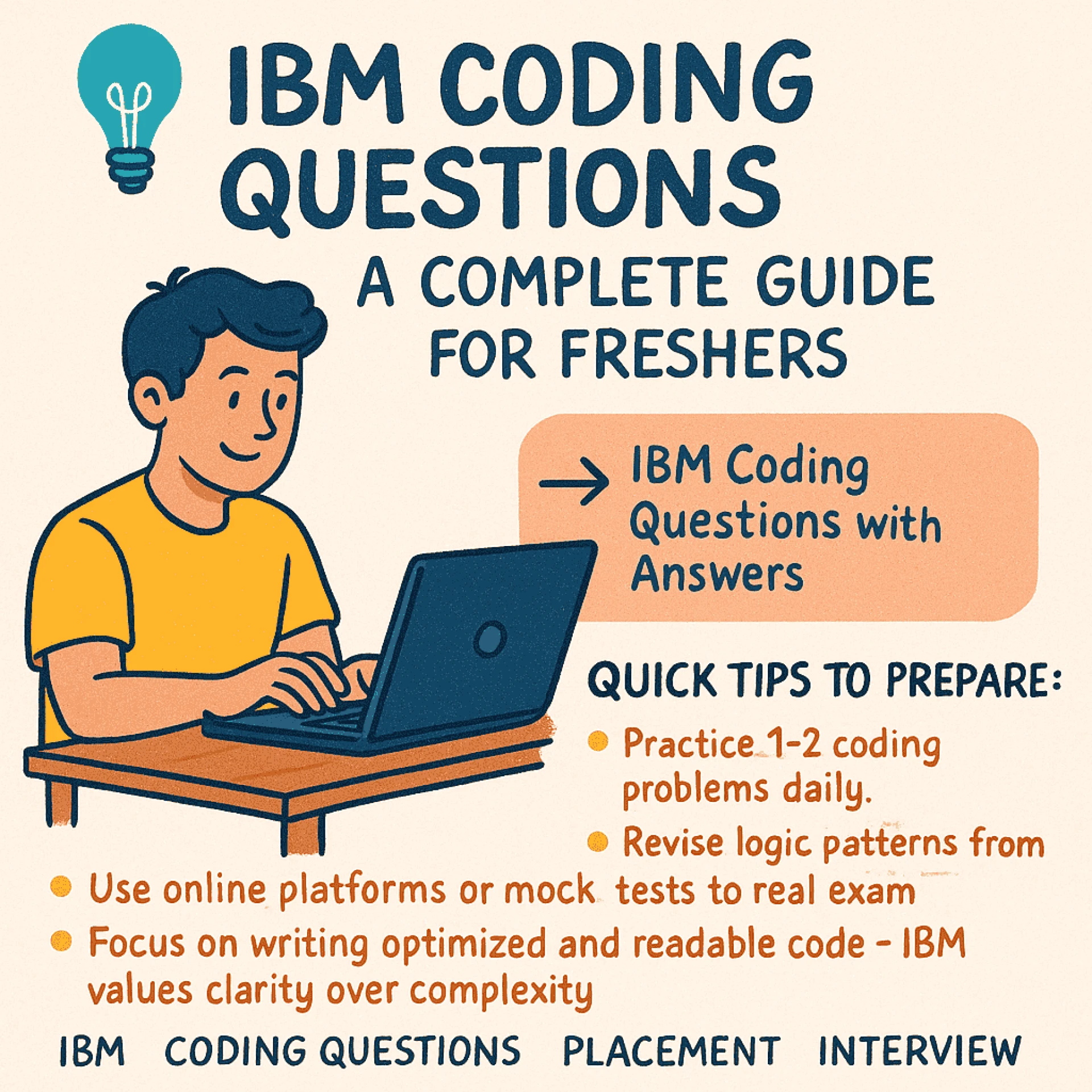
If you’re preparing for IBM’s placement or internship coding round, you might be thinking — “Where should I even start?”
Relax. You don’t need to be a coding expert to clear IBM’s test. You just need the right direction and smart practice.
👨💻 What IBM Actually Tests
IBM’s coding questions aren’t meant to confuse you. They’re designed to check your problem-solving and logical thinking skills.
Most of the questions come from simple topics like:
- Loops and conditional statements
- Arrays and strings
- Numbers and patterns
So even if you know the basics of C, C++, Java, or Python, you’re good to go.
🚀 Common Question Types You’ll See
Here are a few examples IBM loves asking again and again:
- Reverse a string without using in-built functions
- Find the second largest number in an array
- Check whether a number is an Armstrong or palindrome
- Print simple number patterns using loops
If you can solve these confidently, you’ve already covered 70% of the IBM logic base.
🧠 How to Prepare (Without Stress)
- Start small: Begin with easy problems and understand the logic.
- Stay consistent: Practice 1–2 coding problems daily — that’s enough.
- Use free platforms: Try solving on HackerRank or CodeStudio.
- Focus on clean code: IBM prefers clarity, not complexity.
💬 Example Question
Problem: Check if a number is palindrome.
Logic: Reverse the number → if original equals reversed, it’s palindrome.
num = 121
rev = str(num)[::-1]
if str(num) == rev:
    print("Palindrome")
else:
    print("Not Palindrome")
Simple, right? That’s exactly how IBM’s coding test feels when you know what to expect.
🔗 Where to Get Real IBM-Level Practice Questions
If you want actual IBM coding questions with detailed answers and logic explanation, I’ve written a full guide here 👇
👉 IBM Coding Questions with Answers – Full List
It includes:
- Previous-year IBM problems
- Step-by-step coding solutions
- Tips for both beginners and intermediate learners
Go through it once and you’ll easily understand what IBM expects.
✨ Final Advice
Don’t waste time memorizing syntax or mugging up 100 problems. Instead, learn how to break a problem into steps — that’s what real coders do.
With consistent practice and calm mind, you’ll definitely clear IBM’s coding test.
And remember — every great coder once started with “Hello World.” 😉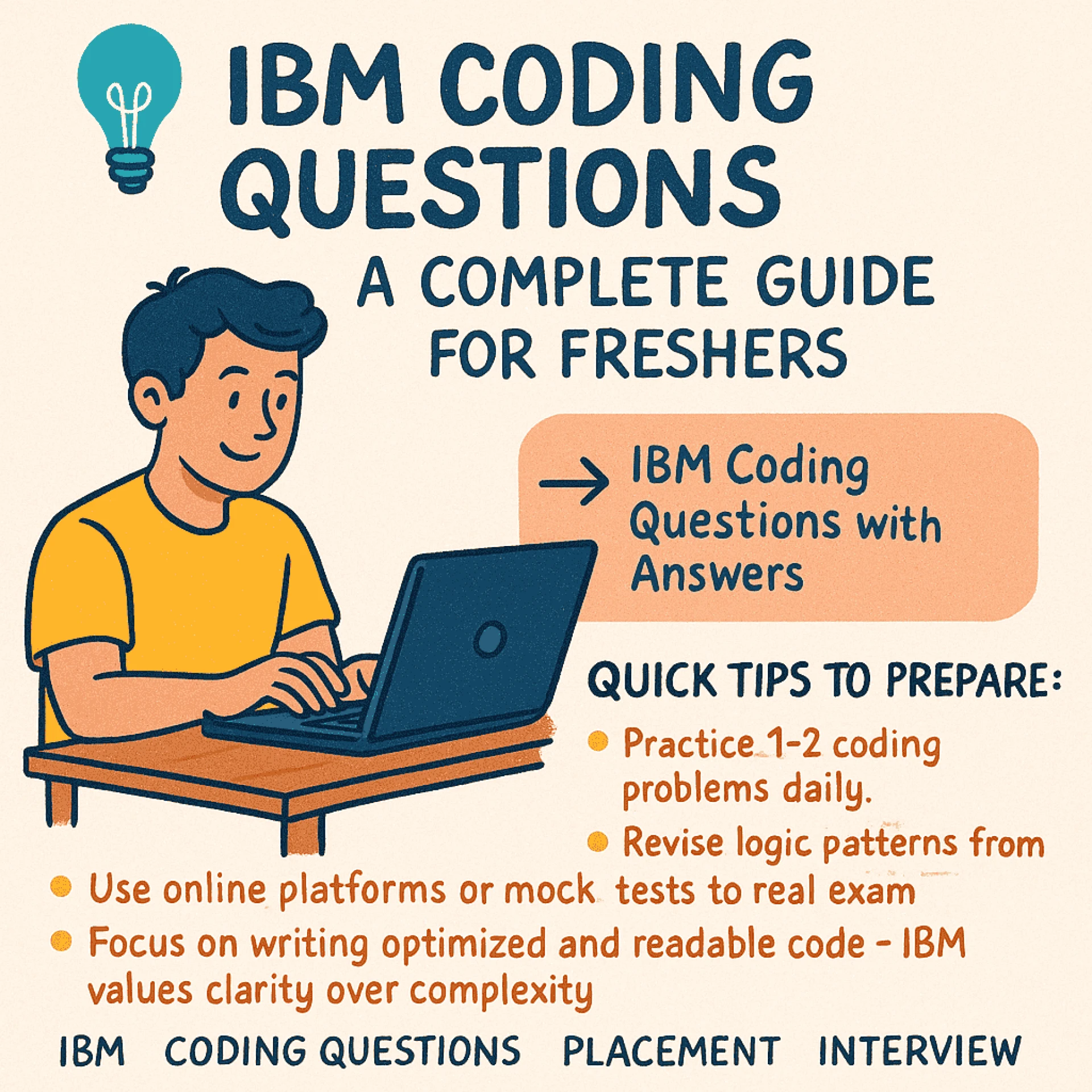

























Sign in to leave a comment.