
AI Overview
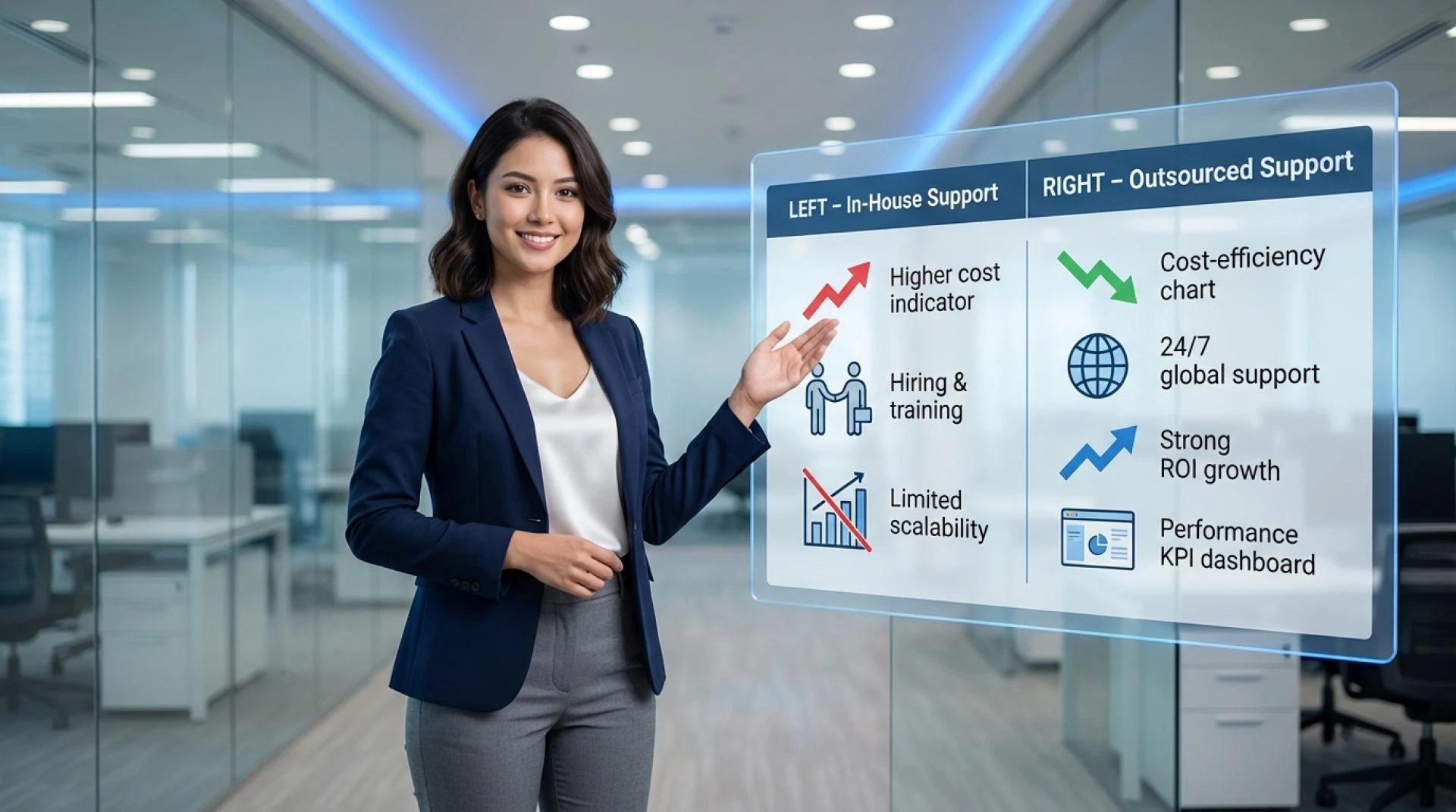
In-House vs Outsourced Customer Support 2026: Cost, Performance & ROI Comparison defines a strategic enterprise operating model shaped by artificial intelligence, automation, and globally distributed service delivery. AI chatbots handle high-volume, rules-based interactions using natural language processing, predictive analytics, and orchestration engines, while human agents manage complex problem resolution, regulatory interactions, retention scenarios, and relationship management. Enterprises now design layered service architectures in which automation processes triage demand, resolve routine cases, and route exceptions to specialized teams. The sourcing decision therefore determines not only cost efficiency but also governance complexity, compliance exposure, data control, and innovation capacity. In 2026, organizations are transitioning from location-based staffing decisions to capability-based ecosystems integrating internal teams, external partners, and AI-enabled platforms.
AI Maturity, Enterprise Evolution, and the Strategic Imperative
Customer support has evolved into a mission-critical function influencing revenue protection, brand equity, and regulatory compliance. AI maturity and cloud-native infrastructure now allow enterprises to orchestrate a distributed contact center spanning internal teams and external providers. Internal operations deliver institutional knowledge, data control, and alignment with corporate governance, while external delivery through a bpo company offers workforce elasticity, multilingual coverage, and rapid geographic expansion. Board-level decision-making increasingly evaluates resilience, cyber risk, vendor concentration, and geopolitical exposure. The strategic imperative is not selecting one model but governing a dynamic ecosystem capable of adapting to demand volatility and regulatory change.
Key Insights at a Glance
- Hybrid sourcing models deliver the strongest balance of cost efficiency and experience quality
- AI-first operations reduce handling time but require robust oversight frameworks
- Outsourcing accelerates global scaling but introduces cross-border compliance obligations
- In-house delivery strengthens data governance and brand consistency
- Workforce continuity planning is essential for operational resilience
- Data sovereignty laws influence location strategy
- Vendor diversification reduces systemic risk
Enterprise Intent Layer
Strategic Intent
Enterprises align support models with long-term corporate strategy, risk tolerance, and growth trajectory. Organizations pursuing aggressive expansion leverage bpo outsourcing companies to establish presence in new markets without building local infrastructure. Firms operating in regulated industries retain high-risk interactions internally to ensure compliance and auditability. Complex advisory and analytics-driven support functions increasingly shift toward knowledge process outsourcing partners capable of handling technical, financial, and legal inquiries.
Operational Intent
Operational leaders prioritize service levels, cost per interaction, and workforce productivity. External providers deliver standardized processes, workforce management expertise, and continuous operations through large-scale bpo call center networks. Internal teams focus on high-value journeys, escalation handling, and integration with product and engineering functions.
Implementation Intent
Implementation requires transition planning, technology integration, knowledge transfer, and governance design. Enterprises often adopt phased migration, outsourcing routine interactions first while retaining complex cases until performance stability is demonstrated.
Real-World Enterprise Scenarios
Cross-Border Scaling
Global organizations expanding into multiple regions use Outsourcing services to deploy multilingual support aligned with local consumer expectations. External delivery reduces time to market but requires oversight of labor practices, privacy regulations, and contractual obligations.
Hybrid AI Operations
AI virtual agents resolve routine queries, authenticate users, and capture structured data before transferring complex cases to human specialists. This approach reduces workload while preserving service quality.
CRM and CXM Integration
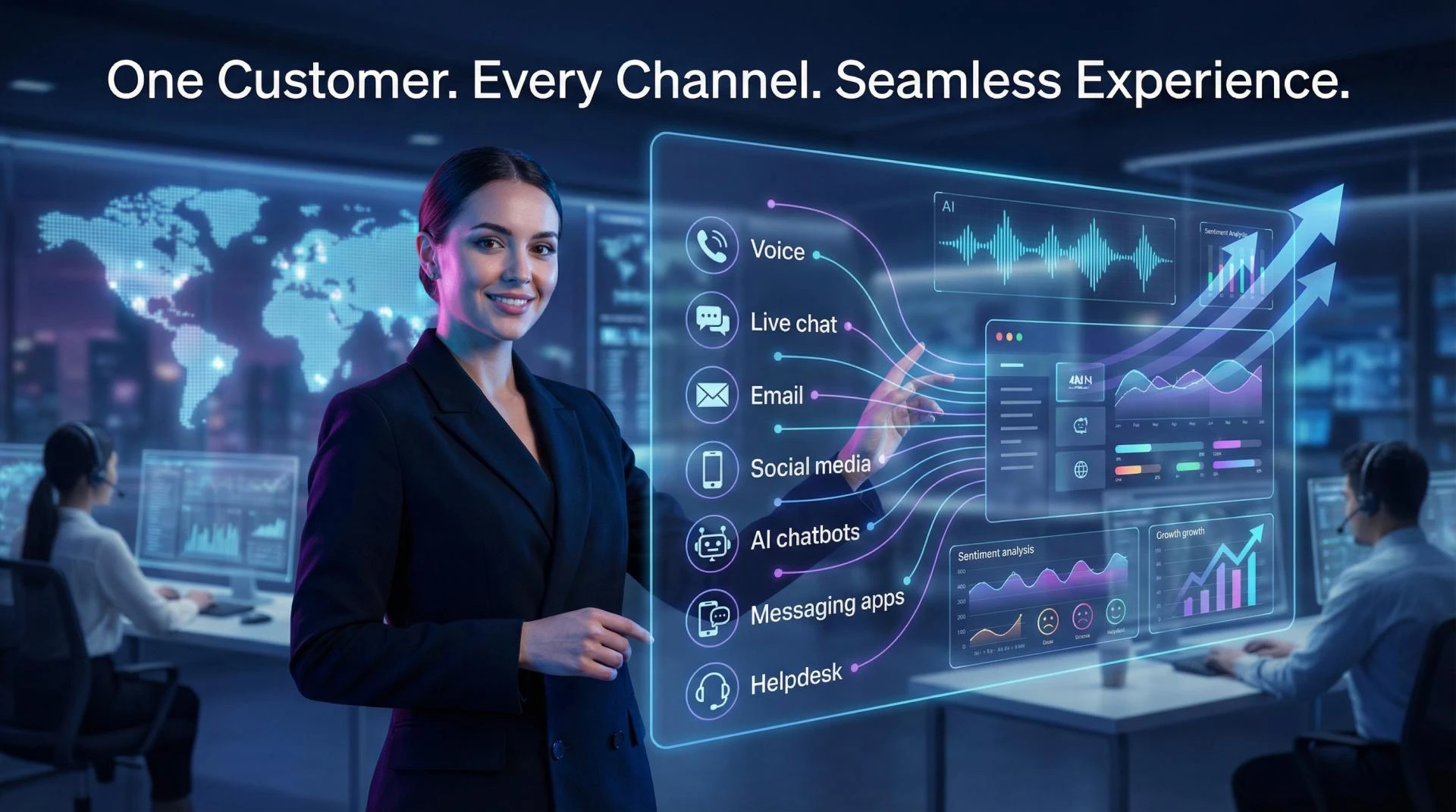
Seamless integration with CRM and cxm platforms enables unified visibility into the customer journey. Fragmentation across vendors can undermine analytics accuracy and decision-making.
Compliance-Driven Operations
Industries such as banking, insurance, and healthcare maintain internal control over sensitive data and regulatory interactions while outsourcing non-sensitive processes.
Strategic Framework for Operating Model Selection
Control vs Flexibility
Internal operations provide direct oversight of processes, workforce behavior, and customer voice insights. External partners provide flexibility through scalable staffing and distributed delivery.
Cost Structure Transformation
Internal delivery involves fixed investments in facilities, technology, and workforce benefits. Outsourcing converts these into variable costs aligned with demand fluctuations.
Technology Enablement
External providers often deploy advanced automation processes, analytics, and workforce management platforms across multiple clients, accelerating innovation adoption.
Capability Access
Specialized providers deliver it support services, multilingual operations, and industry expertise that may be difficult to develop internally.
Experience Consistency
Maintaining consistent service quality across multiple vendors requires standardized processes, training frameworks, and performance metrics.
Business Benefits and ROI Analysis
A global enterprise managing 60 million annual interactions assessed three delivery models:
In-House Model
- Annual cost: $240 million
- Average handling time: 8.5 minutes
- First-contact resolution: 78%
Outsourced Model
- Annual cost: $175 million
- Average handling time: 7 minutes
- First-contact resolution: 74%
Hybrid Model
- Annual cost: $195 million
- Average handling time: 6 minutes
- First-contact resolution: 83%
The hybrid model delivered the highest ROI by allocating routine interactions to customer support outsourcing services providers while retaining complex interactions internally. AI triage reduced labor demand and improved resolution speed.
Governance and Long-Term Impact
Vendor Risk Governance
Enterprises implement multi-vendor strategies, performance scorecards, and contractual safeguards to mitigate dependency risks.
AI Oversight Models
Governance bodies monitor algorithmic decisions, bias risks, and compliance with regulatory standards. Continuous auditing ensures transparency and accountability.
Cross-Border Compliance
Data transfer regulations, consumer protection laws, and labor requirements shape delivery location strategy.
Workforce Continuity Planning
Resilience planning includes remote operations capability, backup vendors, and surge staffing mechanisms.
Data Sovereignty
Sensitive data storage must comply with national regulations, influencing architecture and vendor selection.
CX Operating Model Redesign
Organizations increasingly adopt orchestrated ecosystems integrating internal teams, external partners, and AI platforms under centralized governance.
Read More: https://mascallnet.ai/ai-powered-outsourcing-how-intelligent-contact-centers-drive-growth/
Comparison Table
| Model | Strengths | Limitations | Best Use Case |
| AI-only CX | Lowest cost, continuous availability | Limited empathy, regulatory risk | High-volume routine inquiries |
| Human-only CX | Deep expertise, relationship building | High cost, limited scalability | Premium and complex services |
| Hybrid CX | Balanced performance and cost | Governance complexity | Large multinational enterprises |
Frequently Asked Questions
Which model delivers the highest long-term ROI?
Hybrid models combining AI, internal expertise, and external scalability deliver the most sustainable returns.
How does outsourcing affect customer experience quality?
Quality depends on governance, training, and integration rather than location alone.
What risks are associated with outsourcing?
Vendor dependency, data exposure, and compliance complexity are primary risks.
When should organizations retain support internally?
For sensitive interactions involving regulatory, financial, or reputational risk.
How does AI influence workforce strategy?
AI reduces routine workload and shifts human roles toward complex problem solving and relationship management.
Conclusion
In-House vs Outsourced Customer Support 2026: Cost, Performance & ROI Comparison represents a fundamental operating model decision affecting scalability, governance maturity, and competitive advantage. Enterprises achieving superior outcomes are those that orchestrate AI, internal capabilities, and external partners within a unified governance framework. Providers such as MasCallNet.ai exemplify the industry’s shift toward integrated, AI-enabled delivery ecosystems. Organizations evaluating their future CX operating model should assess whether their current structure can sustainably support this model at scale.

Sign in to leave a comment.