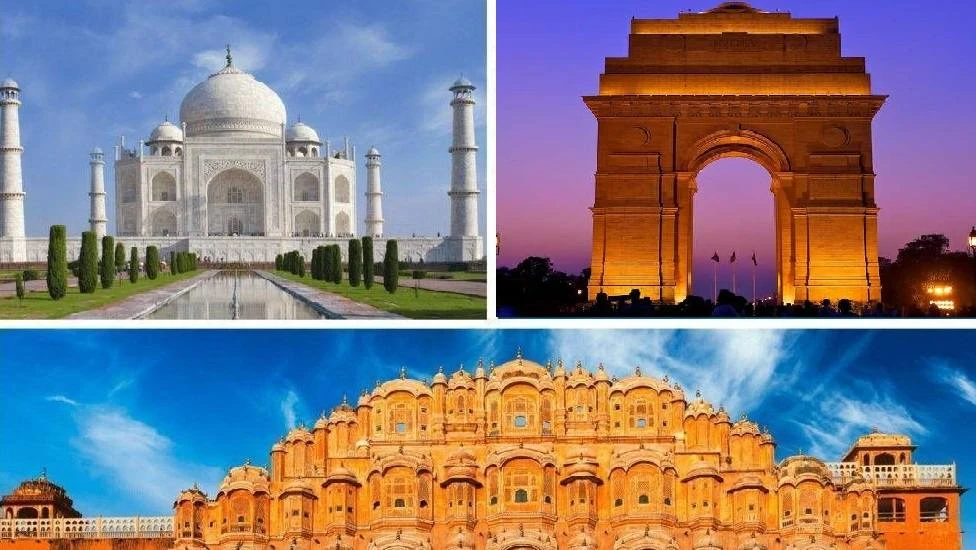
India’s Golden Triangle is one of the most celebrated travel circuits in the country, linking the historic cities of Delhi, Agra, and Jaipur. This triangular route offers travelers an immersive experience into India’s cultural heritage, architectural brilliance, and rich traditions. For many international visitors, it is the first and most memorable introduction to India’s diverse landscapes and history. The journey can be comfortably completed over a few days, making it ideal for both short vacations and extended travel plans. Along the way, travelers witness the contrasts between modern urban life, Mughal splendor, and royal Rajput legacies.
Exploring Delhi: A Blend of Old and New
Delhi, India’s capital city, is often the starting point of the Golden Triangle circuit. The city is divided into Old Delhi and New Delhi, each offering unique experiences. Old Delhi is known for its bustling markets, narrow lanes, and historical monuments. The Red Fort, constructed in the 17th century, stands as a symbol of India’s imperial past. Close by is Jama Masjid, one of India’s largest mosques, where visitors can explore stunning Mughal architecture and vibrant neighborhood streets.
New Delhi contrasts with broad avenues, colonial-era landmarks, and modern business districts. Popular attractions include India Gate, the Parliament House, and the serene Lotus Temple. The Qutub Minar complex, a UNESCO World Heritage Site, showcases Indo-Islamic artistry through its towering minaret and ancient ruins. Travelers often enjoy combining cultural sightseeing with food trails, as Delhi is famous for its street food and diverse cuisine.
For international travelers, Delhi serves as a convenient gateway with excellent road connectivity, making it easy to arrange itineraries such as Golden Triangle tours from Delhi. These packages simplify travel planning and ensure seamless experiences across the three cities.
Agra: Home of the Iconic Taj Mahal
From Delhi, the journey continues to Agra, located in the northern state of Uttar Pradesh. Agra is best known for the Taj Mahal, a monument that captures global admiration for its architectural beauty and romantic legacy. Built by Mughal Emperor Shah Jahan in memory of his wife Mumtaz Mahal, the Taj Mahal is a UNESCO World Heritage Site made from gleaming white marble intricately decorated with floral carvings and gemstone inlay. Visiting at sunrise or sunset enhances the experience, as the marble reflects changing hues under natural light.
Beyond the Taj Mahal, Agra houses other significant historical sites. The Agra Fort, constructed in red sandstone, served as the main residence of Mughal emperors for generations. With its palaces, audience halls, and fortified walls, it offers insights into imperial life during the Mughal era. Another notable site is Fatehpur Sikri, a planned Mughal city located about an hour from Agra. Abandoned centuries ago, it retains impressive structures such as the Jama Masjid, Buland Darwaza, and royal palaces, making it a valuable stop for history enthusiasts.
While Agra is world-famous for its monuments, it also offers cultural experiences through local crafts, marble inlay workshops, and traditional markets. Travelers can shop for souvenirs, handmade textiles, and artisanal décor while engaging with local craftsmen who preserve centuries-old techniques.
Jaipur: The Royal Capital of Rajasthan
The final point of the Golden Triangle is Jaipur, the capital of Rajasthan. Known as the Pink City due to its distinct building color scheme, Jaipur exudes royal charm and showcases grand palaces, hilltop forts, and vibrant bazaars. The city was founded in the 18th century by Maharaja Sawai Jai Singh II and is among the earliest planned urban settlements in India, featuring wide streets and organized layouts.
Among Jaipur’s top attractions is the Amber Fort, a majestic hillside fortress overlooking Maota Lake. Visitors often ride jeeps or walk up to the entrance to explore ornate halls, mirror-work chambers, and sweeping courtyards. Within the city center, the City Palace complex blends Mughal and Rajput architectural elements and includes museums displaying royal costumes, armory, and artifacts. Nearby stands the Hawa Mahal, or Palace of Winds, a five-story façade with hundreds of small windows originally designed to allow royal women to observe street life discreetly.
Astronomy enthusiasts will appreciate the Jantar Mantar observatory, a UNESCO site featuring architectural instruments used to measure celestial movements with remarkable precision. Jaipur is also famous for its colorful markets offering gemstones, block-printed fabrics, jewelry, and handicrafts. The city’s hospitality scene is rich with traditional Rajasthani cuisine, folk performances, and heritage hotels.
Travel Tips and Cultural Insights
Traveling through the Golden Triangle is straightforward due to improved highways and convenient transport options. The best time to visit is typically between October and March, when the weather is cooler and better suited for sightseeing. Guided tours can enhance the experience, as they add historical context and ensure efficient navigation through busy city centers.
Rajasthan-based travel operators are particularly well-versed in curating Golden Triangle journeys. Companies like Rajasthan Tour Services offer customized itineraries, professional guides, and comfortable transportation, making the travel experience smooth and informative. Their expertise also allows visitors to extend their journey into other regions of Rajasthan, such as Udaipur, Jodhpur, or Jaisalmer, to experience desert landscapes, royal forts, and cultural festivals.
Culturally, the Golden Triangle showcases India’s diversity. Visitors encounter different languages, cuisines, and traditions as they move from city to city. Delhi reflects cosmopolitan influences, Agra highlights Mughal grandeur, and Jaipur presents royal Rajput heritage. Respectful dressing, awareness of local customs, and flexibility during travel will enrich the journey.
Conclusion: A Gateway to Indian Heritage
The Golden Triangle offers a compelling blend of history, architecture, and culture, making it one of India’s most attractive travel routes. Whether for first-time visitors or repeat travelers, the circuit provides a compact yet profound introduction to India’s past and present. From the bustling streets of Delhi to the marble elegance of the Taj Mahal and the regal splendor of Jaipur, the experience leaves lasting impressions and often inspires deeper exploration. With reliable travel services and well-planned itineraries, discovering the Golden Triangle becomes not just a trip but a meaningful journey through India’s heritage.




























Sign in to leave a comment.