
India VIX today trades at 14, which creates an illusion of calm in the market. The market appears peaceful because options, which have low prices, show low market activity, and people show no signs of anxiety. The India VIX share price has experienced three distinct phases, which include its lowest point, abrupt shifts, and continuous monitoring despite its apparent tranquil state.
What Is India VIX and Why Does It Matter
The India VIX serves as the volatility index for the National Stock Exchange to predict market volatility during the upcoming 30-day period. The index derives its value from Nifty 50 options, which display bid and ask pricing information. The VIX index shows increased market fear when its value rises. The VIX index shows heightened market fear when its value increases because VIX shows fear, while VIX shows peacefulness.
Traders frequently track India VIX share price movements alongside Nifty to understand whether market moves are driven by genuine momentum or fragile calm. A market that goes up while VIX increases shows that people become anxious about the situation. A market that rises while VIX decreases shows that people become more confident about the market.
From an All-Time Low to a February Climb
The India VIX story in early 2026 begins in late December 2025, when the index touched 9.15, which marked its lowest level since NSE launched the index. This period of market calm showed extreme conditions because investors made minimal hedging activities while option premiums reached their lowest levels in multiple years, and market participants showed no signs of fear through their pricing methods.
The situation experienced a transformation by February 2026. India VIX today has climbed back into the 12 to 14 range, which currently shows a value of 14.06 on February 24. The ascent has experienced various interruptions because it reached multiple sharp increases, which demonstrated to traders that peaceful market conditions could change at any moment.
VIX Is Staying Low, Yet It's Experiencing Multiple Sudden Spikes
India VIX has maintained its position within the 12 to 14 range throughout most of February. The analysts characterize this situation as a moderate calm zone that exists between two boundaries because it stays below 20, yet it does not reach the extreme lows that occurred in late 2025. The month features several important episodes, which started with the following events:
- The Sensex experienced a drop exceeding 1,000 points on February 13, while VIX registered a sharp increase because risk sentiment moved downward throughout all market sectors.
- The VIX experienced a 7% increase during one trading session when the Sensex dropped 1.5%, which ended a three-day winning streak. The market experienced widespread selling activity, which affected all 16 NSE sectoral indices.
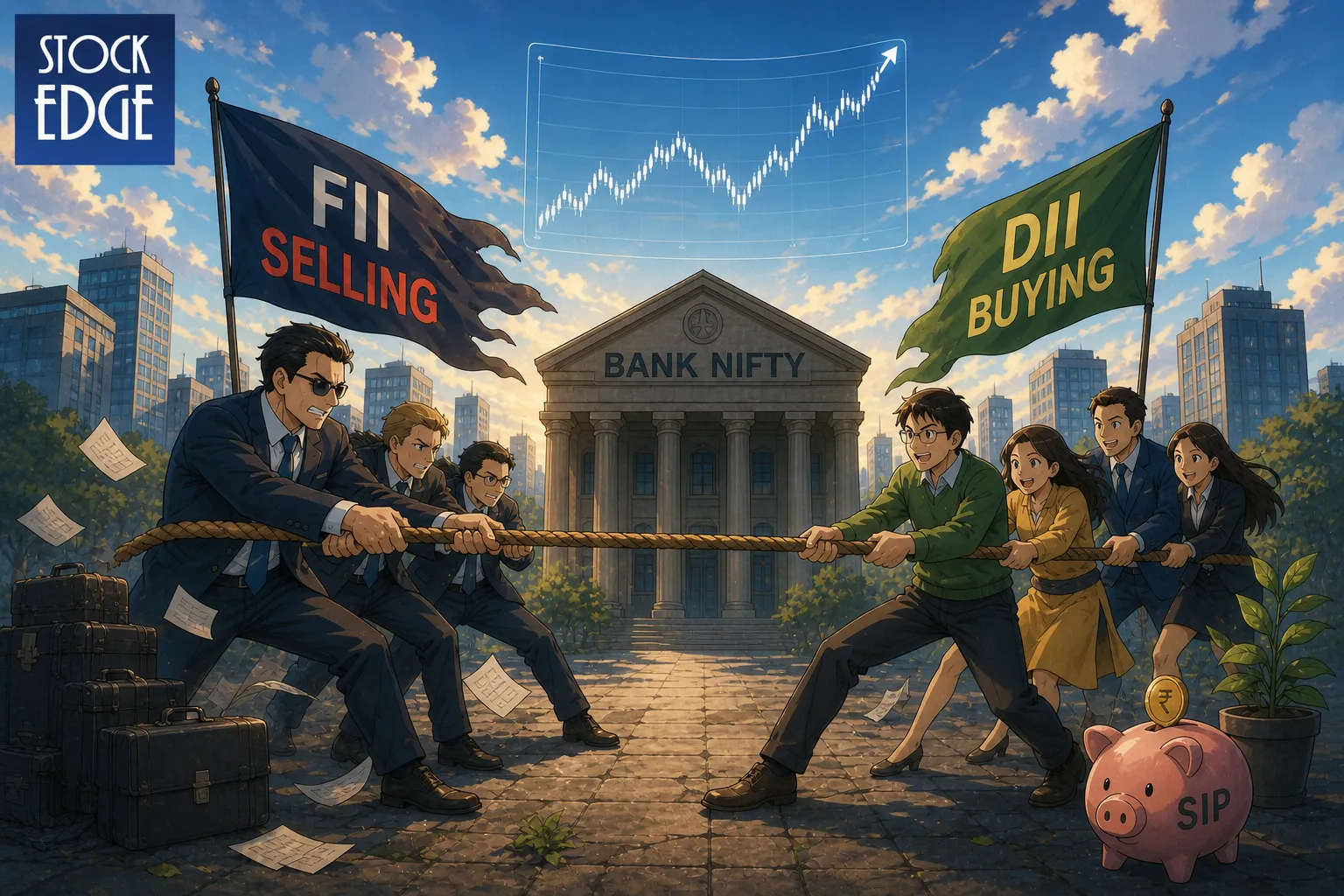
- The VIX index experienced another 6.71% increase on February 20, which brought it to 14.36, while foreign institutional investors (FII) withdrew roughly Rs 880 crore from the market.
The classic VIX pattern shows that these episodes follow the standard VIX movement because long periods of stability face sudden occurrences, which create heightened anxiety. The index maintains its standard value, yet external factors can trigger rapid index movements that occur within multiple hours.
What a VIX of 12 to 14 Actually Signals
India VIX today at around 14 carries several practical implications:
Traders predict short-term price movements between two possible extremes, which results in lower option prices. The market shows active movement because traders already anticipate upcoming price changes.
The India VIX share price shows expected movement sizes but does not provide information about its expected paths. Traders predict lower market movement for the upcoming periods when the VIX shows a low value.
How Traders Are Using India VIX Today
Different participant types create their strategies based on the current market conditions.
- Options buyers find cheaper hedges due to low implied volatility. The current market situation enables options traders to build their positions because protective puts and small directional calls show lower prices than VIX high times.
- Short strangles, credit spreads, and iron condors serve as preferred strategies for options sellers. The range-bound market supports these approaches, but the February spikes are a reminder that position sizing and stop-losses matter.
- Swing traders are using the India VIX share price movement as their active tracking method. A sustained move above 15 would flag a volatility regime shift. A move above 18 to 20 would signal genuine risk-off conditions.
Investors who want to hold positions during long periods identify VIX values that stay below 15 because this pattern historically indicates a lower chance of brief market losses, which allows them to invest gradually in high-quality stocks.
Catalysts That Could Push VIX Higher
Several developments could move India VIX today out of its current range:
- Any surprise shift from the US Federal Reserve on rate direction
- Accelerated FII outflows will occur when dollar strength and global risk sentiment experience declines
- Negative developments in US-India trade negotiations, where optimism has already faded from earlier in the year
Geopolitical flare-ups - a pattern seen in June 2025, when India VIX briefly crossed 21 during a period of heightened regional tension
The Bottom Line
Traders with experience recognize the current market conditions in India's VIX, which they consider as an active state between complete stability and total disturbance. The market has moved past its lowest point, which it reached in December 2025. The index has returned to its normal operating range between 12 and 14, whereas February's increased activity demonstrated that it still reacts strongly to news developments.
Traders can achieve real-time market sentiment assessment through the combination of India VIX share price movements with FII-DII flows and global market indicators. The current assessment shows that people experience reduced fear, but they do not feel complete safety. Markets treat those two categories as separate elements that always hold importance in their operations.
Disclaimer: This article is for informational and educational purposes only and does not constitute investment advice. Please consult a SEBI-registered financial advisor before making any investment decisions.



Sign in to leave a comment.