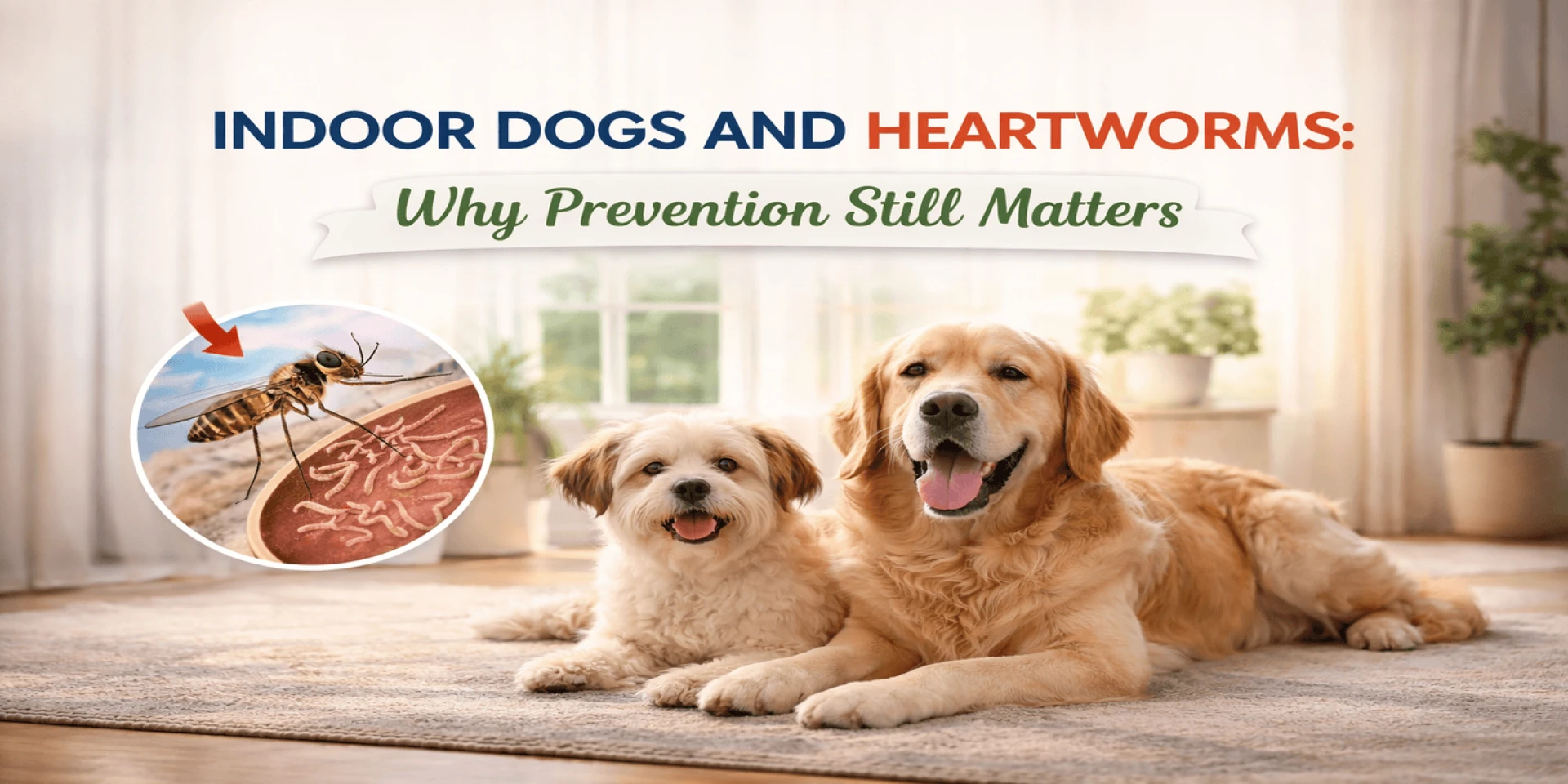

Many dog owners believe that keeping their pets indoors automatically shields them from serious health risks. While an indoor lifestyle can reduce exposure to certain dangers, it does not eliminate all threats—especially when it comes to heartworm disease. Heartworms are transmitted by mosquitoes, and these insects don’t recognize the difference between indoor and outdoor spaces. A single bite is enough to put a dog at risk.
Heartworm disease can quietly progress for months before symptoms appear, making prevention an essential part of responsible pet care. Even dogs that spend most of their time inside may be exposed during short outdoor breaks, open windows, or seasonal changes in mosquito activity. Understanding how heartworms spread and why prevention is recommended for all dogs helps pet parents make informed, proactive decisions. Awareness—not fear—is the first step toward protecting long-term canine health.
What Is Heartworm Disease in Dogs?
Heartworm disease is a serious condition caused by parasitic worms that live in a dog’s heart, lungs, and nearby blood vessels. Over time, these worms can interfere with normal blood flow and place strain on vital organs. The disease often develops gradually, which means dogs may appear healthy long before noticeable signs emerge.
Because the damage occurs internally, heartworm disease can be difficult to detect in its early stages without veterinary testing. This slow progression is one reason prevention plays such an important role in canine health care.
How Heartworms Are Transmitted
Heartworms are spread exclusively through mosquito bites. When a mosquito feeds on an infected animal, it can pick up microscopic heartworm larvae. If that mosquito later bites another dog, the larvae may enter the bloodstream and begin to mature.
This method of transmission means heartworms are not spread through contact with other dogs, shared spaces, or food. The presence of mosquitoes—whether indoors or outdoors—is the key factor that determines risk.
Why Being an Indoor Dog Doesn’t Eliminate Risk
It’s easy to assume that indoor dogs are protected simply because they spend less time outside. In reality, mosquitoes frequently enter homes through open doors, windows, and screens. Even brief moments outdoors—such as bathroom breaks, walks to the car, or time spent on balconies—can create exposure.
In many regions, mosquitoes are active for longer periods than expected, sometimes year-round. Climate patterns and mild winters have also expanded mosquito seasons in various areas. Because exposure can happen unintentionally and unpredictably, an indoor lifestyle alone cannot fully prevent risk.
Common Myths About Indoor Dogs and Heartworms
One common myth is that heartworm disease only affects dogs that spend significant time outdoors. Another is the belief that mosquitoes are only active during peak summer months. Some pet parents also assume that heartworm disease is now rare and unlikely.
In truth, heartworm disease remains a concern wherever mosquitoes are present. Modern prevention efforts have reduced cases, but that success depends on continued awareness and consistency. Misunderstanding risk factors can lead to gaps in protection.
Health Risks of Heartworm Disease
Once heartworms mature, they can cause lasting damage to a dog’s heart and lungs. As the disease progresses, dogs may experience reduced stamina, breathing difficulties, and general discomfort. In advanced cases, heartworm disease can become life-threatening.
Treatment is often more complex and physically demanding for dogs than prevention. Recovery may involve extended rest and careful monitoring, highlighting why prevention is generally considered the safer approach.
Why Prevention Is Still Recommended for Indoor Dogs
Veterinarians often recommend heartworm prevention based on risk rather than lifestyle alone. Because exposure can occur unexpectedly, prevention helps reduce the chance of infection before it starts. This proactive approach supports long-term health and minimizes the likelihood of serious complications later in life.
For pet parents seeking a deeper understanding of how prevention works and why it’s important for all dogs, learning more about heartworm prevention for dogs can help clarify key considerations and care choices.
How Pet Parents Can Reduce Risk at Home
While prevention is important, additional steps can help lower exposure:
- Reducing standing water around living spaces
- Using screens and basic mosquito control methods
- Staying informed about seasonal parasite risks
These actions complement preventive care and contribute to a healthier environment for both pets and people.
When to Talk to a Veterinarian
Every dog’s situation is unique. Puppies, newly adopted dogs, and pets with inconsistent prevention history may require individualized guidance. A veterinarian can help assess risk, recommend testing when appropriate, and answer questions based on a dog’s age, health, and lifestyle.
Open conversations with a trusted veterinary professional ensure decisions are based on accurate information rather than assumptions.
Conclusion
Living indoors can reduce certain risks for dogs, but it does not provide complete protection from heartworm disease. Because mosquitoes can enter homes and exposure can happen during brief outdoor moments, prevention remains an important consideration for all dogs.
By understanding how heartworms spread and why consistent prevention matters, pet parents can make informed choices that support their dog’s long-term health and well-being.





















Sign in to leave a comment.