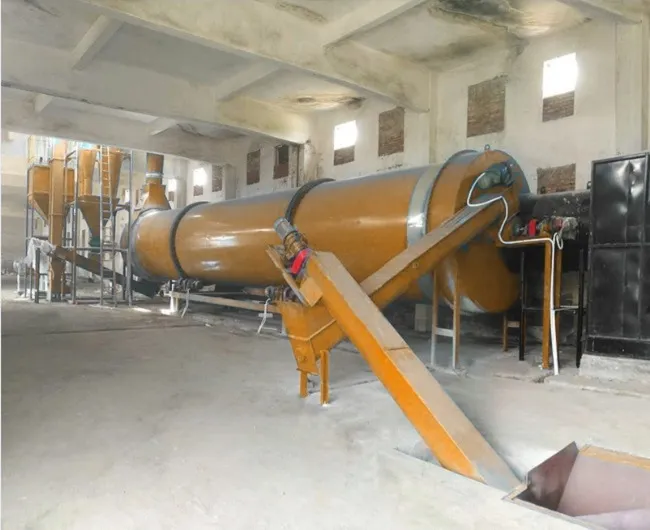

Beet pulp is produced after sugar is extracted from sugar beets. In its fresh form, the material contains a substantial amount of moisture, which makes it heavy, difficult to store for extended periods, and more susceptible to deterioration. Drying changes these characteristics by reducing moisture to a level suitable for storage, transportation, further processing, or use as an animal feed ingredient.
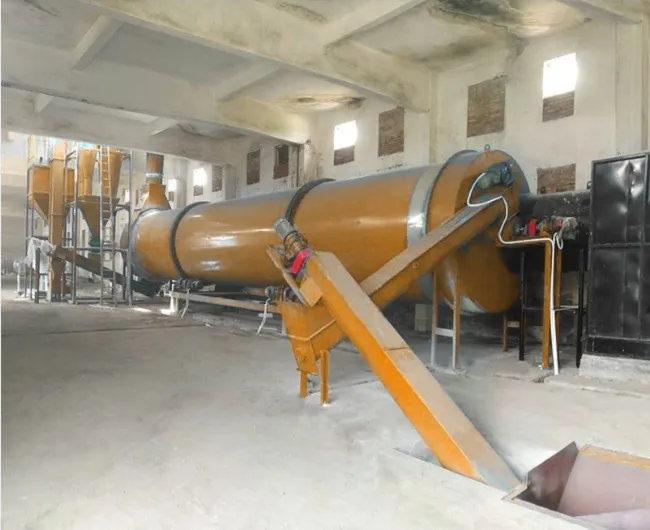
At an industrial scale, however, beet pulp drying is not simply a matter of applying heat until water evaporates. The material has its own physical properties, and the drying process must account for moisture content, particle size, feed consistency, temperature, residence time, airflow, and the way heat reaches the material. The choice of dryer therefore has a direct influence on the final moisture level, throughput, energy consumption, and handling characteristics of the dried pulp.
Why Beet Pulp Requires Industrial Drying
Fresh beet pulp leaves the extraction process with a high-water content. Transporting this wet material over long distances can be costly because a considerable portion of the transported weight is water rather than useful solids. Storage can also become difficult when moisture remains high for prolonged periods.
Drying removes a significant portion of this water and produces a material that is easier to handle and store. Dried beet pulp can subsequently be used in feed formulations or processed into different forms depending on the requirements of the end user.
The objective is not necessarily to remove every trace of moisture. Excessive drying can consume unnecessary energy and may affect the physical properties of the material. Industrial drying therefore involves finding a suitable balance between the required final moisture content, product quality, throughput, and operating cost.
What Happens During Beet Pulp Drying?
The drying process begins when heat is transferred to the wet beet pulp. Water near the surface can evaporate relatively quickly, while moisture located within the particles takes longer to migrate toward the surface.
During the early stage, surface moisture is removed relatively easily. As drying progresses, the remaining water becomes more difficult to remove because internal moisture has to move through the material before reaching the surface. This causes the drying rate to change during the process.
For industrial equipment, this distinction is important. A dryer designed around only the initial drying stage may not provide the desired final moisture level without excessive residence time. The equipment must provide suitable heat transfer and material movement throughout the drying cycle.
Factors That Influence Beet Pulp Drying
Initial Moisture Content
The amount of water entering the dryer determines the evaporation load. Two beet pulp streams with different initial moisture levels may require substantially different drying conditions even when their production rates are similar.
Before selecting drying equipment, the incoming moisture content should therefore be established through representative material testing rather than relying on a general assumption.
Particle Size and Material Form
Beet pulp may be handled in different physical forms depending on the upstream process. Particle size influences the distance moisture must travel before reaching the surface.
Smaller or more evenly distributed particles generally provide a greater surface area for heat and mass transfer. Larger pieces may require more residence time or different material-handling conditions.
Feed Rate
The quantity of wet pulp entering the dryer affects the available heat per unit of material. If the feed rate increases without corresponding changes in the drying conditions, the final moisture content can rise.
Stable feeding is therefore an important part of maintaining consistent drying performance.
Drying Temperature
Temperature determines how much energy is available for moisture evaporation, but increasing temperature indefinitely is not an appropriate solution.
The process must consider the characteristics of the beet pulp and its intended application. Excessive thermal exposure may alter the material unnecessarily, while insufficient temperature may result in inadequate moisture removal or excessive residence time.
Residence Time
The material needs to remain within the drying system long enough for the required moisture reduction to occur.
Residence time depends on several factors, including dryer configuration, material loading, particle characteristics, airflow, temperature, and internal material movement. A suitable residence time is therefore a process parameter rather than a fixed number that applies to every beet pulp operation.
Heat Transfer in Industrial Beet Pulp Dryers
Industrial dryers transfer heat to the wet material through one or more mechanisms. The selection depends on the material characteristics, production requirements, and process configuration.
Convective Drying
In convective systems, heated air or another gas comes into contact with the beet pulp. Heat moves from the gas to the material, causing water to evaporate.
This method is widely applicable to granular, fibrous, and particulate materials because the drying air can simultaneously provide heat and carry evaporated moisture away from the product.
The design of airflow is important. Poor air distribution can create zones where material dries more slowly than the rest of the feed, resulting in variation in final moisture.
Conductive Drying
Conductive dryers transfer heat through a heated surface that comes into contact with or is separated from the material.
This approach can be useful where controlling the drying environment or limiting direct contact with hot gases is important. The dryer must still provide adequate material movement so that different portions of the feed receive sufficient thermal exposure.
Combined Heat Transfer
Some industrial systems use more than one mode of heat transfer. Combining mechanisms can help address different stages of the drying process and improve the way heat reaches the material.
The most appropriate arrangement depends on the moisture characteristics and physical behaviour of the beet pulp rather than on the dryer’s name alone.
Common Industrial Dryer Configurations
Different dryer designs can be considered for beet pulp depending on plant capacity and material characteristics.
Rotary Dryers
Rotary dryers use a rotating cylindrical chamber to move material through the drying zone. Internal flights or lifting elements can raise and shower the material, increasing its contact with the drying medium.
This arrangement is particularly suited to continuous industrial processing where large quantities of material must be handled. The rotation also helps distribute the feed through the drying zone rather than allowing it to remain in a stationary bed.
Belt and Conveyor Dryers
Belt dryers transport the material through one or more drying zones while heated air passes through or across the product.
Their relatively controlled material movement can be useful when the process requires defined drying stages. Different temperature or airflow conditions can also be established along the length of the dryer.
Fluidized Bed Dryers
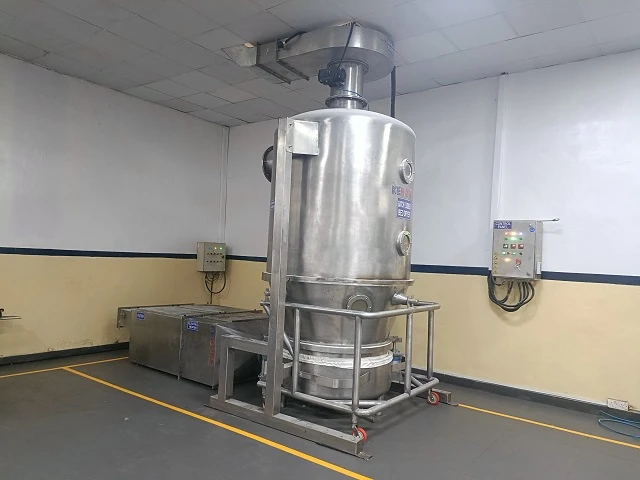
Fluidized bed systems suspend particles in an upward-moving gas stream. When the material has suitable particle characteristics, this creates extensive contact between the drying air and the product.
Such systems can provide strong heat and mass transfer, although the physical characteristics of beet pulp must be evaluated before selecting this configuration.
Other Continuous Drying Systems
Depending on the required throughput and feed characteristics, other dryer configurations may also be considered. The correct selection should come from actual material behaviour, required evaporation capacity, final moisture specification, available utilities, and plant layout.
Why Moisture Uniformity Matters
Achieving an average moisture value is not always enough.
For example, a batch may show an acceptable average moisture content while containing some particles that are significantly wetter than others. Those wetter portions can create storage and handling problems even though the overall laboratory result appears satisfactory.
Uniform drying therefore becomes an important process consideration. Air distribution, material movement, feed preparation, dryer loading, and residence-time distribution all influence the consistency of the final product.
Sampling procedures also matter. Samples taken from only one location or at only one point in the production stream may not represent the entire output.
Energy Considerations in Beet Pulp Drying
Drying is fundamentally an energy-intensive operation because water must be converted from liquid to vapor. The energy requirement becomes particularly significant when the incoming material contains a large quantity of moisture.
Several factors influence the actual energy demand of a beet pulp drying plant. These include the initial and final moisture contents, evaporation load, drying temperature, exhaust conditions, heat losses, airflow, residence time, and the efficiency of heat recovery.
A dryer should therefore be evaluated as part of the complete thermal process rather than by looking only at its nominal heating capacity.
Heat recovery can also play an important role. Depending on the process arrangement, exhaust air may contain recoverable thermal energy that can be redirected toward incoming air or another part of the process.
Managing the Exhaust Air
As moisture leaves the beet pulp, it enters the exhaust stream. The exhaust system must therefore handle both the drying gas and the evaporated water.
Industrial installations may require equipment for separating entrained particles from the exhaust stream before the air is discharged or recirculated. The exact arrangement depends on the dryer design, material behaviour, local environmental requirements, and plant configuration.
Exhaust conditions can also provide useful information about the drying process. Changes in exhaust temperature, humidity, or airflow may indicate changes in feed moisture or drying load.
Drying Is Often Integrated with Upstream Processing
A beet pulp dryer does not operate independently from the rest of the production line.
The condition of the material entering the dryer can strongly influence the drying process. Dewatering before thermal drying, for example, can reduce the amount of water that must be removed using thermal energy.
Feed preparation, mechanical dewatering, conveying, metering, drying, cooling, screening, and storage may therefore form part of a connected processing sequence.
This is one reason why selecting a dryer solely from its advertised capacity can lead to an unsuitable installation. The complete material flow needs to be considered.
Cooling After Drying
The material may still retain considerable sensible heat when it leaves the drying zone. Cooling can be required before the dried beet pulp enters storage or subsequent handling equipment.
Allowing hot material to enter storage without appropriate temperature management can create unwanted conditions inside the storage system. Cooling also makes the product easier and safer to handle.
In continuous plants, the dryer and cooler are often treated as connected parts of the same thermal process.
How to Select a Beet Pulp Dryer
There is no single dryer configuration that is automatically suitable for every beet pulp processing plant. Equipment selection should begin with the material and process requirements.
Important parameters include:
- Initial moisture content
- Required final moisture content
- Wet feed rate
- Required dry-product capacity
- Particle size and physical form
- Bulk density
- Heat sensitivity
- Desired residence time
- Available heating source
- Exhaust handling requirements
- Available floor space
- Energy recovery possibilities
- Downstream storage and handling requirements
Material testing can provide useful information before equipment is finalized. Laboratory or pilot-scale trials can help determine how the product behaves during heating, how quickly moisture is removed, and whether the selected drying approach can achieve the desired result.
The Role of Process Testing
Industrial drying performance cannot always be predicted accurately from material specifications alone.
Two materials with similar moisture content may behave differently during drying because of differences in particle structure, porosity, bulk density, and how water is held within the material.
Testing can establish drying curves and reveal how moisture reduction changes with temperature and residence time. These results can then be used to support equipment sizing and process design.
For large-scale installations, pilot testing can be particularly useful when the material characteristics or production requirements differ from previously processed feedstocks.
From Wet Beet Pulp to a Stable Industrial Product
The purpose of beet pulp drying extends beyond simply reducing water content. Proper moisture management affects transportation, storage, handling, downstream processing, and the practical value of the dried material.
A well-designed drying process begins with understanding the feed material and ends with a defined product specification. Between these two points, heat transfer, moisture migration, airflow, material movement, residence time, and exhaust handling must work together.
For this reason, industrial beet pulp drying is best approached as a process-engineering problem rather than simply an equipment-selection exercise. The most suitable dryer is the one that matches the material, evaporation requirement, production rate, final moisture specification, available energy source, and overall plant arrangement.
Conclusion
Industrial beet pulp drying requires more than supplying heat to a wet material. The process involves controlled moisture removal while maintaining the desired characteristics of the dried pulp and keeping the thermal load within practical limits.
Factors such as initial moisture, particle size, feed rate, drying temperature, residence time, airflow, and heat-transfer method all influence the final result. Rotary, belt, fluidized-bed, and other drying configurations may be considered depending on the specific process.
For a new installation or an upgrade to an existing plant, material characterization and drying trials can provide a stronger basis for equipment selection than relying on general specifications. Once the drying behavior is understood, the system can be designed around the actual evaporation load, product requirements, and operating conditions of the plant.

























Sign in to leave a comment.