

Current transformers (CTs) are important components in electrical measurement and protection systems. They allow high currents flowing through industrial circuits to be measured safely by reducing them to a standardized, manageable value for meters, relays, and monitoring equipment. The correct CT helps improve measurement accuracy and supports reliable protection.
This guide explains the working principle, major types, selection factors, and applications of industrial current transformers, along with common questions buyers and electrical professionals may have.
What Is an Industrial Current Transformer?
An industrial current transformer is an instrument transformer designed to convert high primary current into a lower secondary current that can be safely measured by electrical instruments and protection devices. Unlike an ordinary transformer, a CT is primarily designed for current measurement and electrical protection. Its primary winding may consist of a single conductor passing through the core, while the secondary winding contains multiple turns.
Working Principle of a Current Transformer
A current transformer works on the principle of electromagnetic induction. When alternating current flows through the primary conductor, it produces a magnetic field around the CT core. This changing magnetic flux induces a current in the secondary winding.
The secondary current is proportional to the primary current according to the CT ratio. For example, a 500/5 A CT is designed so that a primary current of 500 A corresponds approximately to a secondary current of 5 A under rated conditions.
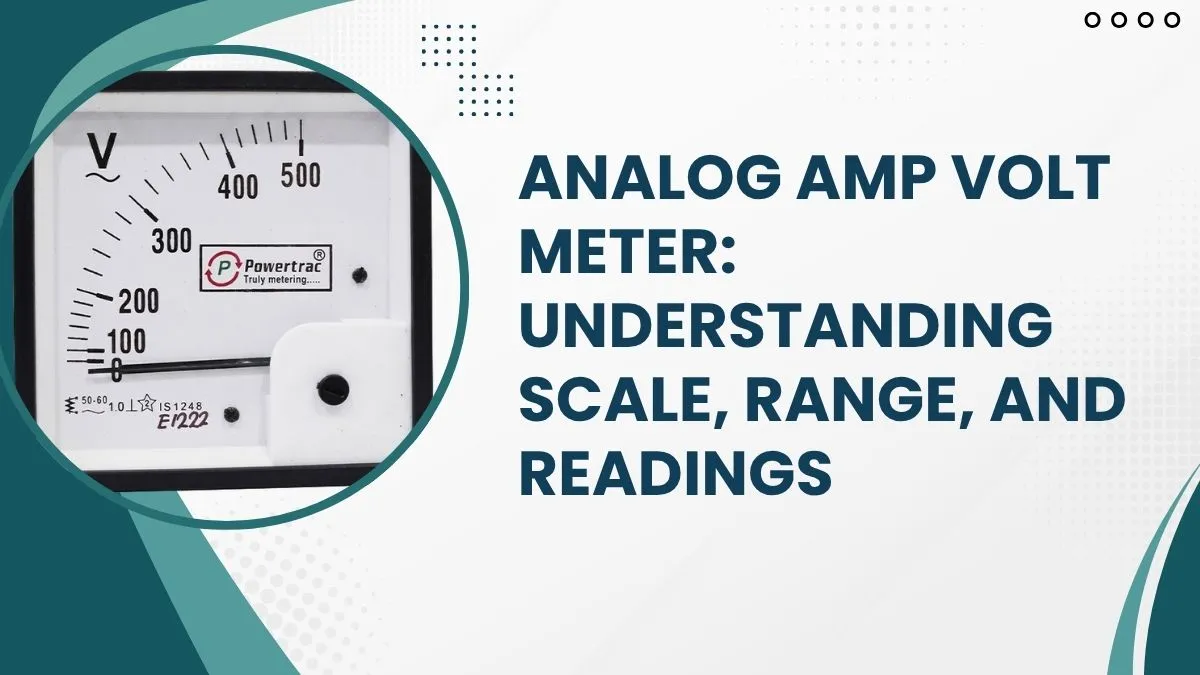
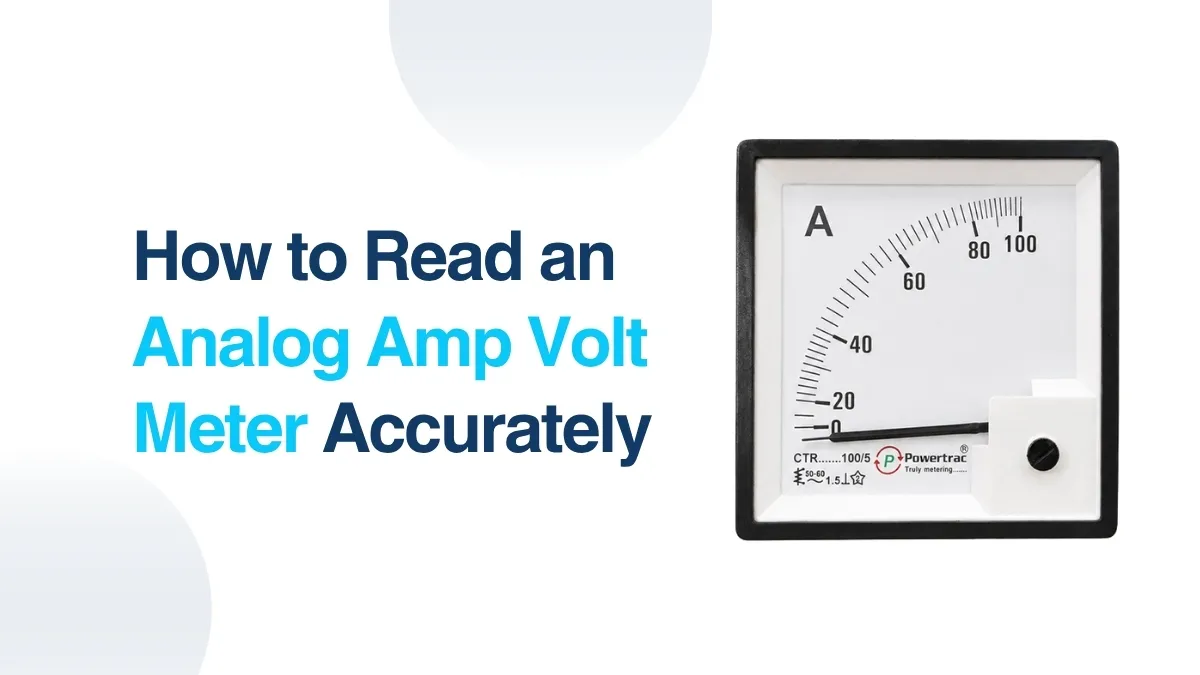
The secondary circuit is connected to instruments such as ammeters, energy meters, power meters, protective relays, and monitoring systems. These devices can monitor electrical systems without being directly exposed to high primary currents.
Main Types of Industrial Current Transformers
1. Wound Type Current Transformer
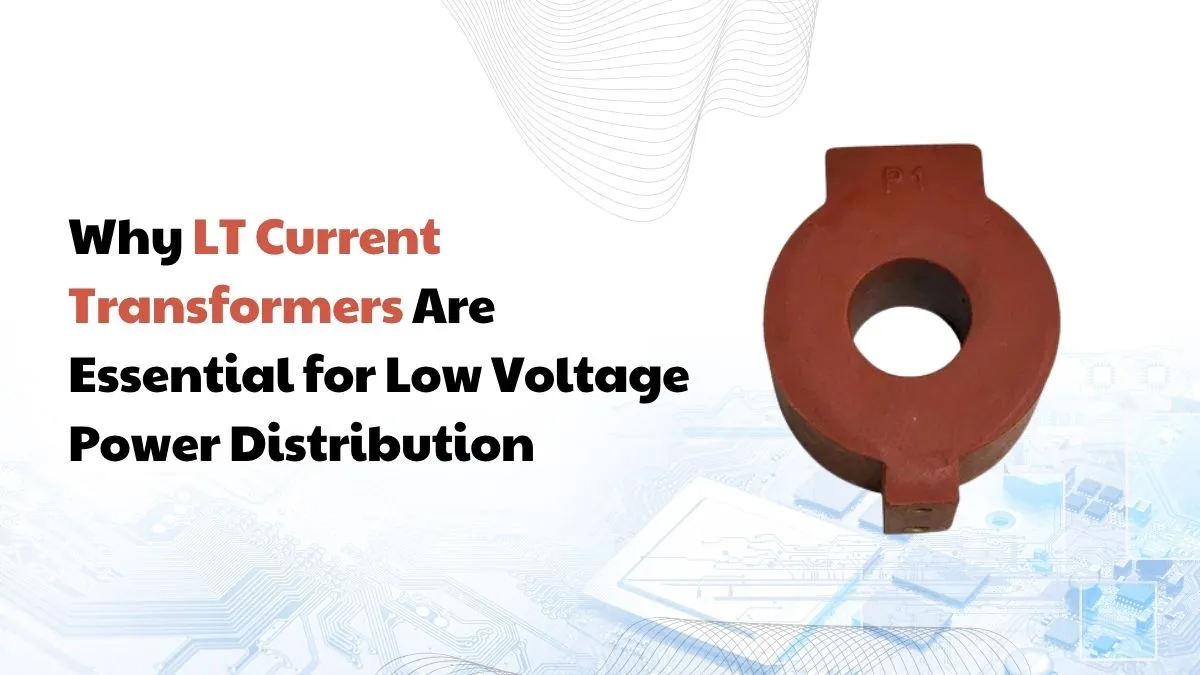
A wound type CT has a primary winding with one or more turns wound around the magnetic core, in addition to its secondary winding. It is useful when a defined primary winding and specific transformation ratio are required.
A Wound Type CT for Electrical Panels can be selected for metering and protection applications where the panel design allows a dedicated primary connection. These CTs are commonly considered for controlled measurement arrangements in industrial distribution equipment.
2. Toroidal or Ring Type Current Transformer
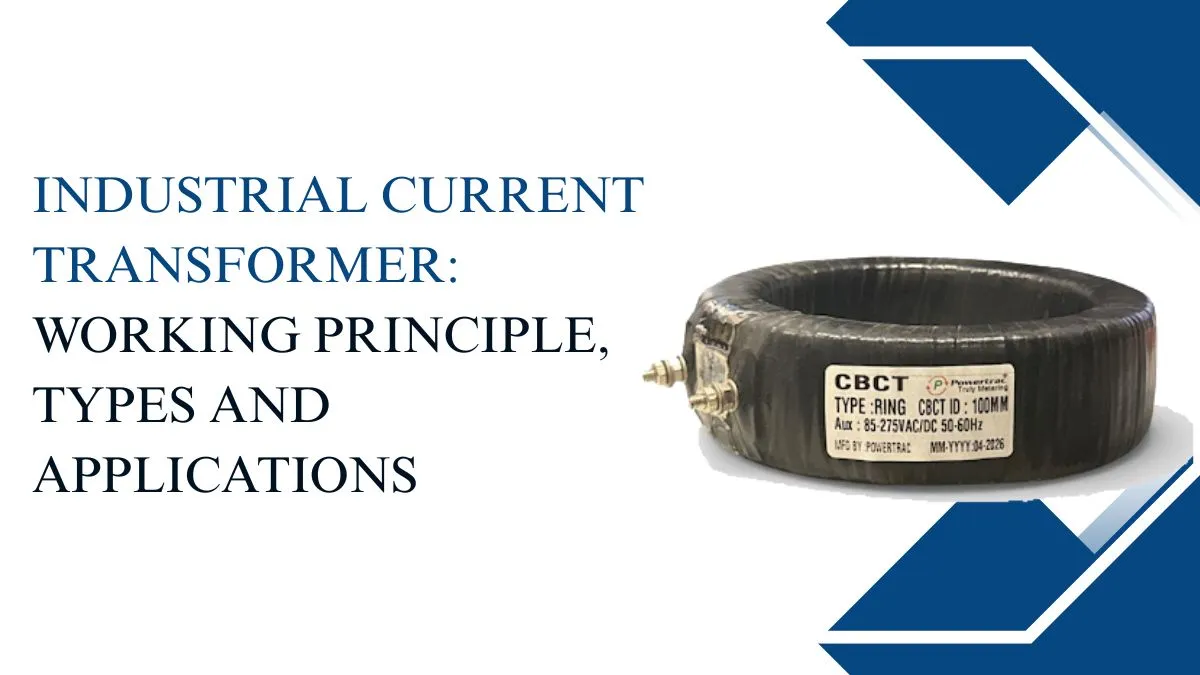
A toroidal CT has a circular core with a secondary winding around it. The primary conductor passes through the center of the core. This design can be compact and convenient for installations where the existing cable or busbar can pass through the CT aperture.
Ring CTs are widely used in distribution boards, switchboards, motor circuits, and monitoring systems.
3. Bar Type Current Transformer
In a bar type CT, a solid bar forms the primary conductor through the transformer. This construction is suitable for high-current applications and electrical assemblies where busbar connections are part of the equipment design.
Bar type CTs are commonly used in switchgear, power distribution systems, and industrial panels.
4. Core Balance Current Transformer
A core balance CT is primarily used for detecting earth leakage or residual current. In this arrangement, all live conductors of a circuit pass through the CT core. Under normal conditions, the vector sum of the currents is approximately zero. If current flows to earth because of an insulation fault, an imbalance occurs and the CT can detect it.
A Core Balance CT for Earth Fault Protection is commonly integrated with earth fault relays and protection systems. It can help identify leakage or fault conditions and support faster protective action when correctly designed and coordinated.
Applications of Industrial Current Transformers
Industrial CTs are used across many electrical installations. One major application is energy and power measurement. CTs allow meters to measure current in high-capacity feeders that cannot be connected directly to the metering device.
They are also used for protective relaying. Protection systems use CT signals to detect abnormal current conditions such as short circuits, overload-related events, and earth faults.
CTs can also support remote monitoring by providing current signals to control systems, power monitoring equipment, and energy management platforms.
How to Select the Right Industrial Current Transformer
The CT should be selected according to the electrical system and the intended measurement or protection function. Important specifications include primary current, secondary current, transformation ratio, accuracy class, burden, frequency, insulation level, short-time thermal current, and installation arrangement.
The CT ratio should suit the normal operating current while allowing appropriate measurement during expected load conditions. For metering, accuracy is especially important because CT errors can affect energy and power readings. Protection CTs have different performance requirements because they must reproduce fault currents adequately for the connected relay.
It is also important to consider whether the CT is being used for metering, protection, earth fault detection, or a combination of functions. In critical installations, CT selection and relay coordination should be reviewed by qualified electrical professionals.
Proper specification also helps reduce installation issues and supports consistent performance during routine operation, testing, and maintenance for industrial electrical systems and distribution applications efficiently.
Safety Considerations
A CT secondary circuit should not be treated like an ordinary low-voltage circuit. In particular, a CT secondary should not be left open while current is flowing in the primary unless the equipment manufacturer specifically permits that condition. An open secondary can produce a dangerously high voltage.
Installation, testing, wiring, and commissioning should therefore be carried out by qualified personnel following applicable electrical standards and the manufacturer's instructions. Correct polarity, grounding, ratio, burden, and terminal connections should be verified before energizing the system.
Why Work With a Reliable Industrial Current Transformer Manufacturer?
The quality of a CT affects measurement accuracy, protection performance, and long-term reliability. An experienced Industrial Current Transformer Manufacturer can help customers select suitable construction, ratio, accuracy class, insulation level, and mounting configuration for their application.
For industrial buyers, it is useful to review technical documentation, test reports, product specifications, manufacturing quality controls, and application support before making a purchase.
Conclusion
Industrial current transformers provide a practical way to measure and monitor high electrical currents while supporting protection systems. From wound and bar type CTs to toroidal and core balance designs, each construction serves different installation and electrical requirements.
Whether the requirement is panel metering, equipment protection, or earth fault detection, a properly specified current transformer can form an important part of a dependable electrical system.
FAQs
1. What is the main purpose of an industrial current transformer?
An industrial current transformer reduces high primary current to a lower standardized secondary current for safe measurement, monitoring, and protection.
2. What is a 500/5 A current transformer?
A 500/5 A CT is designed to provide approximately 5 A secondary current when the primary current is 500 A under rated conditions.
3. Where is a Wound Type CT for Electrical Panels used?
It can be used in electrical panels for measurement or protection where a dedicated primary winding arrangement is suitable for the panel design.
4. What is a Core Balance CT for Earth Fault Protection?
It is a CT arrangement used to detect residual or leakage current caused by an imbalance between the currents in the circuit conductors, supporting earth fault protection.
5. What factors should be checked before buying a CT?
Primary current, secondary current, ratio, accuracy class, burden, frequency, insulation level, short-time current rating, physical dimensions, and application should be reviewed.
6. Can a current transformer be used for both metering and protection?
Some CTs can support multiple functions, but the required accuracy and performance characteristics differ between metering and protection. The CT specification should match the connected devices and protection scheme.

























Sign in to leave a comment.