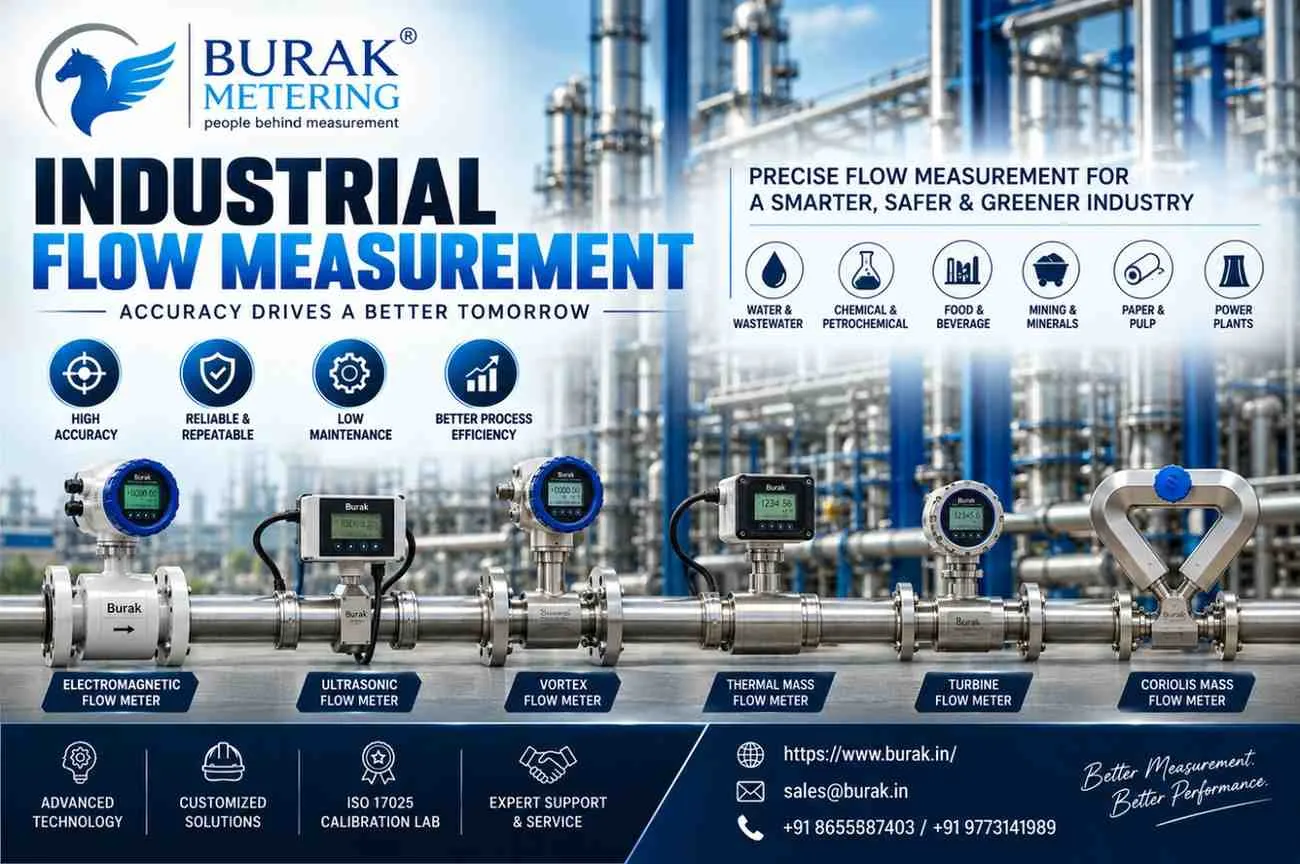

Industrial flow measurement is a fundamental part of modern manufacturing and process industries. Whether measuring liquids, gases, or steam, accurate flow data helps businesses improve operational efficiency, reduce waste, optimize energy consumption, and maintain consistent product quality. From water treatment plants and chemical processing facilities to food manufacturing and power generation, selecting the right flow measurement technology can significantly enhance process performance.
As industrial automation continues to evolve, organizations are increasingly investing in advanced flow measurement solutions that provide reliable, real-time monitoring and seamless integration with control systems.
What Is Industrial Flow Measurement?
Industrial flow measurement is the process of determining the quantity or velocity of fluids moving through pipelines or process systems. Depending on the application, flow meters measure volumetric flow, mass flow, or flow velocity to provide accurate operational data.
Different industries require different flow measurement technologies because fluid properties, temperature, pressure, conductivity, and operating conditions vary significantly. Choosing the appropriate flow meter ensures dependable measurements while improving overall process control.
How Industrial Flow Measurement Works
Modern flow measurement systems use various measurement principles based on the type of fluid and process requirements.
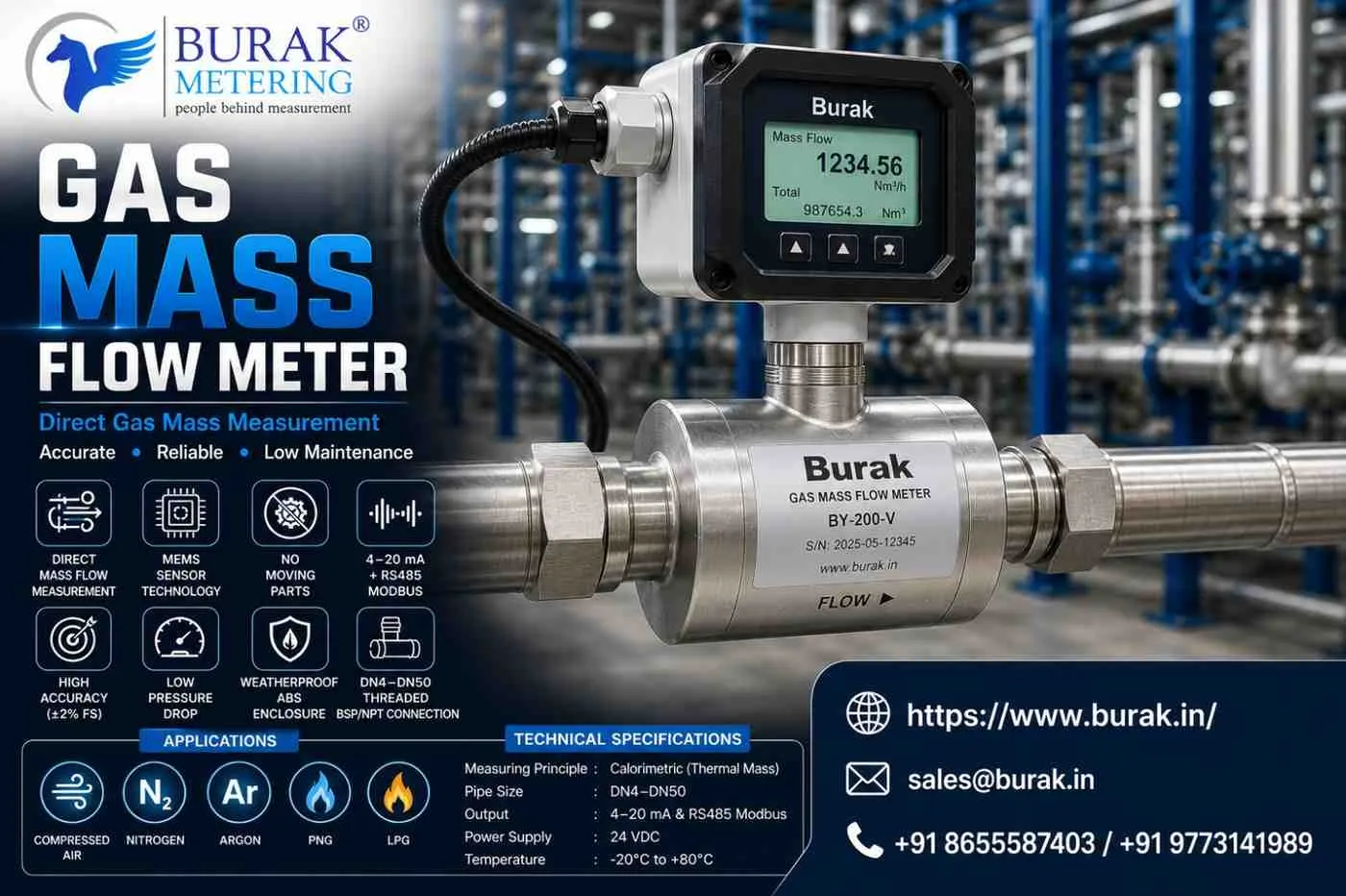
Electromagnetic flow meters measure conductive liquids using electromagnetic induction, making them suitable for water, wastewater, chemicals, and similar applications. Thermal mass flow meters directly measure gas mass flow, making them ideal for compressed air, natural gas, nitrogen, and other industrial gases. Vortex flow meters detect vortices created behind a bluff body to measure liquids, gases, and steam with excellent stability. Turbine flow meters calculate flow by monitoring the rotational speed of a precision turbine, while Coriolis flow meters directly measure mass flow with exceptional accuracy. Differential pressure flow meters determine flow by measuring the pressure drop across a primary flow element.
Each technology offers distinct advantages depending on process conditions, installation requirements, and measurement objectives.
Benefits of Industrial Flow Measurement
Accurate industrial flow measurement delivers numerous operational and financial advantages across industrial facilities.
Precise monitoring helps reduce raw material losses by ensuring accurate dosing and transfer of liquids and gases. Real-time flow information improves process efficiency, allowing operators to optimize production while minimizing energy consumption. Reliable measurements also contribute to better product consistency, improved equipment performance, and easier regulatory compliance.
Modern flow measurement instruments often integrate with PLC, SCADA, and Industrial IoT systems, enabling continuous monitoring, predictive maintenance, and data-driven decision-making for smarter plant operations.
Applications of Industrial Flow Measurement
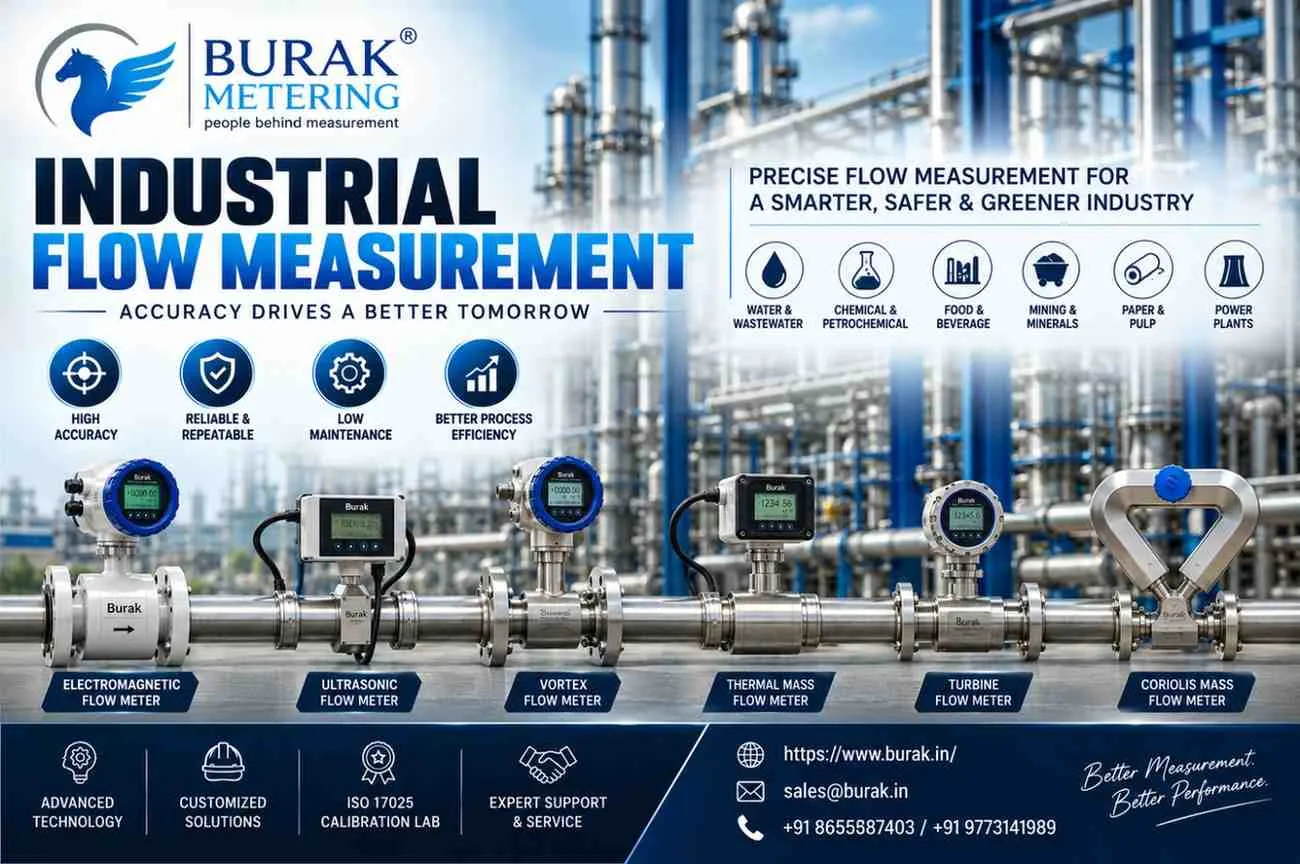
Industrial flow measurement supports a wide variety of industries where process accuracy is essential.
Water and wastewater treatment facilities rely on flow meters to monitor water distribution and treatment processes. Chemical manufacturers use accurate flow measurement for chemical dosing and process control. Food and beverage producers depend on consistent flow measurement to maintain product quality during mixing and filling operations.
Pharmaceutical manufacturers require highly accurate measurements to meet strict production standards.
Flow measurement also plays a critical role in oil and gas operations, power plants, HVAC systems, steel manufacturing, textile processing, utilities, and numerous other industrial sectors where operational efficiency and safety are priorities.
How to Choose the Right Industrial Flow Measurement Solution
Selecting the right industrial flow measurement system involves evaluating several important factors.
Consider the type of fluid being measured, whether it is liquid, gas, or steam. Analyze operating temperature, pressure, flow range, pipe size, installation conditions, and required measurement accuracy. Maintenance requirements, communication protocols, and compatibility with existing automation systems should also be considered before selecting a flow meter.
Matching the measurement technology to the specific application helps maximize reliability while reducing long-term operating costs.
Conclusion
Industrial flow measurement is more than simply monitoring fluid movement; it is a critical component of efficient, reliable, and cost-effective industrial operations. The right flow measurement technology improves productivity, supports process automation, reduces operational waste, and delivers the accurate data needed for informed decision-making.
For organizations seeking dependable industrial flow measurement solutions for liquid, gas, or steam applications, selecting the appropriate flow meter technology is an important step toward achieving long-term operational excellence.

























Sign in to leave a comment.