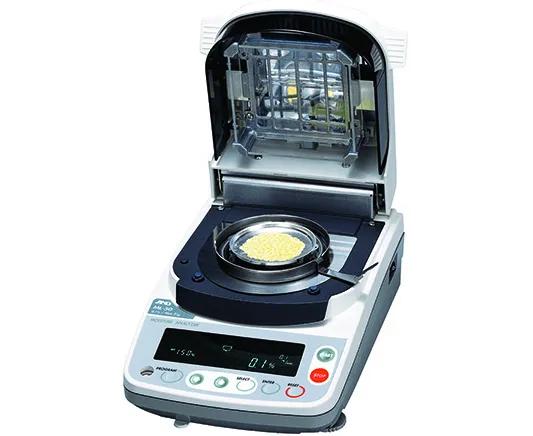

Moisture analysis has long been a critical component in industries such as food processing, pharmaceuticals, chemicals, and manufacturing. From ensuring product quality to meeting regulatory standards, moisture analysers play a vital role in maintaining consistency and safety. Today, however, rapid technological advancements are transforming these instruments from simple lab devices into intelligent, connected systems.
The Evolution of Moisture Analysers
Traditional moisture determination methods like oven drying and Karl Fischer titration were once the gold standard. While still relevant, these techniques are increasingly being replaced by faster and more efficient alternatives such as infrared (IR) and microwave-based analysers.
Modern moisture analysers now deliver:
- Faster testing times
- Higher accuracy
- Reduced human intervention
This shift is driven by industries demanding real-time insights and improved operational efficiency.
1. Smart Moisture Analysers with AI Integration
One of the most exciting developments is the integration of Artificial Intelligence (AI) and machine learning into moisture analysis systems.
AI-powered analysers can:
- Automatically optimise testing parameters
- Predict moisture trends based on historical data
- Detect anomalies in real time
This reduces operator dependency and significantly improves repeatability and accuracy.
In the near future, AI will enable self-learning instruments that continuously improve their performance, making them indispensable in high-precision industries like pharmaceuticals.
2. IoT and Cloud Connectivity
The rise of the Internet of Things (IoT) is turning moisture analysers into connected devices within smart factories.
Modern systems now offer:
- Remote monitoring via cloud platforms
- Real-time data sharing across departments
- Integration with Laboratory Information Management Systems (LIMS)
This connectivity ensures seamless data flow and enhances traceability, which is critical for compliance-driven industries.
Looking ahead, cloud-based ecosystems will allow businesses to centralise moisture data from multiple locations, improving decision-making and operational efficiency.
3. Non-Destructive Testing Technologies
Traditional moisture testing often requires sample preparation or destruction. However, emerging technologies are changing that.
Key innovations include:
- Near-Infrared (NIR) Spectroscopy
- Microwave moisture analysis
These methods allow:
- Instant results
- Non-contact measurement
- Continuous inline testing
NIR technology, in particular, is gaining popularity due to its speed and ability to deliver results in seconds without damaging samples.
This is especially valuable in industries like agriculture and food processing, where preserving sample integrity is crucial.
4. Portable and Handheld Devices
Another major trend is the shift toward portable moisture analysers.
Modern handheld devices offer:
- On-site testing capabilities
- Lightweight and user-friendly designs
- Rapid results without lab dependency
For example, next-generation handheld analysers using NIR technology can measure moisture content directly in the field without grinding or preparation.
This innovation is transforming sectors such as:
- Agriculture
- Construction
- Mining
In the future, we can expect even more compact devices with enhanced battery life and wireless connectivity.
5. Automation and Inline Process Integration
Automation is revolutionising industrial processes, and moisture analysis is no exception.
Today’s advanced systems can:
- Perform continuous inline moisture measurement
- Automatically adjust production parameters
- Reduce manual sampling
Inline analysers are particularly valuable in high-volume manufacturing, where real-time monitoring ensures consistent product quality.
As Industry 4.0 continues to evolve, moisture analysers will become fully integrated into automated production lines, acting as real-time quality control checkpoints.
6. Enhanced Sensor Technology
Sensor innovation is at the heart of modern moisture analysers.
Recent advancements include:
- Tunable diode laser absorption spectroscopy (TDLAS)
- Advanced halogen heating systems
- Improved thermogravimetric sensors
These technologies offer:
- Greater sensitivity
- Faster response times
- Improved durability in harsh environments
Companies are also focusing on developing sensors that require minimal calibration and maintenance, reducing downtime and operational costs.
7. Sustainability and Energy Efficiency
Sustainability is becoming a key focus across industries, and moisture analyser technology is adapting accordingly.
Innovations include:
- Energy-efficient heating systems
- Reduced testing times to minimise power consumption
- Eco-friendly materials in device manufacturing
Additionally, accurate moisture analysis helps reduce waste by preventing over-drying or under-processing of materials, contributing to sustainable production practices.
In the future, we can expect moisture analysers designed specifically to support green manufacturing initiatives.
8. User-Friendly Interfaces and Automation Software
Modern moisture analysers are becoming more intuitive and user-centric.
Key features include:
- Touchscreen interfaces
- Pre-programmed testing methods
- Guided workflows
These enhancements reduce the need for specialised training and minimise human error.
Advanced software also enables:
- Automated reporting
- Data visualisation
- Compliance documentation
This makes it easier for businesses to meet regulatory requirements while improving productivity.
9. Integration with Industry 4.0 and Smart Manufacturing
Moisture analysers are no longer standalone instruments—they are becoming integral components of smart manufacturing ecosystems.
With Industry 4.0 integration, these devices can:
- Communicate with other machines in real time
- Trigger automated actions based on moisture levels
- Provide predictive maintenance alerts
This level of integration enhances efficiency, reduces downtime, and improves overall process control.
10. The Rise of Data-Driven Decision Making
Modern moisture analysers generate vast amounts of data, which can be leveraged for strategic insights.
Businesses can now:
- Analyse trends over time
- Optimise production processes
- Improve product consistency
With AI and analytics tools, moisture data is no longer just a measurement—it becomes a valuable asset for decision-making.
What’s Next for Moisture Analyser Technology?
The future of moisture analysers is driven by speed, intelligence, and connectivity.
Here’s what we can expect in the coming years:
1. Fully Autonomous Systems
Moisture analysers that operate independently with minimal human intervention.
2. Advanced AI Capabilities
Self-calibrating instruments that learn and adapt to different materials.
3. Real-Time Global Monitoring
Cloud platforms that provide instant insights across multiple facilities worldwide.
4. Miniaturisation
Smaller, more powerful devices for field and lab use.
5. Integration with Robotics
Automated sampling and testing using robotic systems.
Conclusion
Moisture analyser technology is undergoing a significant transformation. From AI-powered analytics to IoT-enabled connectivity, these innovations are redefining how industries measure and manage moisture content.
As industries continue to prioritise efficiency, accuracy, and sustainability, moisture analysers will evolve into smarter, faster, and more integrated systems. Businesses that embrace these advancements will gain a competitive edge through improved quality control, reduced waste, and enhanced operational efficiency.
The future isn’t just about measuring moisture—it’s about leveraging data, automation, and intelligence to drive smarter decisions.

























Sign in to leave a comment.