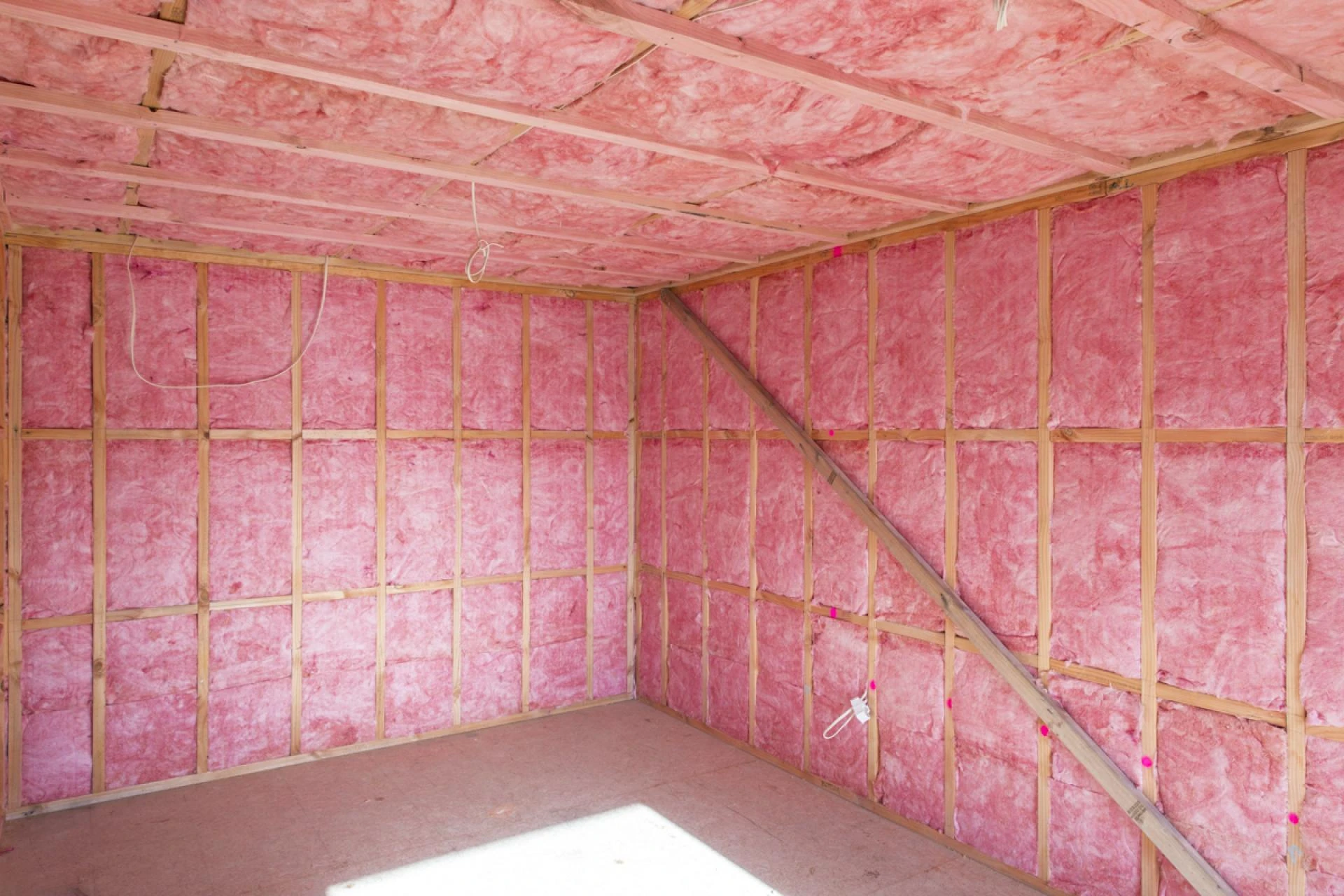

Effective floor joist insulation with fiberglass batts requires proper sizing, secure installation, and complete coverage between joists to prevent air gaps and thermal bridging. The batts must fit snugly within the joist cavity without compression while maintaining contact with the subfloor above to maximize thermal performance.
Success depends on selecting the correct R-value for your climate zone, using faced or unfaced batts appropriately, and installing support systems that hold the insulation in place long-term. Proper fiberglass insulation installation services prevent sagging, gaps, and moisture problems that compromise performance.
Fiberglass Batt Types and Specifications

Installation Methods and Support Systems
Support Wire Installation
Support wires provide the most reliable method for holding fiberglass batts in place. Install wires every 18-24 inches along the joist length, positioning them 2-3 inches below the bottom edge of the joists to allow proper batt placement.
Bonus Tip: Use spring-loaded support wires instead of straight wires for easier installation and better long-term support that accommodates building movement.
Stapling Techniques
For faced batts, staple the flanges to the sides of the joists rather than the face. This method creates a proper vapor barrier while preventing compression of the insulation material. Space staples every 6-8 inches for secure attachment.
Friction Fit Method
Unfaced batts rely on friction fit between joists for support. Cut batts slightly wider than the joist spacing to ensure tight contact with both sides. This method works best with consistent joist spacing and proper batt sizing.
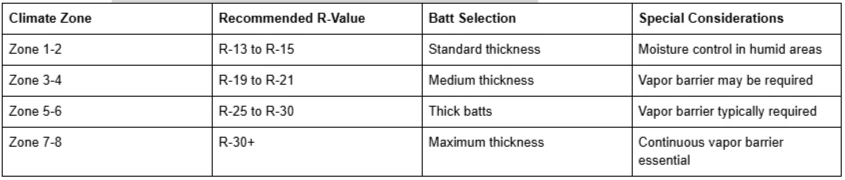
Climate Zone Requirements and Performance
Common Installation Problems and Solutions
Preventing Compression
Compression reduces R-value significantly. Never stuff thick batts into shallow cavities or compress batts to fit around obstacles. Instead, cut batts to proper dimensions and work around obstructions carefully.
Gap Elimination
Gaps around pipes, wires, and ductwork allow air infiltration that reduces insulation effectiveness. Cut batts carefully around obstructions and fill small gaps with loose-fill insulation or expanding foam.
Bonus Tip: Use a sharp utility knife with a fresh blade to make clean cuts in fiberglass batts, reducing loose fibers and ensuring precise fits around obstacles.
Moisture Control
Moisture problems develop when warm, humid air contacts cold surfaces. Install vapor barriers on the warm side of the insulation (typically facing up toward the heated space) and ensure proper ventilation in crawl spaces.
Things to Consider Before Making a Decision
Joist Depth and Spacing
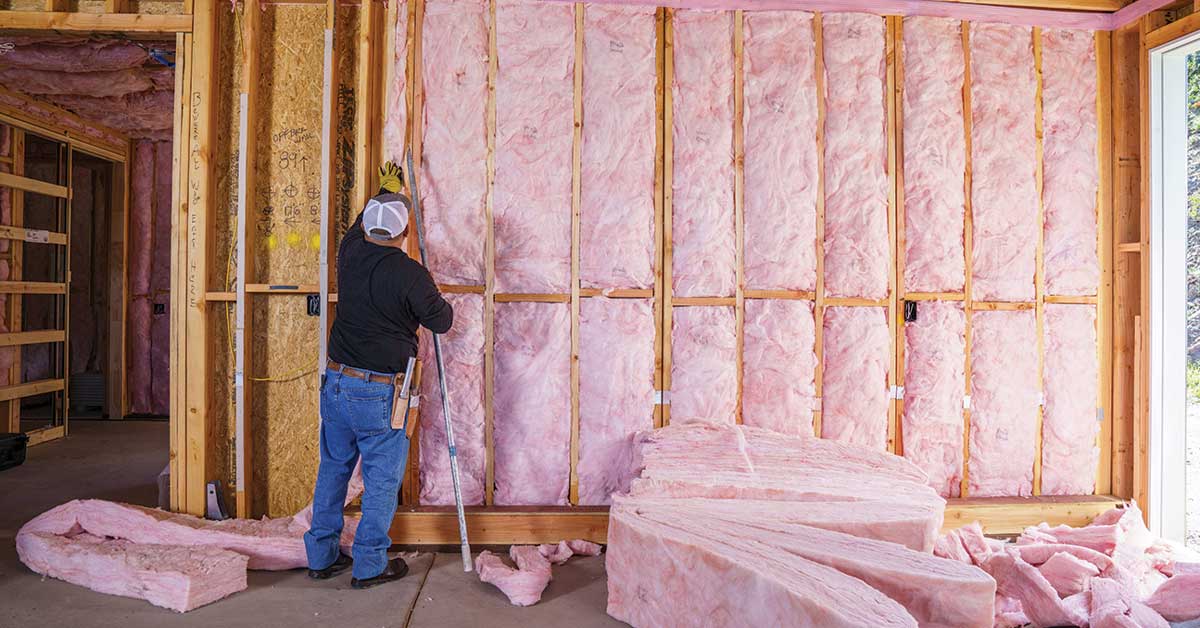
Measure your floor joist depth and spacing accurately before purchasing batts. Standard 2x8 joists (7.25 inches deep) accommodate R-19 batts, while 2x10 joists (9.25 inches deep) handle R-30 batts comfortably.
Access and Working Conditions
Crawl space height, lighting, and ventilation affect installation difficulty and safety. Plan for proper protective equipment and adequate workspace lighting. Consider professional installation if access is severely limited.
Existing Insulation and Retrofits
Evaluate existing insulation conditions before adding new batts. Remove damaged or compressed insulation rather than installing it. Combining different insulation types requires careful planning to avoid moisture problems.
Building Code Requirements
Local building codes specify minimum R-values and vapor barrier requirements. Some areas require continuous vapor barriers, while others prohibit them. Check requirements before beginning installation.
Common Questions About Floor Joist Insulation
Faced vs Unfaced Batt Selection
Choose faced batts when vapor control is needed, typically in cold climates or when building codes require vapor barriers. Use unfaced batts in mild climates or when adding insulation over existing faced insulation to avoid double vapor barriers.
Proper Installation Direction
Install batts with the vapor barrier facing the heated space (usually upward toward the floor). This positioning prevents warm, humid air from reaching cold surfaces where condensation could occur.
Support System Requirements
Support systems prevent sagging and maintain proper contact with the subfloor. Wire supports work best for long-term performance, while stapling provides adequate support for faced batts in most applications.
Installation Best Practices
Cutting and Fitting Techniques
Cut batts 1/2 inch wider than the joist spacing for proper friction fit. Use a sharp knife and compress the batt slightly while cutting to create clean edges. Make relief cuts around obstacles rather than tearing the material.
Safety Considerations
Wear protective clothing, gloves, and respiratory protection when handling fiberglass batts. Ensure adequate ventilation and lighting in work areas. Keep loose fibers contained during installation.
Quality Control Measures
Inspect installation for gaps, compression, and proper support after completion. Address any problems immediately while access remains easy. Document R-values and installation methods for future reference.

Long-term Performance Factors
Maintenance Requirements
Fiberglass batts require minimal maintenance but benefit from periodic inspection for sagging, moisture damage, or pest intrusion. Replace damaged sections promptly to maintain thermal performance.
Settlement and Aging
High-quality fiberglass batts maintain their thickness and R-value over decades when properly installed and protected from moisture. Expect minimal settlement in properly supported installations.
Integration with Other Systems
Consider how floor joist insulation interacts with HVAC ductwork, plumbing, and electrical systems. Plan installation sequence to minimize disturbance of insulation after other trades complete their work.
Insulating Floor Joists Effectively with Fiberglass Batts FAQ
What R-value should I use for floor joist insulation?
R-value requirements depend on your climate zone. Use R-13 to R-15 in mild climates (zones 1-2), R-19 to R-21 in moderate climates (zones 3-4), and R-25 to R-30 in cold climates (zones 5-8). Check local building codes for specific requirements.
How do I prevent fiberglass batts from sagging in floor joists?
Install support wires every 18-24 inches along the joist length, positioning them 2-3 inches below the joist bottom. For faced batts, staple flanges to joist sides every 6-8 inches. Spring-loaded support wires provide the best long-term performance.
Should I use faced or unfaced batts for floor joist insulation?
Use faced batts when vapor control is required, typically in cold climates or when building codes mandate vapor barriers. Install the vapor barrier facing the heated space. Use unfaced batts in mild climates or when adding insulation over existing faced batts.
Can I install fiberglass batts in floor joists myself?
DIY installation is possible with proper tools, safety equipment, and techniques. Ensure adequate workspace access, wear protective gear, and follow local building codes. Consider professional installation for complex layouts or difficult access conditions.
How do I handle obstacles like pipes and wires when installing batts?
Cut batts carefully around obstacles using a sharp utility knife. Make relief cuts rather than tearing the material. Fill small gaps around pipes and wires with loose-fill insulation or minimal expanding foam to prevent air infiltration.
Make the Right Decision
Select proper insulation installation service based on your climate zone requirements, joist dimensions, and local building codes. Proper installation with adequate support systems ensures long-term performance and energy efficiency.
Plan your installation carefully, prioritizing safety and quality workmanship. Address moisture control, vapor barriers, and gap elimination to maximize the effectiveness of your floor joist insulation investment.
Reviewer
Reviewer: Lily Johnson offered her feedback after reviewing this post. With 8 years in the spray foam insulation field, her suggestions centered around improving outreach to homeowners looking for quality insulation solutions.



























Sign in to leave a comment.