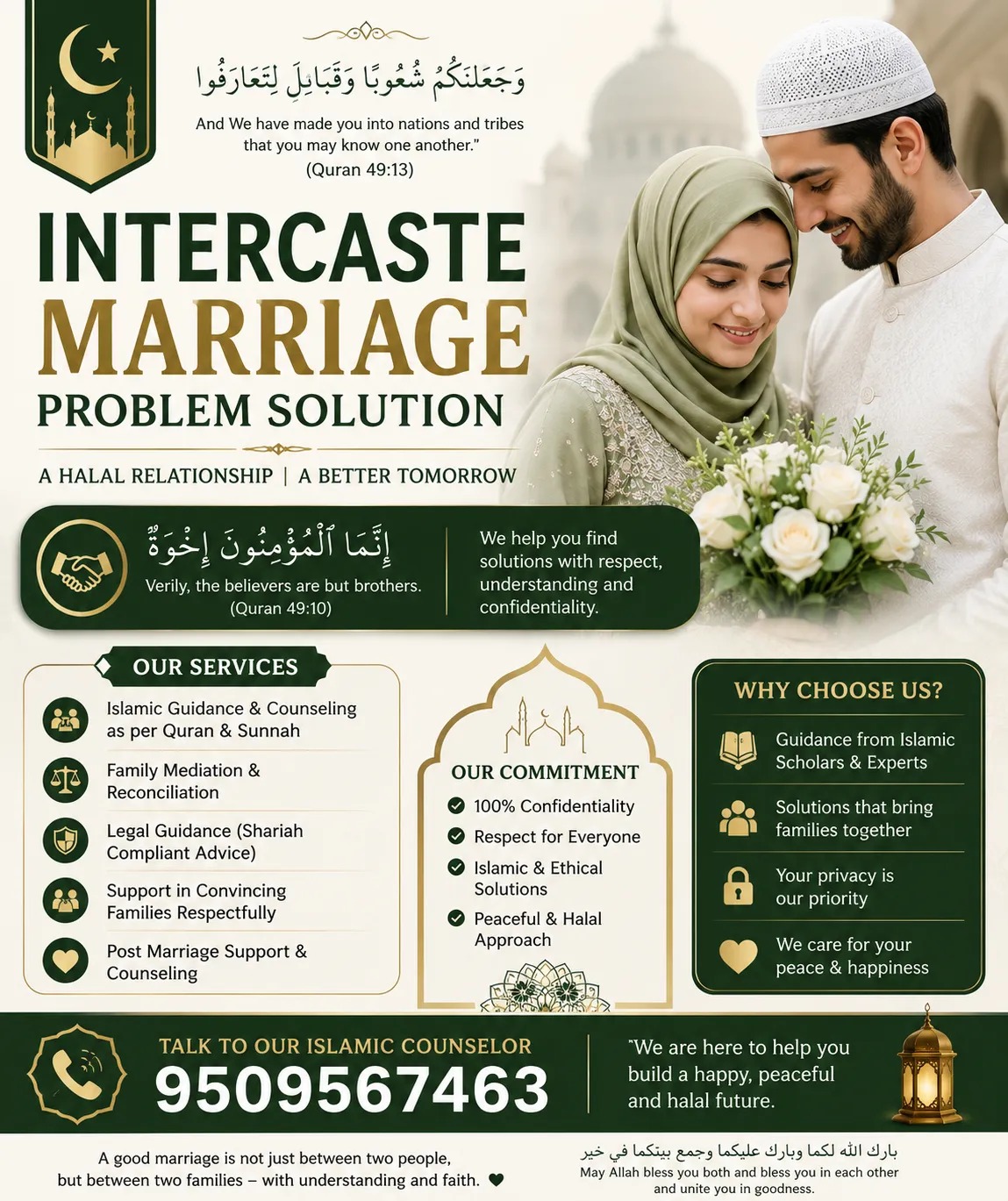
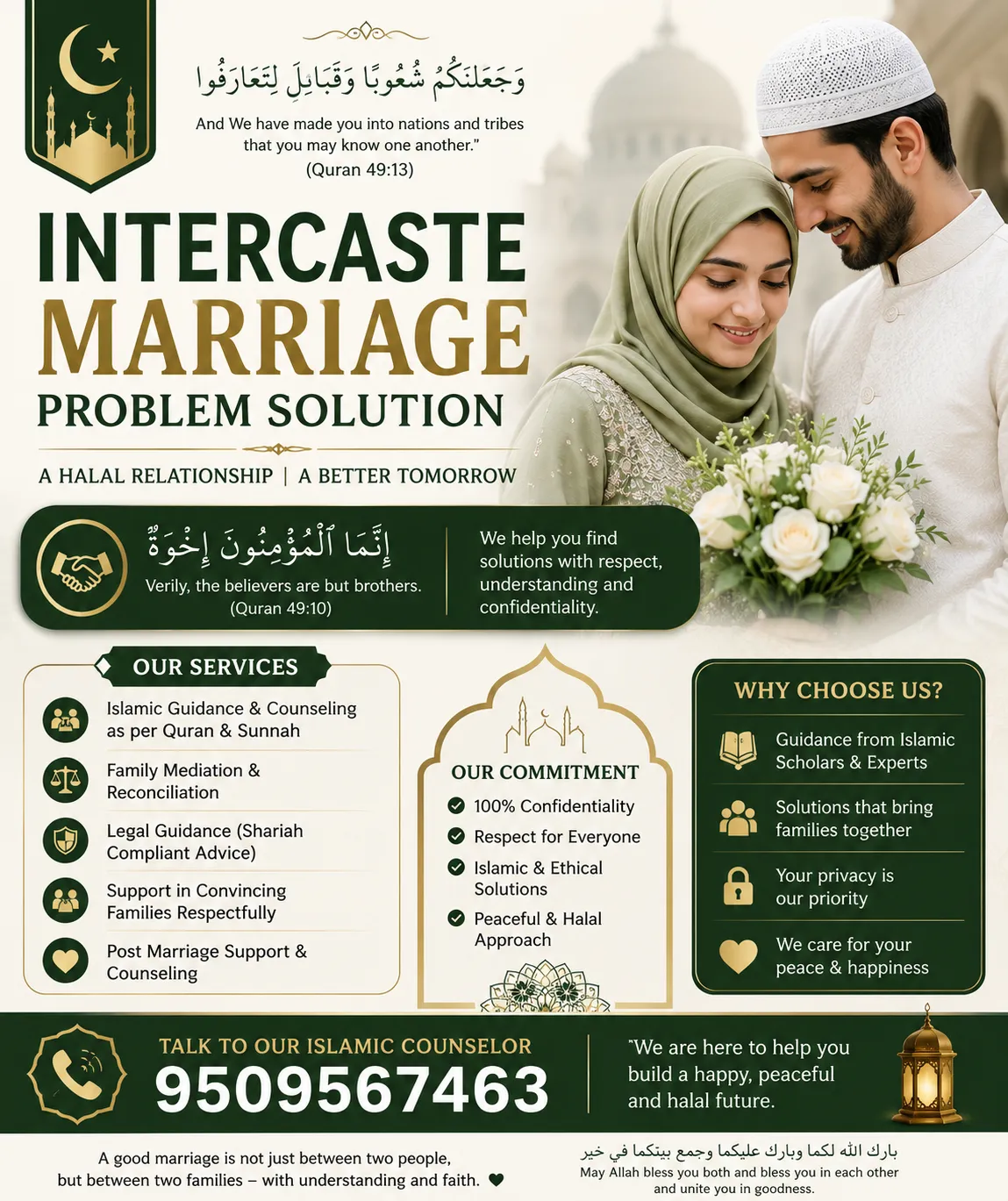
Intercaste Marriage Problem and Solution : Building Strong Relationships Beyond Social Boundaries
Intercaste marriages are becoming increasingly common as individuals prioritize compatibility, education, values, and mutual respect over traditional caste considerations. While these marriages represent social progress and personal freedom, couples often face unique challenges that can affect their relationship, family dynamics, and emotional well-being.
Understanding the common problems associated with intercaste marriages and learning effective ways to address them can help couples build a happy, stable, and fulfilling life together.
What Is an Intercaste Marriage?
An intercaste marriage is a union between two individuals belonging to different castes or social groups. Such marriages promote social integration, equality, and cultural understanding while challenging long-standing societal barriers.
Although acceptance is gradually increasing, many couples still encounter resistance from family members, relatives, and communities.
Common Problems Faced in Intercaste Marriages
1. Family Opposition and Emotional Pressure
One of the most common challenges in intercaste marriages is family resistance. Parents may worry about social status, traditions, community opinions, or cultural differences.
Impact:
- Emotional stress for the couple
- Family conflicts
- Delayed marriage decisions
- Strained relationships with relatives
Solution:
- Maintain respectful communication with family members.
- Give families time to adjust to the decision.
- Arrange discussions focused on values, compatibility, and future plans rather than caste differences.
- Seek support from trusted elders who can mediate constructively.
2. Social Judgment and Community Pressure
Couples may face criticism, gossip, or exclusion from certain social circles due to their marriage choice.
Impact:
- Anxiety and emotional distress
- Reduced social support
- Feeling isolated from the community
Solution:
- Build a strong support network of friends and well-wishers.
- Focus on mutual goals and relationship growth.
- Avoid engaging in unnecessary arguments with critics.
- Participate in inclusive social groups that value diversity and equality.
3. Cultural and Traditional Differences
Different castes often follow distinct customs, rituals, festivals, and family traditions.
Impact:
- Misunderstandings regarding celebrations and religious practices
- Conflicts over family expectations
- Differences in child-rearing approaches
Solution:
- Learn and respect each other's traditions.
- Create new family traditions that blend both cultures.
- Discuss important cultural expectations before marriage.
- Encourage participation in both families' celebrations.
4. Communication Gaps
Stress arising from external pressure can affect communication between partners.
Impact:
- Frequent arguments
- Misinterpretation of intentions
- Emotional distance
Solution:
- Practice open and honest communication.
- Address concerns early rather than suppressing them.
- Schedule regular discussions about relationship goals and challenges.
- Focus on problem-solving instead of blame.
5. Financial and Lifestyle Differences
Different family backgrounds may influence spending habits, career expectations, and lifestyle choices.
Impact:
- Financial disagreements
- Conflicting priorities
- Long-term planning challenges
Solution:
- Create a joint financial plan.
- Discuss savings, investments, and future goals.
- Maintain transparency regarding finances.
- Respect differing perspectives while finding common ground.
6. Parenting and Children's Identity Concerns
Questions about traditions, surnames, religious practices, and cultural identity can arise after having children.
Impact:
- Family disagreements
- Confusion regarding cultural upbringing
Solution:
- Discuss parenting philosophies before marriage.
- Introduce children to both cultural backgrounds.
- Encourage values of equality, respect, and inclusiveness.
- Focus on character development rather than caste identity.
How to Make an Intercaste Marriage Successful
Prioritize Compatibility Over Social Labels
Long-term marital success depends on trust, respect, emotional support, communication, and shared values rather than caste backgrounds.
Key Areas to Strengthen:
- Emotional intelligence
- Conflict resolution skills
- Mutual respect
- Shared future goals
- Financial planning
Build a Strong Partnership
A united approach helps couples handle external pressures more effectively.
Best Practices:
- Make major decisions together.
- Support each other during family conflicts.
- Celebrate achievements as a team.
- Maintain healthy boundaries with outside influences.
Develop Mutual Respect for Families
Acceptance often grows gradually when families see stability and happiness in the relationship.
Practical Steps:
- Stay respectful during disagreements.
- Visit and engage with both families regularly.
- Avoid comparing family traditions.
- Show appreciation for family efforts and concerns.
Seek Professional Guidance When Needed
Marriage counselors and relationship experts can help couples navigate challenges objectively.
Professional guidance may be particularly helpful when:
- Family conflicts become severe
- Communication breaks down
- Emotional stress affects daily life
- Major life decisions create disagreements
Legal Rights in Intercaste Marriage
Many countries, including India, legally recognize and protect intercaste marriages. Couples have the right to choose their life partner regardless of caste, religion, or community, provided legal marriage requirements are fulfilled.
Understanding marriage registration procedures, legal protections, and available support systems can help couples feel more secure during the process.
Benefits of Intercaste Marriage
Despite challenges, intercaste marriages offer several advantages:
- Promotes social equality
- Encourages cultural exchange
- Reduces social barriers
- Strengthens acceptance and diversity
- Helps future generations develop inclusive perspectives
- Expands family experiences and traditions
Frequently Asked Questions
Are intercaste marriages successful?
Yes. Like any marriage, success depends on communication, trust, compatibility, commitment, and mutual respect rather than caste background.
How can parents be convinced to accept an intercaste marriage?
Patience, respectful communication, transparency, and demonstrating long-term commitment often help improve family acceptance over time.
What is the biggest challenge in intercaste marriages?
Family opposition and social pressure are often the most significant challenges faced by couples.
Can cultural differences create marital problems?
Cultural differences can create misunderstandings if not discussed openly. Respect, flexibility, and communication help overcome these challenges effectively.
Final Thoughts
Intercaste marriages symbolize personal choice, equality, and social progress. While couples may face challenges such as family resistance, social pressure, and cultural differences, these obstacles can be addressed through communication, patience, mutual respect, and strong partnership. Reach us to know more about us # 9509567463
Frequently Asked Questions
What are the common challenges faced in intercaste marriages?
Couples in intercaste marriages often face challenges such as family opposition, social judgment, cultural differences, communication gaps, and financial disagreements. These issues can lead to emotional stress and conflicts if not addressed properly.
How can couples successfully communicate about their intercaste marriage?
Successful communication in intercaste marriages involves open and honest discussions about expectations, concerns, and goals. Couples should address issues early, focus on problem-solving, and maintain regular check-ins to strengthen their relationship.
What steps can be taken to gain family acceptance for an intercaste marriage?
To gain family acceptance, couples should practice patience, maintain respectful communication, and demonstrate their commitment to each other. Engaging family members in discussions about shared values can also help ease concerns over time.
Are intercaste marriages legally protected?
Yes, intercaste marriages are legally recognized and protected in many countries, including India. Couples have the right to choose their partners regardless of caste, religion, or community, as long as they fulfill the legal marriage requirements.
How do cultural differences affect intercaste marriages?
Cultural differences can lead to misunderstandings and conflicts if not openly discussed. Couples should respect each other's traditions and work together to create new family customs that incorporate both cultures.
What is the importance of financial planning in intercaste marriages?
Financial planning is crucial in intercaste marriages as differing family backgrounds can influence spending habits and priorities. Couples should create a joint financial plan to ensure transparency and alignment on future goals.
Can intercaste marriages promote social change?
Yes, intercaste marriages can promote social change by challenging traditional caste boundaries, fostering cultural exchange, and encouraging acceptance and diversity in society. They can help future generations develop a more inclusive perspective.



























Sign in to leave a comment.