

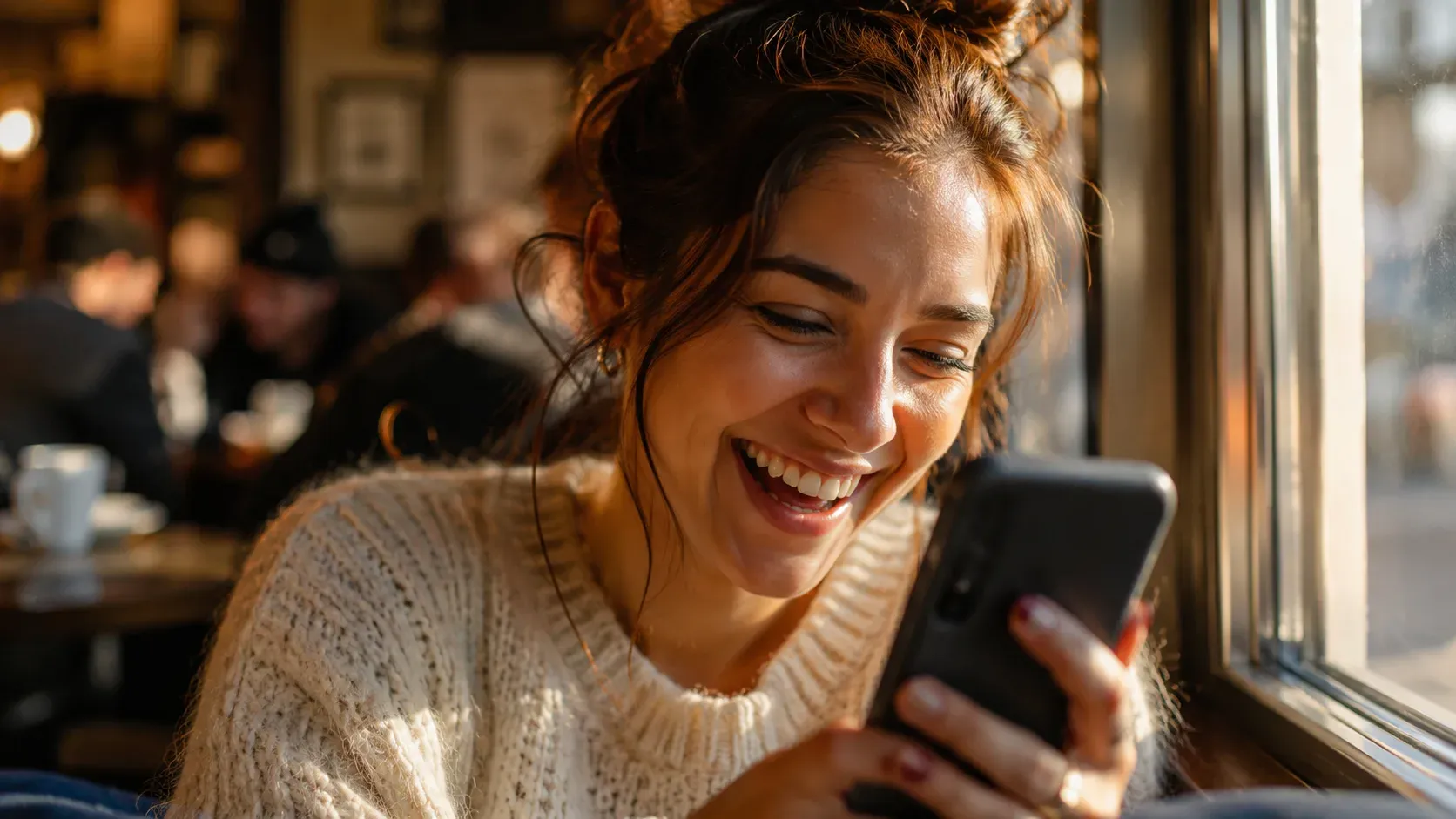
You could write the wittiest bio on Tinder. You could nail every prompt on Hinge. You could craft a Bumble profile that reads like a personal essay worthy of The New Yorker. And none of it would matter if your photos aren't working.
That's not an opinion. It's what the data consistently shows. Research from multiple dating platforms confirms that photos drive roughly 90% of the initial swipe decision. Your bio might close the deal once someone's already interested, but photos are what stop the thumb from scrolling past you in the first place.
So if you've been spending hours tweaking your bio while using the same blurry mirror selfie from 2019, you've got the equation backwards.
The three-second window you can't afford to waste
The average person spends about three seconds looking at a dating profile before deciding to swipe left or right. Three seconds. That's barely enough time to read a sentence, but it's plenty of time to process a photo.
Our brains are wired to make snap visual judgments. Within milliseconds, we form impressions about attractiveness, trustworthiness, and approachability based on nothing more than a photograph. A Stanford study on online dating found that physical appearance predicted initial interest far more than any written content, shared hobbies, or demographic similarities.
This isn't shallow. It's just how human perception works. And once you accept that, you can start working with the system instead of fighting it.
What actually makes a good dating app photo
There's a surprising amount of research on this. Not just anecdotal advice from dating coaches, but real data from the platforms themselves.
Eye contact matters. Photos where you look directly at the camera consistently outperform those where you're looking away. It creates a feeling of connection, even through a screen.
Natural light beats everything else. Indoor flash photos tend to flatten your features and make skin look washed out. Step outside. Golden hour, that warm light about an hour before sunset, is genuinely flattering for almost everyone.
Smile, but only if it looks real. A forced grin is worse than a neutral expression. Hinge's internal data found that candid smiles outperformed posed ones by a significant margin. If you can't produce a natural smile on command, have someone tell you something funny while they take the shot.
Show some variety. Your lead photo should be a clear headshot. After that, include a full-body shot, a photo of you doing something you enjoy, and maybe one social photo. But every photo should look like it belongs on the same profile. Wildly inconsistent photos make people suspicious that you don't actually look like any of them.
Skip the group photos where nobody can tell which one is you. Also skip the gym selfies, the fish photos (unless you're genuinely looking for someone who loves fishing), and anything with sunglasses covering your face. You'd be surprised how many people hide behind accessories in every single photo.
The mistakes that silently kill your matches
Most people don't get feedback on why they're not getting matches. The app just feels dead. So they assume they're not attractive enough, when really their photos are just working against them.
Here are the most common problems I see:
Using old photos. If your photos are more than two years old, replace them. People feel deceived when you show up looking noticeably different, and that kills any chance of a second date.
All selfies, no real photos. One selfie in your lineup is fine. An entire profile of nothing but selfies signals that either nobody takes photos of you, or you couldn't be bothered to put in effort. Neither message helps.
Bad lighting and low resolution. A dark, grainy photo makes you look like you're hiding something. It doesn't matter how good you look in person if the photo quality makes it impossible to tell.
The exact same expression in every shot. If all six photos show the same tight-lipped half-smile at the same angle, it feels robotic. Mix up your expressions and poses.
Too many filters. Heavy filtering, especially the ones that smooth skin or alter facial proportions, erodes trust before you've even matched. People want to know what you actually look like.
How AI is changing the way people approach dating photos
Here's where things get interesting. Over the past couple of years, AI photo tools have gone from novelty to genuinely useful, and dating profiles are one of the areas where they've had the biggest impact.
The concept is simple. You upload a set of your regular selfies, and AI generates professional-quality photos of you in different settings, outfits, and lighting conditions. The output looks like you hired a photographer for a full day. Some people use AI tools built for Tinder profiles to create an entire set of profile-ready images without ever booking a photoshoot.
The appeal is obvious. Professional photography for dating apps can run $200 to $500 per session, and you still need to coordinate locations, outfits, and schedules. AI alternatives typically cost a fraction of that and deliver results in hours instead of weeks.
DatePhotos.AI, for example, takes 5 to 20 selfies and generates 80 to 200 photos across more than 15 styles. Packages start at $29 for the basic tier. That's a one-time payment, not a subscription. For context, that's less than most people spend on a single dinner date that goes nowhere because their profile photos weren't pulling matches in the first place.
The quality has gotten remarkably good. The best tools preserve your actual facial features while improving lighting, composition, and setting. You end up with photos that genuinely look like you on a very good day, which is exactly what dating profile photos should be.
Making it work across different platforms
Different dating apps reward slightly different photo strategies. Tinder is fast-paced and visual, so your first photo needs maximum stopping power. Bumble tends to attract users who pay more attention to the full profile, so variety across your photo set matters more. Hinge lets you add captions to photos, which means you can provide context that turns a good photo into a conversation starter.
If you're on multiple platforms, consider tailoring your lead photo for each one rather than using the same lineup everywhere. The vibe on Bumble skews slightly different from Tinder, and what works as a first impression on one might not land the same way on another.
Tools like DatePhotos for Bumble generate photos in platform-specific styles, which takes some of the guesswork out of this. But whether you use AI-generated photos or traditional ones, the principle is the same: match the energy of the platform you're on.
What to do this week
If your matches have slowed down or you're starting fresh on a dating app, here's a practical plan.
Audit your current photos honestly. Show them to a friend, preferably one who will be blunt with you, and ask which ones actually look good and which ones need to go. Most people are terrible judges of their own photos.
Replace your weakest photos first. You don't need a complete overhaul overnight. Swapping out even two or three bad photos for stronger ones can make a measurable difference in your match rate.
Make your first photo count. It should be a clear, well-lit shot of your face with a natural expression. No sunglasses, no group, no distance shot. This single image does more work than everything else on your profile combined.
Consider your lighting and background in every shot. A photo of you in a coffee shop with warm window light will outperform a photo of you in a messy bedroom with overhead fluorescent lighting, regardless of how good you look in either one. Environment matters more than most people realize.
Your dating app photos are a solvable problem. You don't need to become more attractive. You just need photos that accurately represent how you look when you're at your best. Whether you get there through a friend with a good phone camera, a professional photographer, or an AI tool, the most important step is recognizing that your current photos might be the only thing standing between you and better matches.
























Sign in to leave a comment.