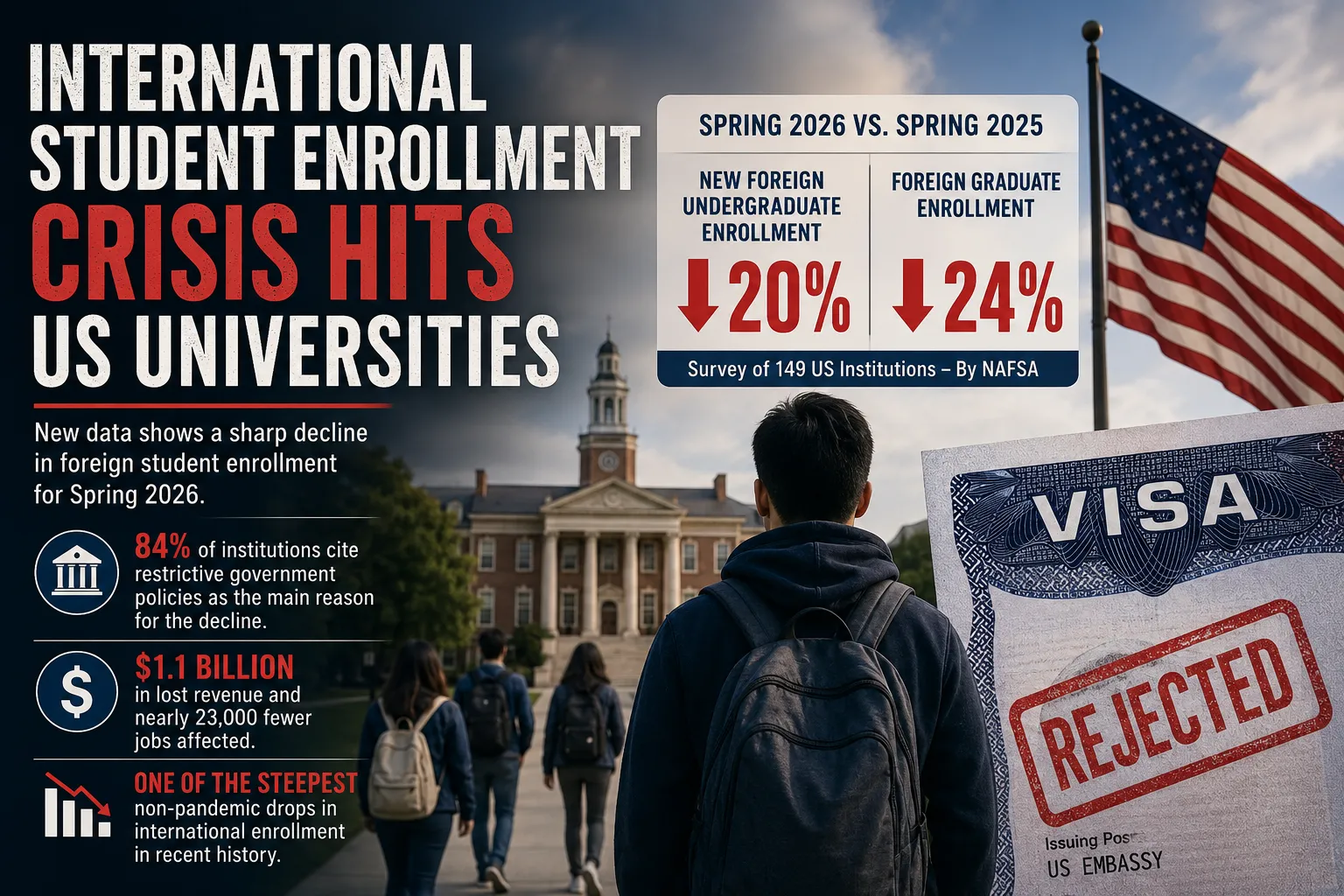

American universities built entire systems around international student enrollment. Tuition revenue, research programs, graduate staffing, and even housing demand depended on a steady flow of students arriving from abroad. Now that system is under pressure.
The international student enrollment crisis is no longer a future concern discussed in policy meetings. It is happening in real time. Colleges across the United States are reporting declines in applications, visa uncertainty, and shrinking international admissions. Smaller institutions feel the shock first, but even major universities are starting to adjust programs, staffing, and recruitment plans.
What makes this moment different is the scale. A temporary slowdown is one thing. A long-term drop changes how universities operate.
According to reporting from Medium and analysis published on U-SSR, many institutions are now restructuring recruitment strategies while trying to stabilize budgets already stretched by inflation and declining domestic enrollment.
Why International Students Matter So Much
International students contribute far more than cultural diversity on campus. In many universities, they quietly support the financial engine behind degree programs.
Graduate STEM departments often rely heavily on international enrollment. Engineering, computer science, and health science programs frequently fill labs and research positions with students from India, China, Nigeria, and South Korea. When those numbers fall, universities lose tuition revenue and research capacity at the same time.
Some campuses are now facing difficult decisions. Certain electives disappear because enrollment no longer supports them. Housing projects get delayed. Research assistants become harder to recruit. It creates a ripple effect across departments that students notice almost immediately.
Think of it like a restaurant losing its dinner crowd. The kitchen still exists. The staff still shows up. But once enough customers disappear, the entire operation changes shape.
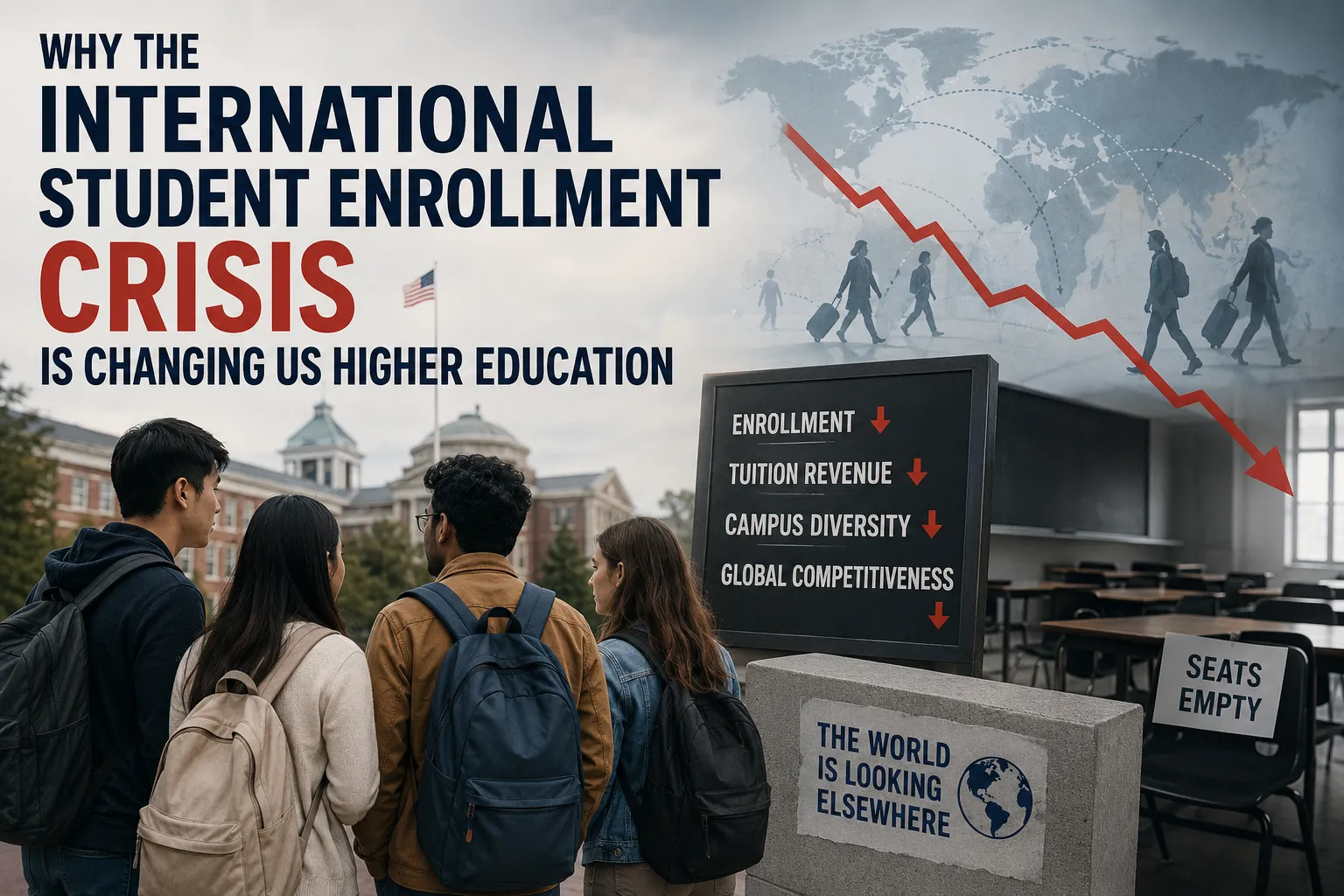
The crisis also exposes how dependent universities became on international tuition. Many institutions charged overseas students significantly higher fees than domestic students. That extra revenue often balanced gaps elsewhere in university budgets.
Now those gaps are harder to hide.
Visa Delays and Rising Uncertainty Are Driving Students Away
Students today compare countries before choosing where to study. The United States still offers world-class universities, but uncertainty has become part of the decision.
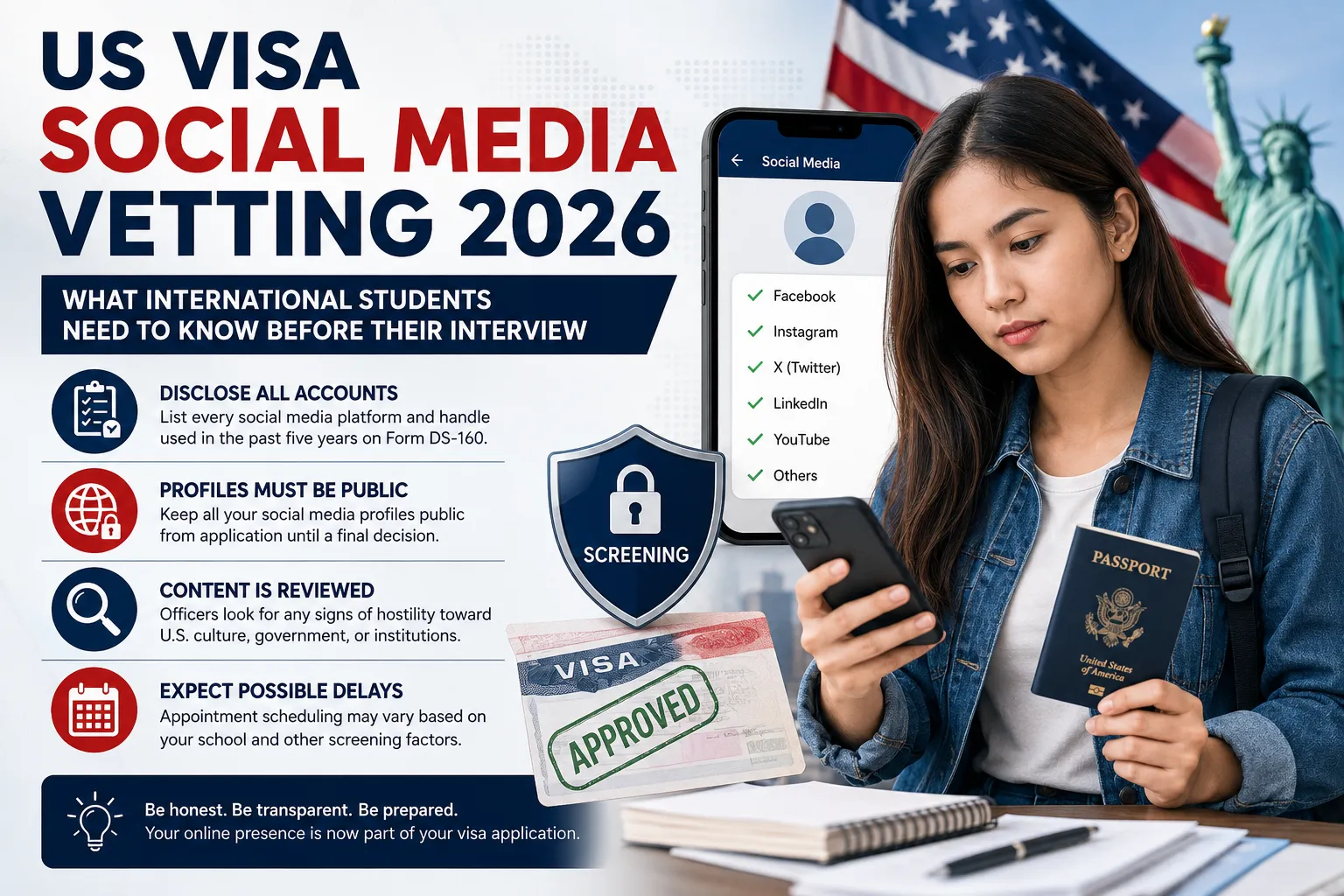
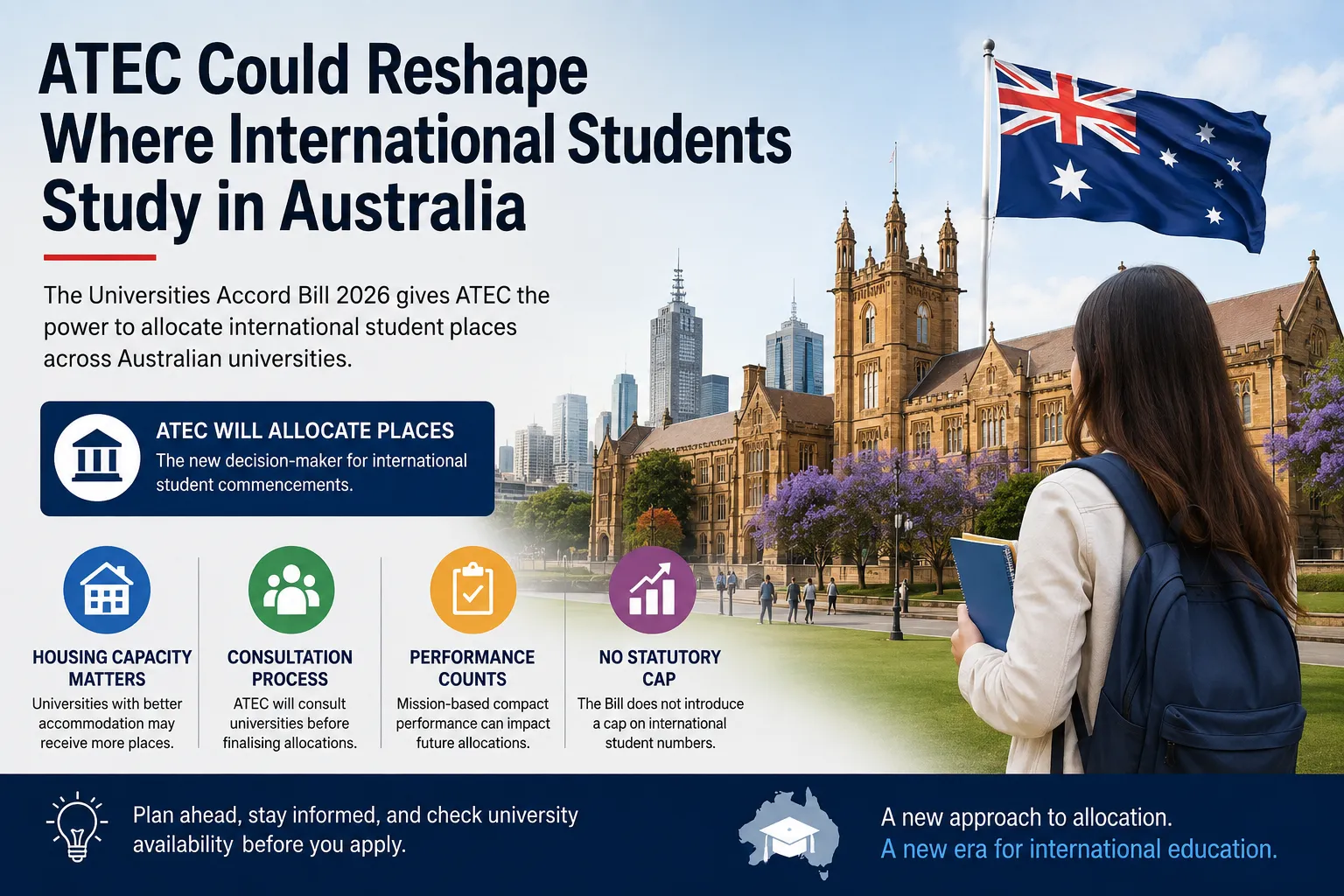
Visa processing delays, shifting immigration rules, rising living costs, and concerns about post-study work opportunities are pushing students toward countries like Canada, Australia, and Germany. These nations continue expanding international education pathways while promoting clearer immigration options after graduation.
The emotional toll matters too. A recent discussion shared through Reddit discussions on the human cost behind America’s international student decline highlighted how students increasingly feel treated as financial assets rather than valued members of campus communities.
That perception damages trust. Once students start viewing universities as unstable or unwelcoming, recruitment becomes much harder.
Social media amplifies the problem. One rejected visa story on TikTok or Reddit can spread across thousands of prospective applicants within hours. Universities can no longer rely on reputation alone. Students want security, transparency, and long-term opportunity.
Colleges Are Quietly Changing Their Survival Strategies
Many universities are already adapting, though few openly frame it as crisis management.
Some institutions are increasing online graduate programs aimed at international markets. Others are forming partnerships with overseas colleges so students can complete part of their degrees locally before transferring to the United States.
Recruitment teams are also expanding beyond traditional markets. India remains strong, but universities are now targeting students from Vietnam, Nepal, Kenya, and Latin America more aggressively than before.
At the same time, academic support services are becoming more important. International students face pressure that goes beyond coursework. Language barriers, isolation, and financial stress often collide during the first year.
That explains why educational support platforms continue gaining attention among global students. Resources like Expertsmind.com’s academic support network and subject-specific services such as physiology assignment help resources are increasingly used by students managing demanding workloads while adjusting to new academic systems.
This trend reflects a larger shift in higher education. Universities are no longer competing only on rankings. They are competing on student experience, flexibility, and support.
The Enrollment Crisis Could Permanently Change Higher Education
The biggest mistake universities can make is assuming international enrollment will automatically rebound.
Student mobility has changed. Families now ask tougher questions before investing tens of thousands of dollars into overseas education. They want clearer career pathways and stronger guarantees that the experience will justify the cost.
American universities still hold enormous advantages. Research quality remains unmatched in many fields. Campus ecosystems are stronger than most competitors. Employers still value US degrees worldwide.
But prestige alone no longer closes the deal.
The institutions that adapt fastest will likely focus on three things: affordability, visa clarity, and student support systems. Universities that continue treating international students mainly as revenue sources may struggle for years.
This crisis also forces a broader conversation about the future of higher education financing in America. For decades, many colleges depended on continuously rising tuition and expanding international enrollment. That model now looks fragile.
The schools that survive this period strongest may end up building healthier systems in the process. More balanced budgets. Better student services. Smarter recruitment strategies. Less dependence on one enrollment stream.
International students are still willing to cross oceans for opportunity. The question is whether American universities can convince them the opportunity remains worth the risk.




























Sign in to leave a comment.