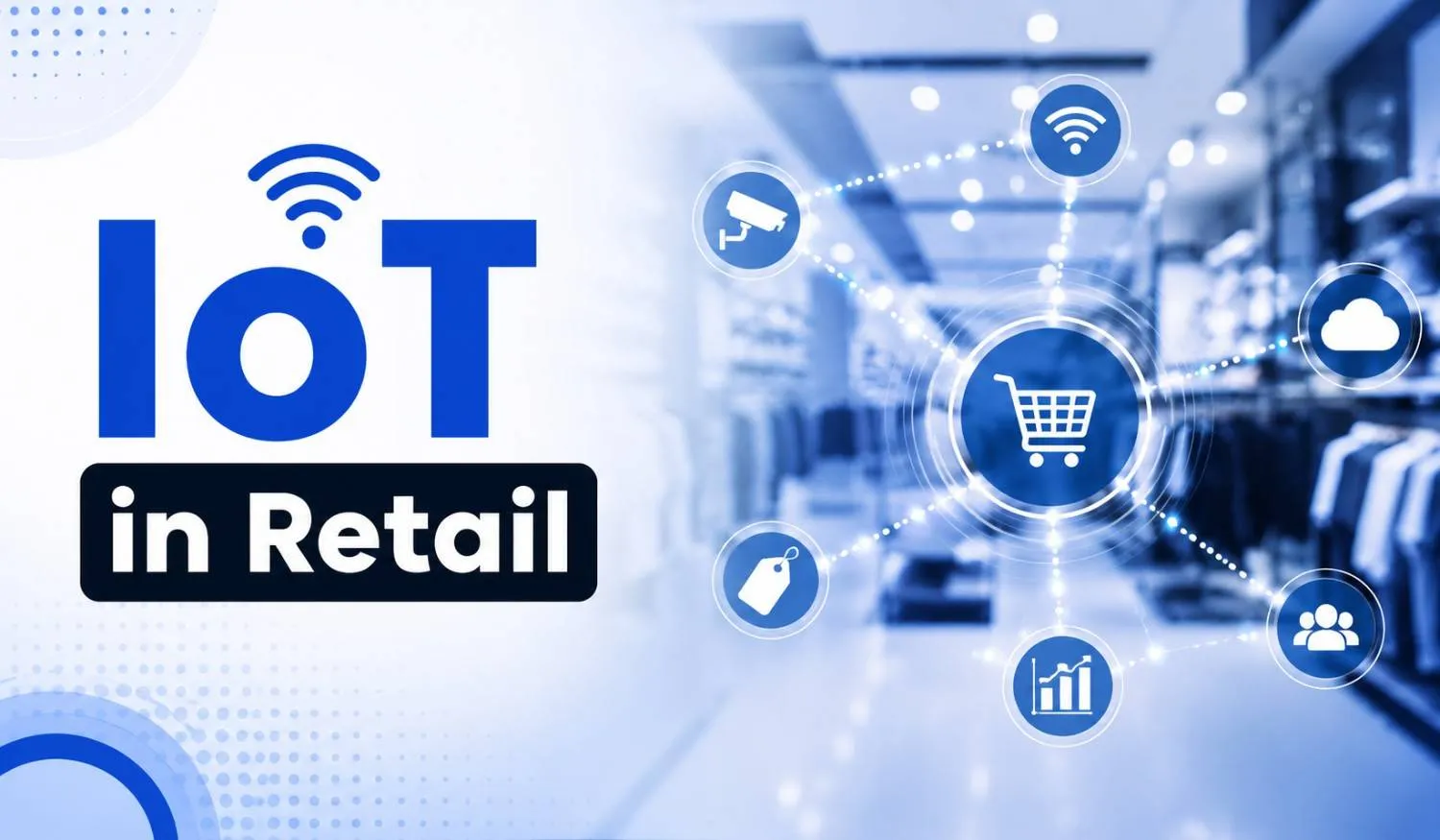

Have you ever entered a store, quickly found what you needed, paid without waiting in long lines, and even received offers that matched your interests? That smooth shopping experience is often powered by technology working in the background.
One of the biggest technologies changing retail today is the Internet of Things (IoT). Retailers are using smart devices and connected systems to improve customer experiences, manage products better, and make store operations faster and easier.
Today’s customers expect convenience, speed, and personalized experiences. Traditional retail methods are no longer enough. IoT helps businesses meet these new expectations.
Must Read: How IoT in Retail Is Making Shopping Smarter and Easier?
What Is IoT in Retail?
IoT, or the Internet of Things, refers to devices connected through the internet that collect and share data in real time.
In retail, IoT helps stores:
- Track products
- Monitor customer behavior
- Improve security
- Automate daily tasks
Common examples of IoT in retail include:
- Smart shelves
- RFID tags
- Digital kiosks
- Smart payment systems
- Connected security cameras
- Inventory sensors
- Mobile beacons
These technologies help stores work smarter and more efficiently.
For example, smart shelves can alert employees when products are running low. This helps stores restock items quickly and avoid empty shelves.
Creating Better Shopping Experiences
Customers today want shopping experiences that feel simple and personal.
IoT helps retailers understand customer preferences and shopping habits. This allows businesses to provide personalized offers, faster service, and better recommendations.
For example, some stores send special offers directly to a shopper’s phone while they browse nearby products.
Smart fitting rooms are another example. They can suggest sizes, colors, or matching items through connected screens and sensors.
These small improvements make shopping more enjoyable and convenient.
Smarter Inventory Management
Managing inventory is a major challenge for retailers.
Too much stock increases costs, while low stock can disappoint customers.
IoT helps retailers track inventory in real time using RFID tags and smart sensors. Employees can quickly identify products that need restocking and track which items are selling faster.
This saves time and reduces manual errors.
Large retail brands can also monitor inventory across multiple stores from one system, making supply chain management easier and more efficient.
Faster Checkout and Payments
Long checkout lines can frustrate customers.
IoT-powered checkout systems help make payments faster and smoother.
Some smart stores use connected systems that automatically detect products and process payments digitally. Customers can simply pick up items and leave while the payment happens automatically.
Self-checkout systems are also becoming more common. They reduce waiting times and improve convenience.
Contactless payments and mobile wallets make transactions quicker and safer for shoppers.
Improving Retail Security
Retail businesses also face challenges like theft and inventory loss.
IoT helps improve store security through connected cameras and smart sensors that monitor activities in real time.
Some retailers combine IoT with AI to detect suspicious behavior faster and improve security monitoring.
RFID tags also help track products and reduce losses caused by theft.
These technologies help create safer environments for both customers and employees.
Personalized Marketing Through Data
IoT devices collect useful customer data that retailers can use for personalized marketing.
By understanding customer interests and shopping habits, businesses can offer more relevant promotions.
For example, a customer who regularly buys fitness products may receive discounts on workout accessories through a store app.
This personalized approach helps businesses improve customer engagement and build stronger relationships.
Challenges of IoT in Retail
Although IoT offers many benefits, retailers still face some challenges.
Data privacy and cybersecurity are major concerns because connected devices collect customer information.
Implementing IoT systems can also be expensive, especially for small businesses.
In addition, IoT devices require regular updates and maintenance to work properly.
Even with these challenges, many retailers believe IoT provides strong long-term value.
The Future of IoT in Retail
The future of IoT in retail looks very promising.
As technology continues to improve, stores are expected to become smarter and more customer-focused.
AI and IoT together can help retailers automate tasks, predict customer needs, and create highly personalized shopping experiences.
In the future, fully connected smart stores may become more common.
Businesses that adopt these technologies early can gain a strong competitive advantage.
Why Choose Moon Technolabs for IoT Retail Solutions?
As retail businesses continue to adopt smart technologies, choosing the right technology partner becomes just as important as choosing the technology itself.
Moon Technolabs helps businesses build reliable and scalable IoT retail solutions that improve customer experiences and simplify store operations.
With experience in IoT, AI, mobile apps, and custom software development, the company helps retailers create smarter and more connected shopping environments.
Here are a few reasons businesses choose Moon Technolabs:
- Custom IoT solutions tailored to retail business needs
- Expertise in smart inventory and automation systems
- Scalable technology for both small stores and large retail chains
- Focus on user-friendly and customer-centric experiences
- End-to-end development and technical support
- Experience with AI, cloud integration, and real-time analytics
Whether a business wants to improve inventory tracking, build smart checkout systems, or create personalized shopping experiences, Moon Technolabs provides solutions designed to support long-term retail growth and digital transformation.
Conclusion
IoT in retail is changing how businesses operate and how customers shop.
From smart shelves and real-time inventory tracking to faster payments and personalized experiences, IoT is helping retailers create smoother and smarter shopping experiences.
While challenges like cybersecurity and implementation costs still exist, the benefits of IoT continue to drive its growth across the retail industry.
As customer expectations continue to rise, IoT will play an even bigger role in the future of retail. Businesses that adopt smart retail technology today are preparing for a more connected and customer-friendly tomorrow.



















Sign in to leave a comment.