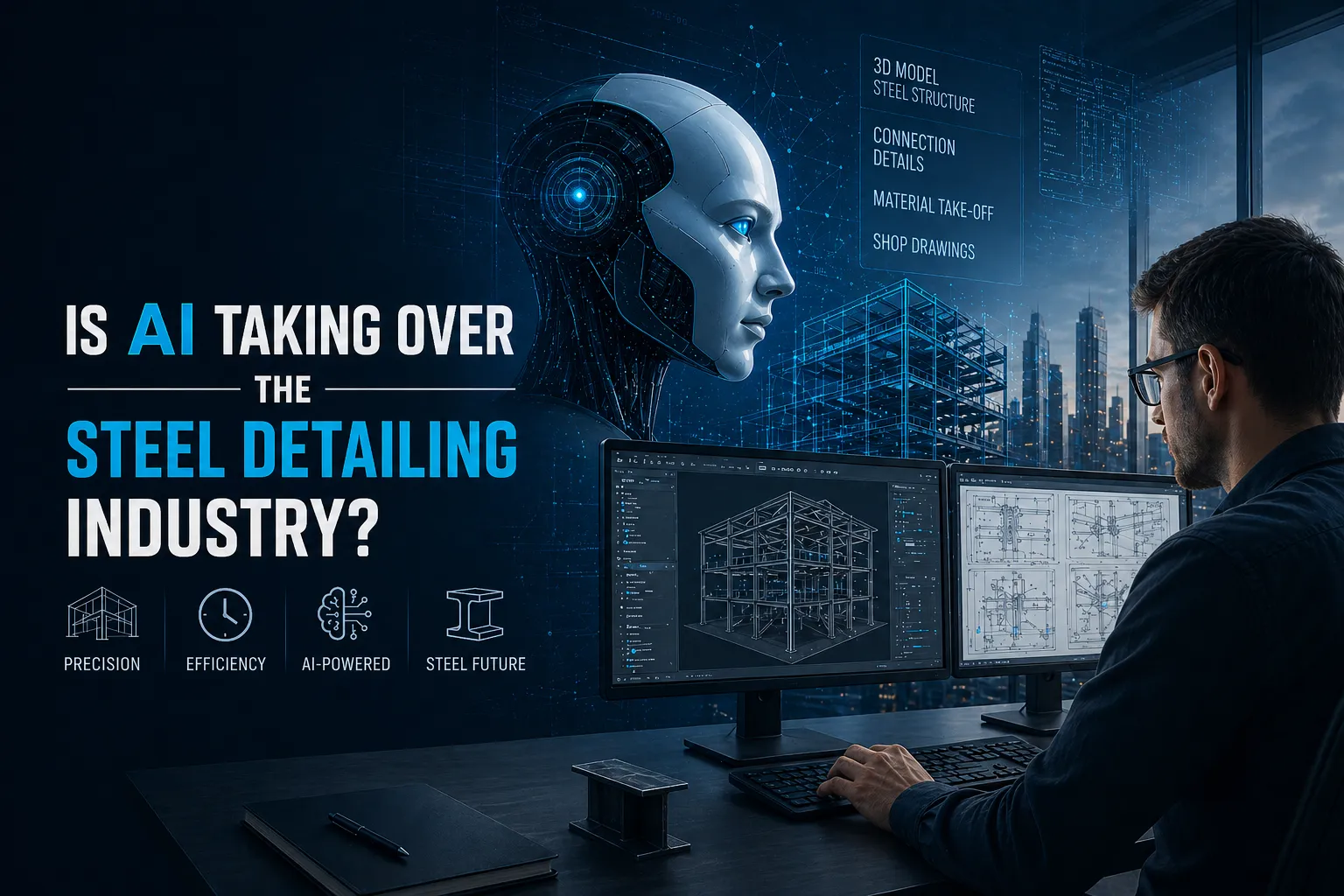

Artificial Intelligence is everywhere in the news these days, and you’ve probably heard the headline, “AI is taking over jobs!” It’s natural to wonder what this means for steel detailing. The reality is, AI is already a part of our workflows. But it’s a tool, not a replacement. Instead of taking over, AI is transforming how we work, automating routine tasks and helping us catch errors faster. In this blog, we’ll look at how AI is being used in steel detailing, what it can (and can’t) do, and why human detailers are still essential.
How AI Fits into Steel Detailing
Modern detailing software and tools have become quite sophisticated. They are starting to include AI-driven features that speed up modeling, drawing creation, and error checking. Here are some ways AI and automation are helping in our day-to-day work:
Automating Repetitive Modeling: A lot of the routine work that detailers once had to do manually can now be handled by software. For example, some tools can take 2D drawings or PDFs and automatically generate the base 3D model in Tekla or SDS/2. The software can place beams, columns, grids, and standard details without us having to sketch every single element from scratch. This helps us to save hours of manual drafting and so that we can focus on more complicated parts of the model where our expertise is significant
Smart Connection and Detail Placement: AI-powered features can suggest or automatically apply standard connections and welds based on geometry and code requirements. For example, if the software recognizes a typical beam-to-column scenario, it can insert the correct clip angle or weld. This “smart connection” capability cuts down on repetitive data entry. We still check and tweak these connections, but AI helps with the heavy lifting of selecting the right piece from our libraries.
Clash Detection & Error Checking: One of the biggest advantages of 3D BIM is early clash detection, and AI is boosting that capability. Automated clash-detection tools can scan the model and flag clashes or interferences before we send drawings to fabrication. Some systems use intelligent rules (a form of AI) to check code compliance or highlight missing bolts, welds, or plate thicknesses. This means we catch design errors or overlooked details much earlier, reducing costly rework later on.
Faster Drawing and Document Creation: Creating shop drawings and erection plans can be tedious. New software features use AI to speed this up. For example, Tekla Structures 2025 introduced a “Smart Create” feature for fabrication drawings that automatically selects the best drawing templates and settings. Similarly, cloud-based AI tools can search past projects and copy relevant views and annotations. In practice, this cuts down the time needed to set up drawing sheets. We get a head start on diagrams and can refine them instead of starting with a blank page.
Rapid Bill of Materials (BOM) and Takeoffs: Generating accurate material lists is a classic pain point. AI-enhanced tools extract member lists and quantities instantly from the model, often even optimizing what to include on each drawing. This automation means our estimators and detailers spend less time on manual counting. In some cases, machine learning algorithms analyze past projects to predict extra materials (like bolts or weld rod) that might be needed, helping create more accurate takeoffs from the get-go
Design Optimization and Predictive Analytics: This is an emerging area. Some AI tools can suggest optimized design alternatives. For example, generative design software might propose a framing layout that uses fewer beams or uses standardized sections more efficiently, balancing cost and performance. Also, by analyzing data across projects, AI can predict trouble spots: it might flag that a particular roof design historically tends to have clearance issues or that certain shop drawing processes usually cause delays. These predictive analytics give us warnings so we can address problems efficiently.
AI in detailing acts like an assistant. It can do bulk work and point out issues, but it relies on us to give it direction and context. We’re already seeing these features in the software we use every day (Tekla Structures, Autodesk Advance Steel, SDS/2, etc.), and they get improvised each year.
Why Human Detailers Are Still Crucial
Even with all these AI helpers, human expertise is irreplaceable. Steel detailing services involves a lot of judgement, creativity, and on-the-fly problem solving that AI just can’t match. Here are a few reasons we can’t hand the process entirely over to machines:
No two projects are exactly the same. Despite AI’s power, it works best when recognizing patterns or following rules. But construction projects constantly throws issues like last-minute design changes, unexpected site conditions, unique architectural details. A human detailer interprets those nuances. We know how to adapt a standard connection when the architect changes the roof slope, or how to adjust details when a shop lays out equipment differently. That kind of adaptability and creative problem-solving is still a human skill.
Complex Judgement Calls: Choosing the right connection or detail often involves understanding the bigger picture – future work, constructability, sequencing, or even owner preferences. Consider the instance of picking a connection that will be easy for the fabricator to weld on-site, it requires insight about the project’s schedule or shop capabilities. AI can suggest options, but it is limited as AI can't understand the contractor’s situation or job-site logistics. We still make the final calls based on experience.
Communication and Collaboration: Detailers don’t work in individually. We coordinate with engineers, architects, fabricators, and field crews. Explaining changes, answering questions, and interpreting markup requires interpersonal skills. A chatbot might help draft an email, but it can’t negotiate a creative solution on the fly or reassure a project manager. Human detailers are the bridge between the tech and the people. They ensure everyone is on the same page and that the details meet the project needs.
Quality Oversight: AI tools can catch many errors, but they aren’t foolproof. Sometimes they generate false positives or miss the subtle “gotcha” that only an experienced eye would spot. We set the accuracy standards and double-check the AI’s work. For example, if automated software inserts a connection, we still verify the weld sizes and plate thicknesses, and we confirm that holes line up across members. In practice, AI frees us from brute-force checking so we can focus on these quality aspects – but it doesn’t replace our attention to detail.
Legal and Safety Responsibility: Qualified engineers and detailers sign off on the work. We hold the licenses and certifications. Any AI-generated output still needs our stamp of approval. That legal responsibility means we have to understand every part of the design. We can’t simply trust the AI, there is no assurance. We should ensure that it meets code, safety, and contract requirements.
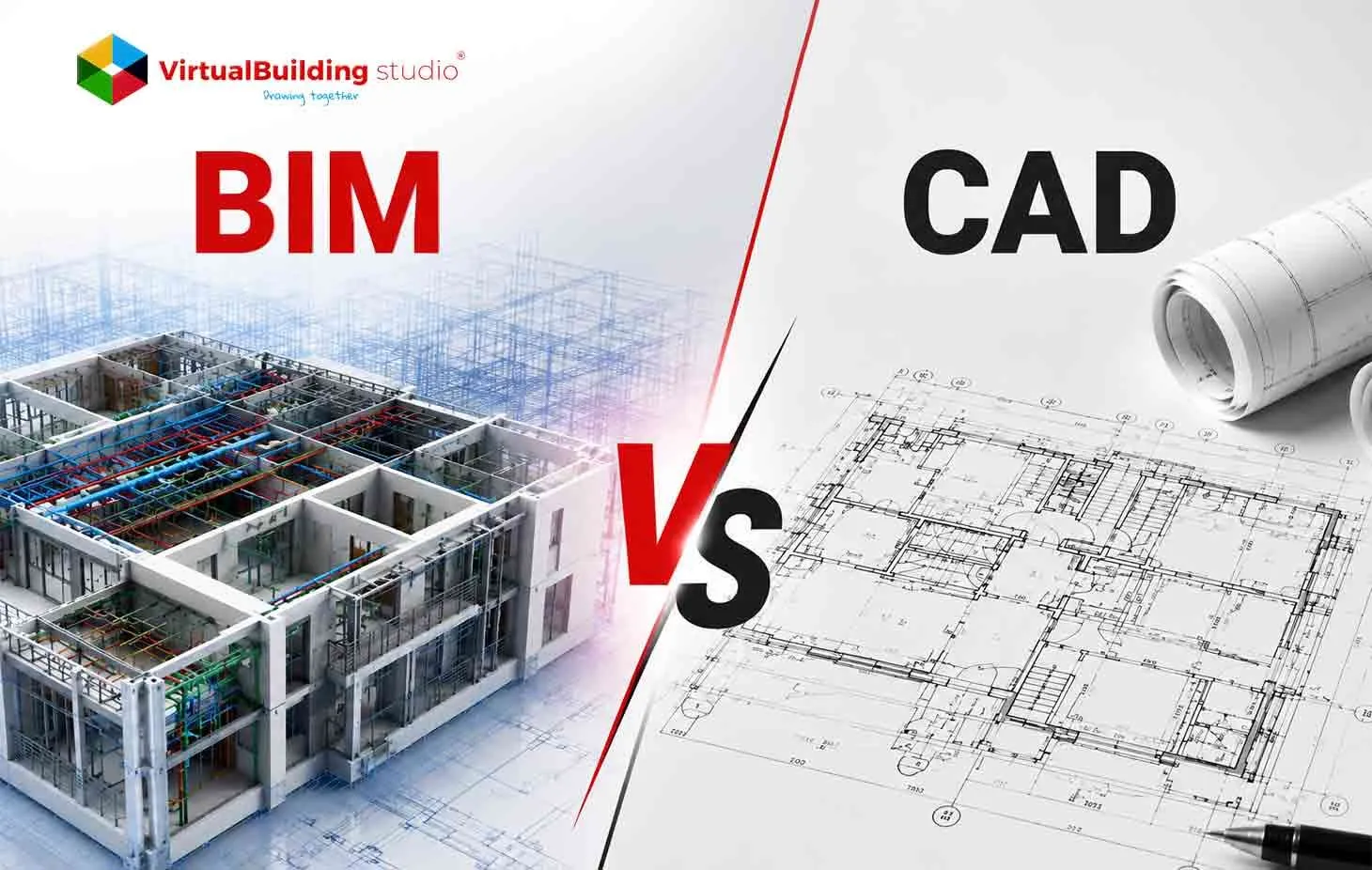
To conclude, AI is a tool that boost up what we do, and it doesn’t replace the human in the loop. We bring qualities like creativity, context, and accountability which machines don’t have. AI is not taking over steel detailing, but it is reshaping it. Our industry has always evolved from hand-drafting to CAD to BIM and AI is just the next step. Embracing these tools ensures we stay competitive and continue delivering top-quality detailing in the future.






















Sign in to leave a comment.