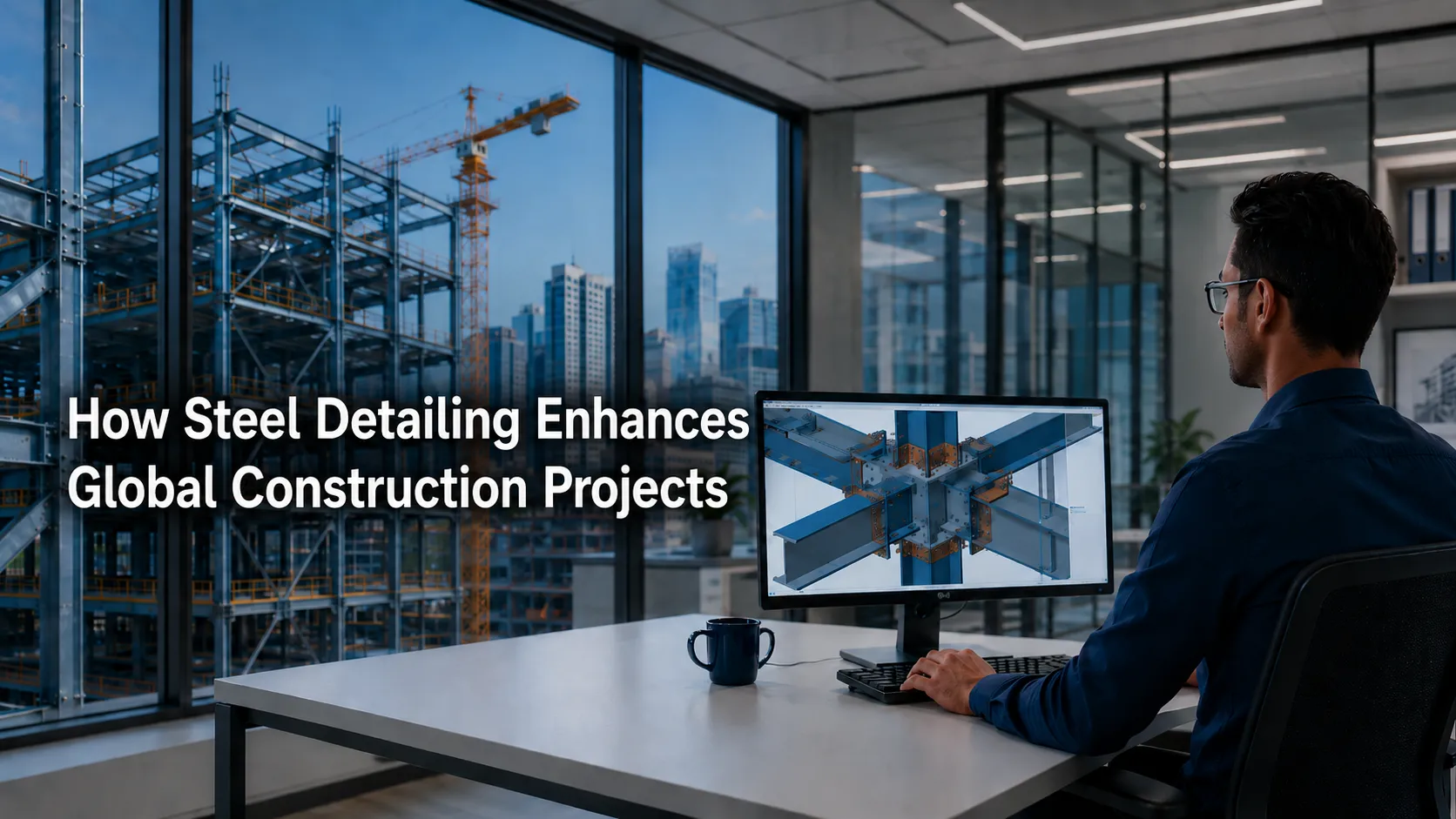

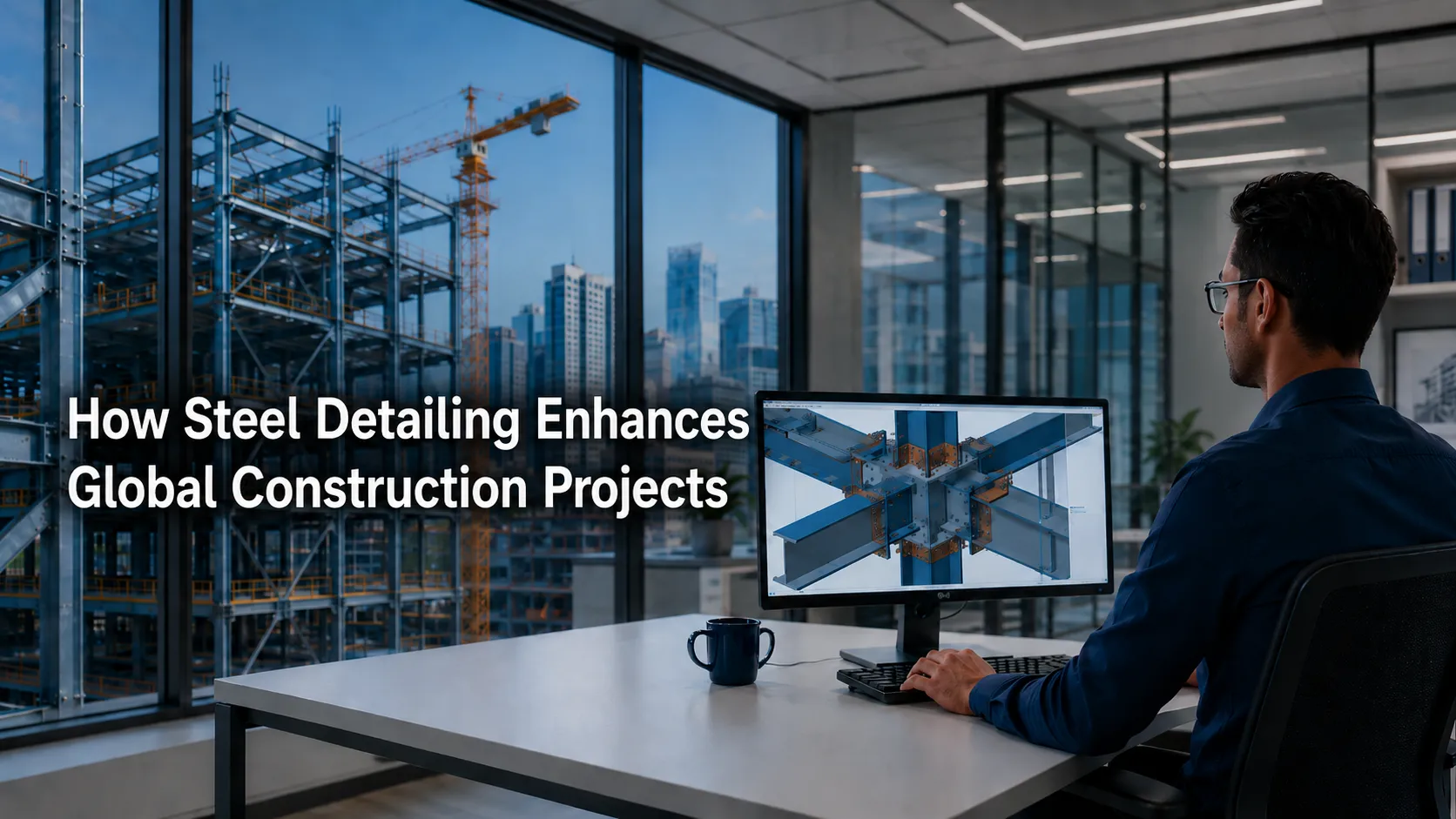
Steel is one of the most widely used materials in modern construction, especially for commercial buildings, industrial facilities, bridges, airports, stadiums, data centers, healthcare facilities, and infrastructure projects. However, the success of any steel structure depends not only on design strength but also on how accurately the design is converted into fabrication-ready and erection-ready information.
This is where steel detailing plays a critical role. Steel detailing acts as the link between structural design, fabrication, and on-site erection. It transforms engineering drawings into precise shop drawings, erection drawings, connection details, material lists, and 3D models that guide fabricators, erectors, contractors, and project stakeholders. Reference articles also highlight shop drawings, erection plans, and BOMs/material lists as key steel detailing deliverables.
For global construction projects, where teams may be spread across different regions, time zones, codes, and workflows, accurate steel detailing helps reduce uncertainty and improves project execution from preconstruction to installation.
What Is Steel Detailing?
Steel detailing is the process of creating detailed drawings and models for structural steel components such as beams, columns, bracings, trusses, stairs, handrails, platforms, connections, anchor bolts, and miscellaneous steel items.
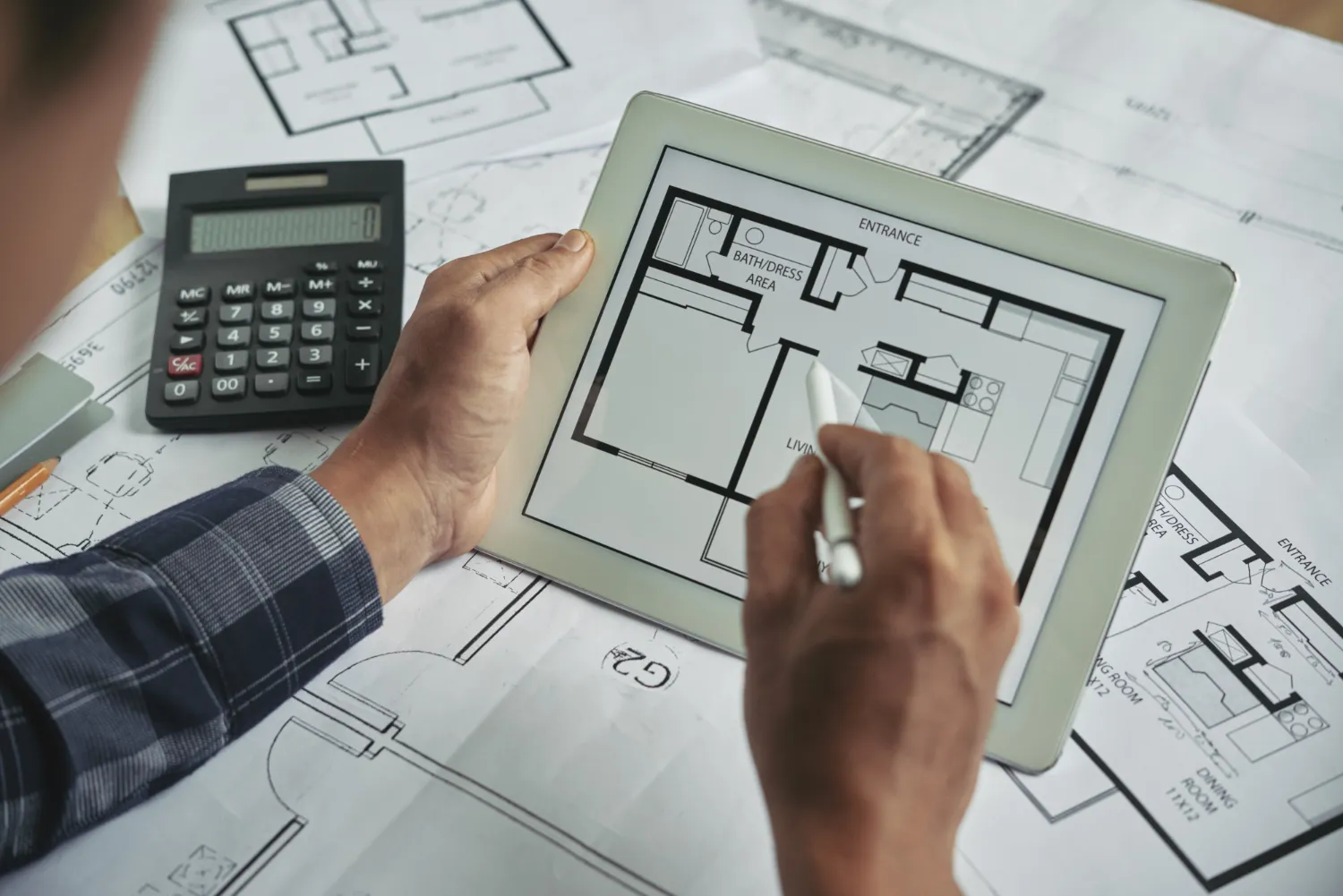
A steel detailer interprets the structural engineer’s design and prepares clear instructions for fabrication and erection. These deliverables usually include:
- Shop drawings for fabrication
- Erection drawings for site installation
- Assembly drawings
- Connection details
- Anchor bolt plans
- Material takeoffs and bill of materials
- 3D steel models for coordination
In simple terms, steel detailing ensures that every steel component is correctly sized, placed, connected, fabricated, transported, and installed.
Why Steel Detailing Matters in Global Construction
Large-scale construction projects involve multiple stakeholders, including architects, structural engineers, general contractors, steel fabricators, erectors, MEP teams, façade consultants, and project owners. When these teams work across different countries, the need for accuracy becomes even more important.
Steel detailing helps create a common technical language for all stakeholders. Instead of depending only on design intent, project teams get fabrication-ready and erection-ready documentation that supports practical execution.
In global projects, even a small detailing error can result in fabrication rework, material wastage, delayed shipments, site clashes, or installation issues. Accurate detailing reduces these risks by identifying problems before steel reaches the fabrication shop or construction site.
1. Improves Fabrication Accuracy
Fabrication shops rely heavily on steel detailing drawings. These drawings provide clear information about member sizes, cuts, holes, welds, bolts, plates, and assembly requirements.
When shop drawings are accurate, fabricators can manufacture steel components with fewer errors. This reduces rework, saves time, and improves production efficiency. For international projects, this is especially valuable because fabricated steel may be shipped across long distances. Any error discovered after shipping can lead to major delays and additional costs.
Accurate steel detailing ensures that the fabricated components match the design requirements and can be assembled correctly on site.
2. Supports Better BIM Coordination
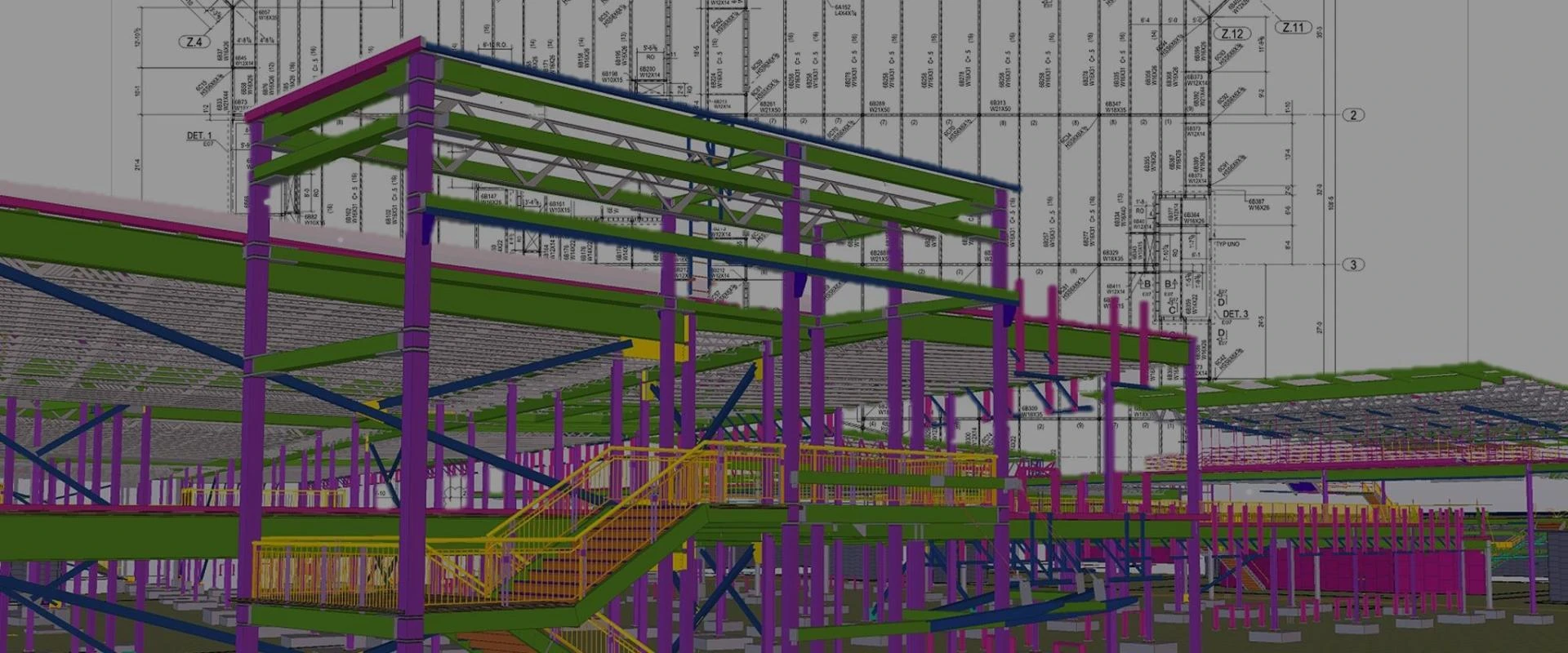
Modern steel detailing is no longer limited to 2D drafting. Today, 3D modeling and BIM-based coordination are widely used to improve project clarity. Steel models can be coordinated with architectural, structural, MEP, façade, and precast models to detect clashes before construction begins.
This is especially useful in complex projects such as airports, hospitals, high-rise buildings, industrial plants, and data centers, where structural steel must coordinate with ducts, pipes, cable trays, equipment, ceilings, and access zones.
With BIM-based steel detailing, project teams can review steel connections, erection sequences, maintenance access, and installation constraints early in the process. This helps reduce site conflicts and improves coordination between global teams.
3. Reduces Rework and Site Delays
Rework is one of the biggest challenges in construction. It affects project timelines, budgets, labor productivity, and client satisfaction. Many site issues occur because design information is incomplete, unclear, or not properly coordinated.
Steel detailing reduces rework by identifying constructability issues before fabrication starts. Detailers review design drawings, raise RFIs, coordinate connection requirements, and prepare clear documentation for fabrication and erection.
This proactive approach helps prevent common issues such as:
- Misaligned bolt holes
- Incorrect member lengths
- Connection conflicts
- Missing plates or stiffeners
- Clashes with MEP services
- Erection sequence problems
- Incorrect material quantities
By solving these issues early, steel detailing helps projects move smoothly from design to fabrication and site installation.
4. Enhances Cost Control
Global construction projects often involve tight budgets and strict delivery schedules. Steel detailing helps control costs by improving material accuracy, reducing waste, and supporting better procurement planning.
A detailed bill of materials allows contractors and fabricators to order the right quantity of steel, bolts, plates, and accessories. This reduces excess material purchase and avoids shortages during fabrication.
Model-based steel detailing also allows project teams to extract accurate quantities, compare revisions, and track changes more efficiently. This improves commercial control and helps reduce unexpected costs during construction.
5. Improves Erection Planning and Site Safety
Erection drawings are essential for on-site steel installation. They show how steel members should be positioned, connected, and assembled. Clear erection drawings help site teams understand the installation sequence, crane planning, connection points, and temporary stability requirements.
For large projects, erection planning is critical because steel installation must often happen alongside other construction activities. Poor planning can lead to delays, safety risks, and coordination issues.
Steel detailing improves site execution by providing erectors with accurate placement plans, member marks, connection details, and installation references. This helps crews work faster, safer, and with greater confidence.
6. Supports International Codes and Standards
Global construction projects must often comply with region-specific standards such as AISC, BS, Eurocode, OSHA-related requirements, or local building codes. Steel detailers working on international projects must understand these standards and apply them correctly in drawings and models.
This is particularly important for projects delivered across the USA, UK, Europe, Middle East, Australia, and other global markets. The detailing team must align with project specifications, fabrication standards, connection requirements, and documentation expectations.
A skilled steel detailing partner helps contractors and fabricators maintain compliance while meeting client and regional project requirements.
7. Enables Faster Project Delivery
Construction timelines are becoming shorter, and stakeholders expect faster project delivery without compromising quality. Steel detailing supports this by improving coordination, reducing RFIs, enabling parallel workflows, and preparing fabrication-ready drawings on schedule.
When detailing is integrated early in the project, fabricators can begin planning procurement, production, and delivery more efficiently. Contractors can also understand erection requirements earlier, which improves site readiness.
For global projects, offshore and distributed detailing teams can also support faster turnaround by working across time zones and maintaining continuous project progress.
8. Strengthens Collaboration Across Global Teams
Steel detailing creates a reliable technical foundation for communication. Through 3D models, cloud-based platforms, BIM coordination tools, and structured drawing submissions, project teams can collaborate more effectively even when they are located in different countries.
Digital steel models make it easier for engineers, fabricators, contractors, and project managers to review details, track revisions, and resolve issues. Reference material also points to BIM, AI, automation, and international collaboration as major forces shaping the future of steel detailing.
This improves transparency and reduces miscommunication across the project lifecycle.
9. Contributes to Sustainable Construction
Steel detailing also supports sustainability by reducing material waste and improving fabrication efficiency. Accurate detailing helps optimize steel usage, avoid unnecessary rework, and reduce excess procurement.
When steel components are fabricated correctly the first time, projects save energy, labor, transportation, and material resources. Better planning also reduces site waste and improves overall construction efficiency.
As sustainability becomes a priority in global construction, accurate steel detailing will continue to play an important role in responsible project delivery.
The Future of Steel Detailing in Global Projects
The steel detailing industry is rapidly evolving. Advanced technologies such as BIM, automation, AI-assisted workflows, cloud collaboration, parametric modeling, and digital twins are transforming how steel structures are modeled, reviewed, fabricated, and erected.
Future-ready steel detailers will need more than drafting skills. They must understand construction sequencing, BIM coordination, fabrication logic, international standards, digital collaboration, and constructability. As projects become more complex, steel detailing will become even more central to preconstruction planning and global project execution.
Conclusion
Steel detailing enhances global construction projects by improving accuracy, coordination, fabrication quality, cost control, and site execution. It bridges the gap between design and construction, ensuring that structural steel components are fabricated and erected with precision.
For contractors, fabricators, engineers, and project owners, investing in professional steel detailing services is not just a documentation requirement. It is a strategic step toward reducing risk, avoiding delays, improving collaboration, and delivering successful construction projects across global markets.


















Sign in to leave a comment.