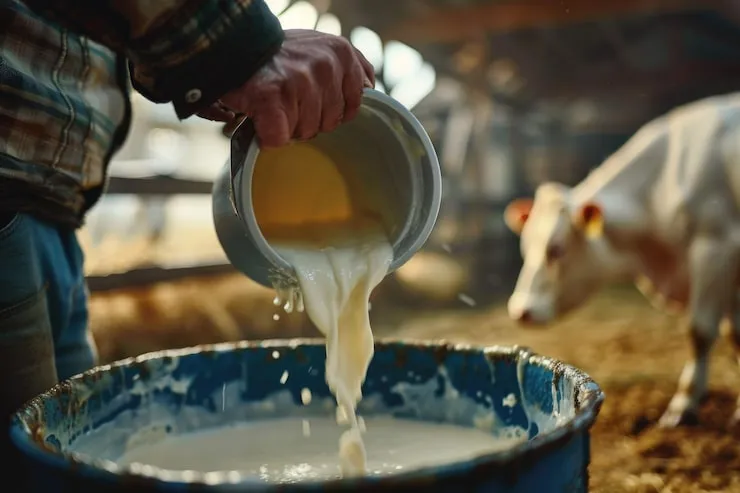

Old-timers talk about milk the way some people talk about tomatoes. The store-bought stuff just isn't the same as what came straight from the source, and everyone who grew up around a farm seems to know it. Bring up raw milk at a farmers market and someone will have a story ready — a grandparent's dairy cow, a jar in the fridge that never lasted as long as it should have. That kind of loyalty doesn't come out of nowhere. And lately, anyone searching for raw milk in Houston has probably noticed the topic getting louder than it used to be. Worth asking why.
What Actually Makes It Different
Pasteurization does its job. Heat kills bacteria, plain and simple. But heat isn't picky about what else it destroys — it also breaks down enzymes and proteins that raw milk drinkers swear give the product its character. Lactase is one of them. Some people believe it helps with digestion, which might explain why a chunk of the lactose-sensitive crowd says they do fine with raw milk when the pasteurized carton gives them trouble. Not universal. Bodies are stubborn like that. But the pattern shows up often enough that it's not something to just brush off.
Then there's the cream. Raw milk separates on its own, with a thick layer rising to the top — something that basically never happens with the homogenized stuff on grocery shelves. That's not a defect. It's a sign nothing's been mechanically forced into staying uniform. Plenty of people skim that cream right off for coffee, or baking, or honestly just eating with a spoon.
The Flavor Nobody Gives Enough Credit
Taste gets brushed aside too fast in these conversations, like health is the only thing worth discussing. It's not. Raw milk carries a fuller, slightly grassy flavor that shifts with the season — what the cows are grazing on, how much rain fell, all of it shows up in the glass. Spring milk doesn't taste quite like fall milk. Strange the first time someone notices. Grows on you fast, though. Compare that to processed milk, which tastes the same in January as it does in July no matter where it came from. Consistency has its place. Doesn't mean it's always a compliment.
What the Nutrition Conversation Actually Looks Like
This part deserves some nuance instead of sweeping claims. A handful of studies suggest raw milk holds onto higher levels of certain vitamins — B vitamins, vitamin C — since pasteurization's heat can wear those down. Enzymes like lipase and phosphatase, which some nutritionists say help with absorption, stay intact too. None of that makes raw milk a miracle food. It isn't one, and anybody pitching it that way is overselling. What's fair to say: sourced properly, raw milk keeps a nutrient profile closer to what came straight out of the animal, before anything got stripped out along the way.
More Than a Trend — It's Local Agriculture
There's a bigger picture worth mentioning. Buying raw milk almost always means buying from a small, local dairy rather than an industrial supplier. That has real weight for a local economy. Small dairies can't compete on volume with the big processors — so trust and quality end up being the entire business model, not just a marketing angle. Every gallon sold helps keep a farmer in business, usually one managing a small herd, rotating pastures, paying closer attention to individual animals than any factory line ever could.
Sourcing Matters More Than Anything Else Here
This is the part that gets glossed over too often. Raw milk is only as good as the farm behind it — full stop. Skip pasteurization and suddenly cleanliness, animal health, and handling practices carry a lot more weight than they would with a pasteurized product. Reputable producers test regularly. They keep records. Their sanitation standards, in a lot of cases, rival — sometimes beat — bigger operations. Not a footnote. The whole game. Anyone buying should ask questions: how's the herd tested, how's the milk cooled, how fast does it move from the farm to somebody's fridge. A good farmer won't flinch at any of that. Most will be glad someone bothered to ask.
A Slower Supply Chain, on Purpose
There's something old-fashioned about how raw milk moves from farm to table, and that's not an accident. Less processing. Less time sitting in transit. Fewer hands touching it between the cow and the glass. For anyone trying to eat closer to the source — fewer ingredients they can't pronounce, more visibility into where the food actually came from — raw milk fits that mindset naturally. Not about rejecting modern food systems entirely. Just wanting a bit more transparency somewhere on the grocery list.
The Community Part People Don't Expect
Buying raw milk turns into more than a transaction pretty quickly. Regular customers know their farmer by name. Some visit the property. A few bring their kids along, just to see where the milk actually comes from before it hits the fridge. That relationship changes how people think about food — it stops being an anonymous carton and starts being tied to a place, a person, a season. Hard to put a price on that. Though plenty of people would say it's worth paying extra for anyway.
Conclusion- Finding the Right Source in Houston
Not every option is equal, and that's especially true for something this dependent on where it comes from. Among the farms in Houston selling raw milk, there's real variation — in animal welfare, testing frequency, how pastures get managed. Worth visiting in person when possible. Ask about herd health protocols. Look for farms that are upfront about their practices instead of vague about them. A little digging beforehand goes a long way, both for the product and for peace of mind.


























Sign in to leave a comment.