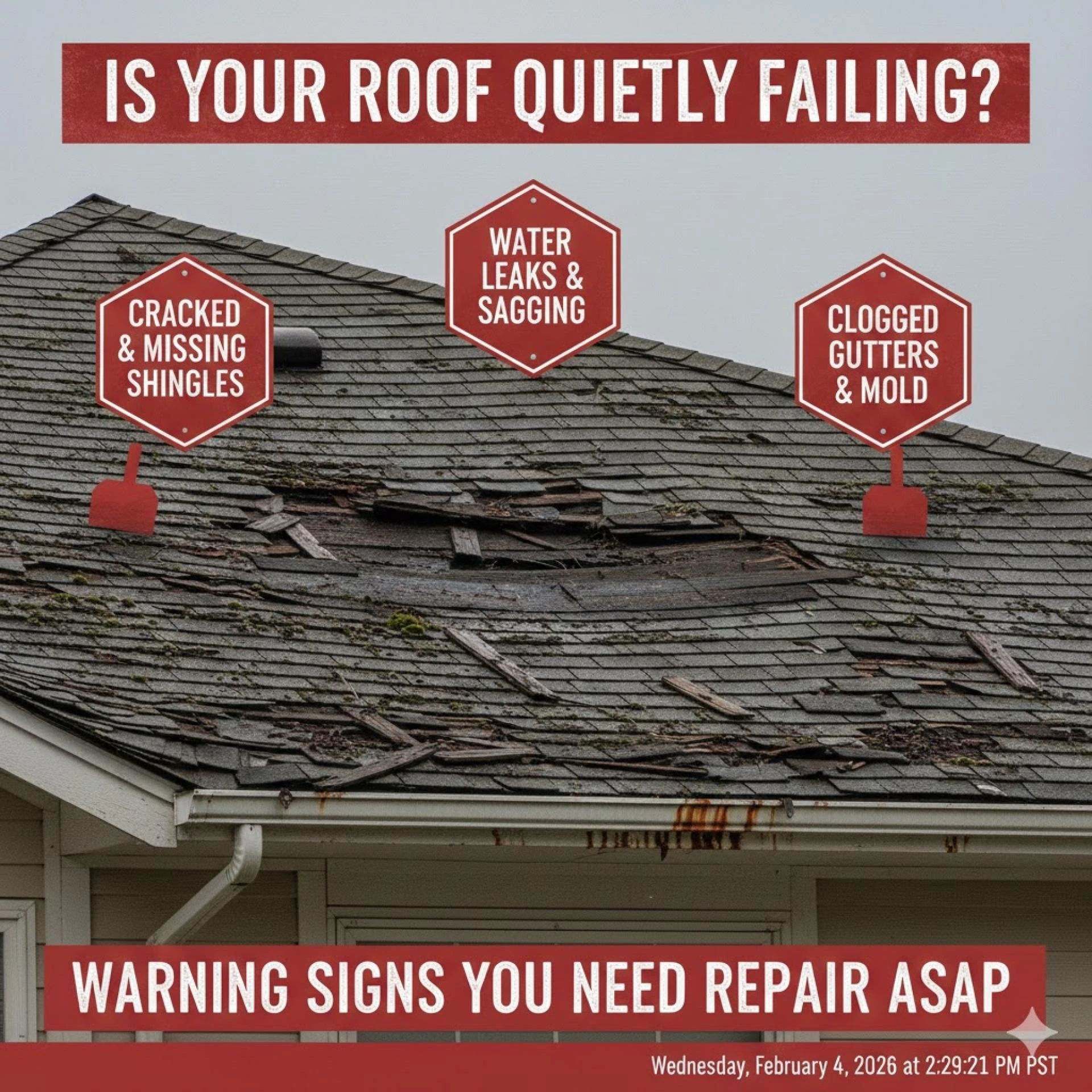

Your roof doesn’t usually fail in dramatic, movie-style fashion. There’s no loud crash, no obvious collapse, no immediate alarm. Instead, roof problems tend to creep in quietly, causing subtle damage that worsens over time. By the time homeowners notice something is seriously wrong, repairs can be expensive—or worse, a full replacement may be unavoidable.
That’s why knowing the early warning signs of roof failure is critical. Catching issues early can save you thousands of dollars, protect your home’s structure, and prevent health risks like mold and poor indoor air quality.
In this in-depth guide, we’ll walk through the most common (and often overlooked) signs your roof needs repair ASAP, why they matter, and what you should do next. If you suspect your roof might be quietly failing, this article could help you stop damage in its tracks.
Why Roof Problems Often Go Unnoticed
Most homeowners don’t inspect their roofs regularly—and that’s understandable. Roofs are out of sight, out of mind. Unlike plumbing or electrical issues, roof damage doesn’t always announce itself right away.
Here’s why roof issues are so easy to miss:
- Damage often starts beneath shingles
- Leaks may travel before becoming visible
- Attic issues aren’t checked often
- Minor problems don’t feel urgent at first
Unfortunately, small roof problems rarely stay small. A single cracked shingle or loose flashing can allow water intrusion that slowly rots wood, damages insulation, and invites mold growth.
Missing, Cracked, or Curling Shingles
One of the clearest visual signs of roof trouble is damaged shingles. Shingles are your roof’s first line of defense, and when they fail, everything underneath is at risk.
What to look for:
- Missing shingles after storms
- Cracked or broken shingles
- Curling or buckling edges
- Bald spots where granules are gone
Damaged shingles expose your roof to moisture, UV rays, and temperature extremes. Even a few compromised shingles can lead to leaks that spread far beyond the original problem area.
Granules in Gutters or Downspouts
Asphalt shingles are coated with granules that protect them from sun damage and help regulate temperature. When those granules start coming loose, it’s a sign your roof is aging—or failing.
Warning signs include:
- Sand-like debris in gutters
- Granules at the base of downspouts
- Uneven shingle texture on the roof
Granule loss reduces shingle effectiveness and shortens roof lifespan. If you’re noticing this regularly, your roof may need repair—or at least a professional evaluation—sooner rather than later.
Water Stains on Ceilings or Walls
This is one of the most alarming signs homeowners notice, and for good reason. Water stains almost always indicate an active or past leak.
Common indicators:
- Brown or yellow ceiling stains
- Peeling paint near ceiling corners
- Bubbling drywall
- Damp wall patches after rain
The tricky part? Roof leaks don’t always show up directly below the damaged area. Water can travel along rafters or insulation before becoming visible, meaning the actual roof problem could be much larger than it appears.
A Sagging or Uneven Roofline
A sagging roof is never normal—and it’s never something to ignore.
Possible causes include:
- Trapped moisture
- Rotted decking
- Structural damage
- Excessive weight from snow or debris
If your roofline looks uneven or dips in certain areas, this could signal serious structural compromise. At this stage, repairs become more complex and urgent. Delaying action could put your entire home at risk.
Daylight Visible in the Attic
Your attic should be dark, dry, and well-ventilated—but not exposed.
If you see sunlight coming through the roof boards, that’s a major red flag.
What daylight means:
- Gaps in decking
- Missing shingles or underlayment
- Failing seals around vents or chimneys
If light can get in, so can rain, snow, pests, and cold air. This issue often leads to insulation damage and higher energy bills, even before leaks become obvious.
Musty Odors or Mold Growth
A quietly failing roof often creates the perfect environment for mold and mildew. Moisture trapped in attic spaces or wall cavities can lead to persistent odors and health risks.
Signs to watch for:
- Musty smells in upper floors
- Visible mold in attic insulation
- Dark spots on rafters or plywood
- Increased allergy symptoms indoors
Mold caused by roof leaks isn’t just a cosmetic issue. It can impact indoor air quality and lead to costly remediation if ignored.
Rising Energy Bills Without Explanation
If your heating or cooling costs are climbing and nothing else has changed, your roof could be part of the problem.
Roof damage can cause:
- Air leaks
- Compromised insulation
- Poor attic ventilation
A failing roof allows conditioned air to escape, forcing your HVAC system to work harder. Over time, this adds up to higher utility bills and unnecessary wear on your equipment.
Flashing Damage Around Chimneys and Vents
Flashing is the metal material that seals roof joints and penetrations. When flashing fails, leaks often follow.
Common flashing problems:
- Cracked or rusted metal
- Loose or lifted flashing
- Missing sealant
- Improper installation
Because flashing issues are localized, they’re often mistaken for minor problems. In reality, flashing failures are one of the leading causes of roof leaks.
Frequent Ice Dams in Winter
If you live in a colder climate, ice dams can signal roof trouble.
Ice dams form when:
- Warm air escapes into the attic
- Snow melts unevenly on the roof
- Refreezing water backs up under shingles
This process can force water beneath roofing materials, leading to hidden leaks and insulation damage. Persistent ice dams often point to ventilation or insulation issues linked to roof failure.
Your Roof Is Near or Past Its Expected Lifespan
Even the best roofs don’t last forever. If your roof is approaching its expected lifespan, problems are more likely—even if everything looks fine from the ground.
Typical roof lifespans:
- Asphalt shingles: 20–30 years
- Metal roofing: 40–70 years
- Tile or slate: 50+ years
Age alone doesn’t mean immediate failure, but it does mean closer monitoring and proactive repairs are essential.
Why Delaying Roof Repairs Is Risky
Putting off roof repairs rarely saves money. In fact, it usually does the opposite.
Delaying repairs can lead to:
- Structural wood rot
- Mold remediation costs
- Interior damage to ceilings and walls
- Insulation replacement
- Full roof replacement sooner than expected
What starts as a small repair can snowball into a major renovation if ignored.
When to Call a Professional Roof Inspector
If you’ve noticed any of the warning signs above, it’s time to bring in a professional.
A roof inspection can:
- Identify hidden damage
- Pinpoint leak sources
- Assess remaining roof life
- Recommend targeted repairs
- Help you plan future maintenance
Professional inspections often catch issues homeowners miss—and early detection can save thousands.
Repair vs. Replacement: How to Know the Difference
Not every roof problem requires replacement. Many issues can be resolved with timely repairs.
Repairs are often enough when:
- Damage is localized
- Roof is relatively young
- Structure is still sound
Replacement may be necessary if:
- Damage is widespread
- Roof is near end of lifespan
- Structural components are compromised
- Repairs are becoming frequent
A qualified roofing contractor can help you make the right call based on condition, cost, and long-term value.
Preventing Quiet Roof Failure in the Future
The best way to avoid surprise roof damage is preventive maintenance.
Smart prevention tips:
- Schedule annual roof inspections
- Clean gutters regularly
- Trim overhanging tree branches
- Address small issues immediately
- Check attic ventilation and insulation
Proactive care extends roof life and helps you avoid emergency repairs.
Conclusion: Don’t Ignore the Subtle Signs
A failing roof doesn’t always shout—it whispers. Small changes, subtle stains, rising energy bills, or faint odors can all be signs that your roof needs attention right now.
By recognizing the early warning signs and acting quickly, you protect not just your roof, but your entire home. If something feels off, trust that instinct. A timely inspection or repair today—guided by experienced professionals like those at https://forcewashing.com/—could save you from major headaches tomorrow.
Your roof works hard every day to protect you. Make sure you’re listening when it asks for help.























Sign in to leave a comment.