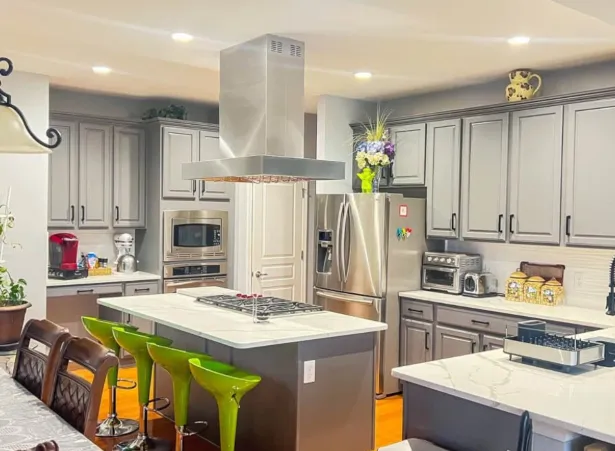

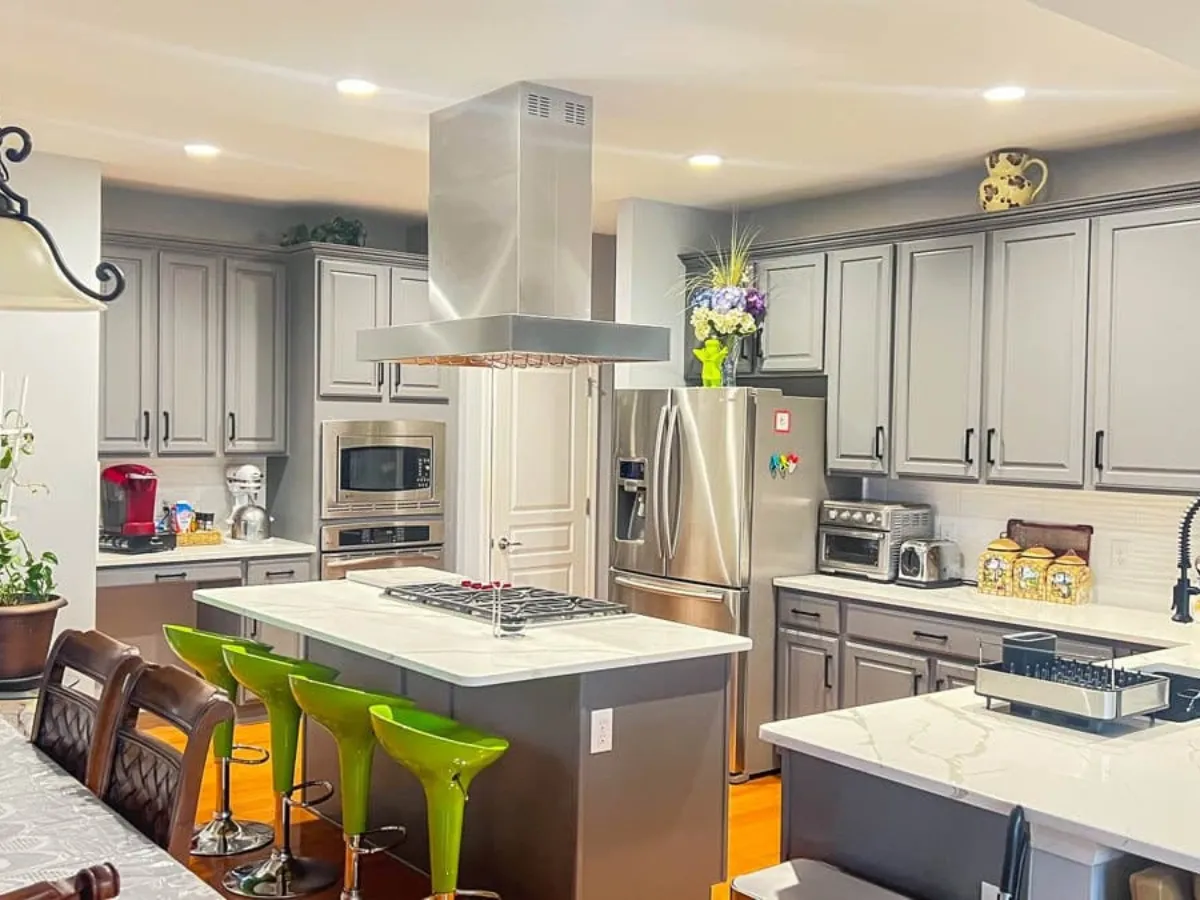
A 30-inch cooking surface is a common choice for kitchens where space, functionality, and ventilation all need to work together. When that cooking surface is positioned on an island, choosing the right ventilation system becomes particularly important because cooking emissions can escape in several directions rather than being contained by a wall.
Island range hoods 30 inch are designed around this type of kitchen configuration, but selecting one involves more than matching the hood width to the range. Airflow, capture area, mounting height, ductwork, cooking habits, and noise all influence how effectively a hood performs. Understanding these factors can help homeowners plan an island ventilation system that suits their kitchen.
What Are Island Range Hoods 30 Inch?
Island range hoods 30 inch are ventilation hoods intended for installation above a 30-inch-wide cooking surface located on a kitchen island. Unlike wall-mounted hoods, island models are suspended from the ceiling and have open space around the cooking area.
This open arrangement makes capture performance especially important. Smoke, grease, steam, and cooking odors can drift sideways before reaching the hood if its dimensions or installation position are not appropriate.
The Home Ventilating Institute recommends matching hood width to the cooking range and following the manufacturer's recommended mounting height. It also notes that island installations can require higher ventilation rates than comparable wall-mounted applications.
Why Does a 30-Inch Island Range Need Proper Ventilation?
Cooking can introduce moisture, odors, grease particles, and other airborne contaminants into the kitchen. Gas cooking can also produce combustion byproducts. A properly installed exhaust system can help remove these pollutants from the indoor environment by directing air outdoors.
The challenge is greater when the range sits on an island. There is no wall behind the cooktop to help contain rising air, so the hood must capture emissions from an exposed position.
This is why island range hoods 30 inch should be selected based on the cooking appliance and the overall kitchen layout rather than width alone.
How Much CFM Does a 30-Inch Island Hood Need?
CFM, or cubic feet per minute, describes the volume of air a ventilation fan can move. The required airflow varies according to the cooking equipment, cooking style, hood configuration, ductwork, and local requirements.
HVI guidance lists 150 CFM per linear foot as a recommended ventilation rate for an island range, compared with 100 CFM per linear foot for a range positioned against a wall. For a 30-inch, or 2.5-foot, island cooking surface, that guidance corresponds to approximately 375 CFM as a reference point.
The U.S. Department of Energy provides residential kitchen ventilation guidance that includes 40 CFM per linear foot as a minimum guideline and 100 CFM per linear foot as a recommended level for a 30-inch range in certain contexts.
These figures are useful reference points, not universal prescriptions. Local building codes, appliance specifications, hood design, and installation conditions should always be considered.
Does Hood Size Need to Match the Range?
Matching the hood to the cooking surface is an important starting point. A hood that is too narrow may provide insufficient capture coverage, particularly when the cooking surface is exposed on multiple sides.
For island range hoods 30 inch, homeowners should examine both the width of the range and the hood's overall capture area. A hood that extends beyond the cooking surface can provide additional coverage, depending on the kitchen design and manufacturer's specifications.
The recommended dimensions should also account for the installation height. A hood positioned too high may have greater difficulty capturing rising cooking emissions, while installing it too low could interfere with cooking activities or violate manufacturer requirements.
Why Is Installation Height Important?
Distance between the cooking surface and hood affects capture performance. As hot air and cooking contaminants rise, they naturally disperse. Increasing the distance gives these emissions more opportunity to move away from the hood's capture area.
For that reason, the manufacturer's specified mounting height should be followed rather than selecting an arbitrary distance.
The HVI specifically advises that range hoods be located at the manufacturer's recommended height.
Before installation, homeowners should therefore review the hood specifications, cooking appliance requirements, ceiling height, and surrounding cabinetry or lighting.
How Does Ductwork Affect Performance?
The fan rating on a range hood does not tell the entire story. Ductwork can influence the amount of airflow achieved in an actual installation.
Long duct runs, multiple bends, undersized ducts, and restrictive configurations can increase resistance and reduce effective airflow. HVI notes that duct width, length, and the number of bends affect duct efficiency.
The U.S. Department of Energy similarly explains that kitchen exhaust systems should be vented outdoors rather than terminating in an attic, crawlspace, or other interior building space.
Planning the duct route before installation can therefore prevent performance problems later.
What Should You Consider if You Cook Frequently?
Cooking habits should influence ventilation decisions. Someone who mostly prepares low-temperature meals may have different requirements from someone who frequently sears meat, stir-fries, grills, or cooks with high heat.
Frequent high-temperature cooking can generate more smoke, grease, and heat, increasing the demand on the ventilation system. HVI notes that ventilation performance should be compatible with the cooking range and the type and frequency of cooking.
For this reason, homeowners should consider their actual cooking patterns when evaluating island range hoods 30 inch rather than relying solely on the nominal size of the cooking surface.
How Can You Reduce Hood Noise?
Noise is another practical consideration for an island installation because the hood may be located close to seating, dining, or conversation areas.
Range hood sound is affected by airflow, fan design, and ductwork. HVI uses sones as a measure of perceived loudness and recommends considering both the hood's sound rating and properly sized ductwork when seeking quieter operation.
A multi-speed fan can also be useful because lighter cooking may not require the highest setting. Using the appropriate speed can help balance ventilation and comfort.
What Maintenance Does an Island Hood Need?
Regular maintenance helps preserve ventilation performance. Grease filters can collect residue from cooking and should be cleaned according to the manufacturer's instructions. Accumulated grease can restrict airflow and create unpleasant odors.
Exterior surfaces should also be cleaned regularly, especially around areas exposed to cooking vapor and grease.
For ducted systems, persistent odors, reduced airflow, or unusual fan noise can indicate that the system needs inspection. Keeping filters and surrounding surfaces clean is one of the simplest ways to support consistent operation.
Are 30-Inch Island Hoods Suitable for Every Kitchen?
A 30-inch island hood can be appropriate when the cooking surface is approximately 30 inches wide and the hood is properly sized and installed. However, the best configuration depends on the cooking appliance, ceiling height, available duct route, cooking frequency, and kitchen layout.
Homeowners should also check local requirements before installation, particularly where mechanical ventilation, make-up air, or gas cooking is involved.
At Proline Range Hoods, we believe that understanding these technical factors is essential before choosing an island ventilation system. Our approach is to consider the relationship between hood dimensions, cooking equipment, airflow, ducting, and installation rather than treating hood selection as a purely visual decision.
Conclusion
Choosing ventilation for an island cooking surface requires attention to more than the 30-inch measurement. Hood coverage, airflow, mounting height, duct design, cooking habits, noise, and maintenance all contribute to performance. A properly planned system can help capture cooking pollutants and support better kitchen air quality. When comparing island range hoods 30 inch, homeowners should start by reviewing the cooking appliance specifications and then consider the hood's capture area and ventilation requirements. At Proline Range Hoods, we recommend evaluating the complete installation rather than focusing on a single specification. With the right planning, a 30-inch island cooking area can be paired with ventilation that fits both the kitchen's practical requirements and its everyday cooking needs.

























Sign in to leave a comment.