
Introduction
When people use websites or online platforms, the experience usually feels smooth and simple. A user may open a website, search for information, fill out a form, or create an account within seconds. Behind this seemingly simple interaction, however, there is a complex technological system working continuously to process requests and deliver results.
Every time a user interacts with a web application, the request travels through multiple layers of software. The interface captures the action, the server processes the request, and the database stores or retrieves the information needed to respond. This entire process happens quickly because different technologies work together efficiently.
The development approach that connects these layers is called full stack development. Developers who work in this area understand both the visual side of an application and the systems that operate behind the scenes.
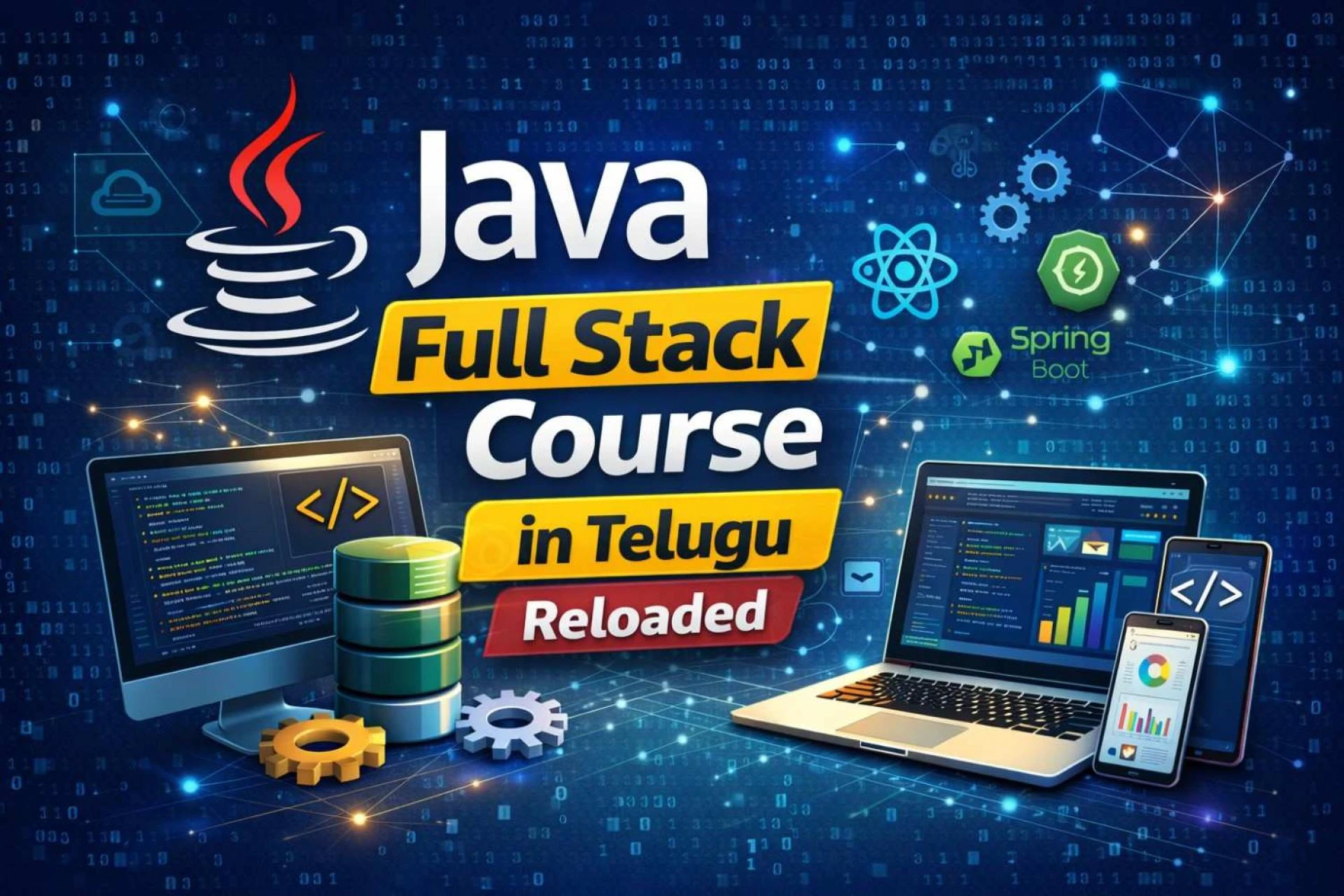
One programming language that has played an important role in this field is Java. Because of its reliability and ability to handle large systems, Java has been widely used to develop enterprise applications, financial systems, and web platforms. For learners who prefer understanding technical topics in their native language, exploring these concepts through a Java Full Stack Course in Telugu can make complex ideas easier to understand.
What Is Java Full Stack Development?
Java full stack development refers to building a complete web application using Java along with technologies that manage both the front-end interface and the back-end systems of an application.
A web application usually consists of three main layers.
Front-End Layer
This layer includes the part of the application that users interact with directly. It contains elements such as buttons, forms, images, and other visual components displayed on web pages.
Back-End Layer
This layer handles the logic that processes user requests. It performs operations such as validating information, executing commands, and generating responses.
Data Layer
This layer stores information used by the application. Databases manage data such as user profiles, system records, and transaction details.
Full stack development focuses on connecting these layers so they function together as one system.
Why Java Is Widely Used in Software Development
Java has been one of the most popular programming languages in the technology industry for many years. It is known for its stability, security, and ability to support large applications.
One of Java’s major advantages is its platform independence. Java applications can run on different operating systems because they operate through the Java Virtual Machine.
Java is commonly used in several industries, including:
- Enterprise software development
- Banking and financial platforms
- E-commerce systems
- Cloud-based services
- Android mobile applications
Because of its reliability and scalability, many organizations continue to use Java for building complex digital systems.
Technologies Used in Java Full Stack Development
Developing a full stack application requires several technologies that manage different aspects of the system.
Front-End Technologies
Front-end development focuses on creating the interface that users see when they access a website or application.
Important front-end technologies include:
HTML
HTML structures the content of web pages and defines how information is displayed.
CSS
CSS controls the visual appearance of web pages, including layout and design.
JavaScript
JavaScript enables interactive features that allow web pages to respond to user actions.
Modern frameworks such as React, Angular, and Vue are often used to create responsive and dynamic user interfaces.
Back-End Technologies
The back-end is responsible for processing user requests and managing application logic.
In Java full stack development, common back-end technologies include:
Java Programming Language
Java is used to develop server-side applications that process system operations.
Spring Framework
Spring provides tools that simplify the development of enterprise applications.
Spring Boot
Spring Boot helps developers build web services and APIs with reduced configuration.
These technologies allow developers to build scalable applications that can support many users simultaneously.
Database Systems
Databases store the information required by applications.
Common databases used with Java applications include:
- MySQL
- PostgreSQL
- Oracle Database
- MongoDB
Database management systems organize data so it can be stored securely and retrieved efficiently.
APIs and Integration
Modern applications often connect with external services using Application Programming Interfaces, commonly known as APIs.
APIs allow software systems to communicate with each other. For example, a web application might connect to payment services, authentication systems, or mapping tools.
These integrations help developers add advanced functionality to applications.
How Java Full Stack Applications Work
To understand how full stack systems operate, consider a typical example such as an online profile management system.
When a user updates their profile information:
- The front-end interface collects the input from the user.
- The request is sent to the application server.
- The server processes the request using Java-based logic.
- The system updates the information stored in the database.
- The updated result is displayed on the user interface.
Although this process occurs quickly, several technologies work together to produce the final output.
Interesting Facts About Java and Full Stack Development
Java has remained a major technology in the software development industry for decades.
Some notable insights include:
- Java is used by millions of developers worldwide.
- Many enterprise-level systems rely on Java-based applications.
- Full stack developers understand both the interface and the architecture of applications.
- Large web platforms require scalable technologies to support high user traffic.
These observations show why Java continues to play an important role in modern web development.
Skills Associated With Java Full Stack Development
Developers working with Java full stack technologies develop several technical skills.
Some of these skills include:
- Writing efficient Java programs
- Understanding web application architecture
- Designing responsive user interfaces
- Managing databases and performing data queries
- Integrating applications with external services
- Testing and debugging software systems
These abilities help developers build applications that are reliable and scalable.
Why Learning Java Full Stack in Telugu Helps
Understanding technical topics can be easier when explanations are provided in a familiar language. Studying through a Java Full Stack Course in Telugu allows learners to grasp programming logic, system workflows, and development concepts more clearly. Learning in Telugu helps beginners focus on understanding the technology instead of translating unfamiliar terminology.
The Future of Java Full Stack Development
Technology continues to evolve with innovations in cloud computing, distributed systems, and modern development frameworks. Java has adapted to these changes by supporting scalable architectures and modern application development tools.
Many organizations still rely on Java because of its reliability, performance, and long-term stability. As digital platforms continue to expand, developers who understand full stack technologies will remain essential in building modern software systems.
Conclusion
Java full stack development combines multiple technologies to build modern web applications that support many digital services used today. By understanding how front-end interfaces, server-side programming, databases, and system integrations work together, developers gain a deeper understanding of how digital platforms operate.
For learners interested in exploring these concepts, studying through a Java Full Stack Course in Telugu can help make complex development ideas easier to understand and more accessible.
As digital technologies continue to evolve and web applications become increasingly sophisticated, could understanding full stack development provide valuable insight into the systems that power the modern digital world?
























Sign in to leave a comment.